Is USDC Safe to Get Paid In? What Merchants Should Know
USDC is generally considered one of the more stable ways to get paid in crypto — but "stable" describes its design goal, not a guarantee. It is a stablecoin intended to be redeemable one-for-one for US dollars, and for a business the practical question is not "is it perfectly safe?" but "which risks am I accepting, and are they smaller than the ones I have today?"
What USDC actually is
USDC is a dollar-denominated stablecoin issued by Circle. The issuer states that each token is backed by reserves, and holders can redeem tokens for dollars through the issuer. On Solana, USDC exists as a token you hold in the same wallet as SOL.
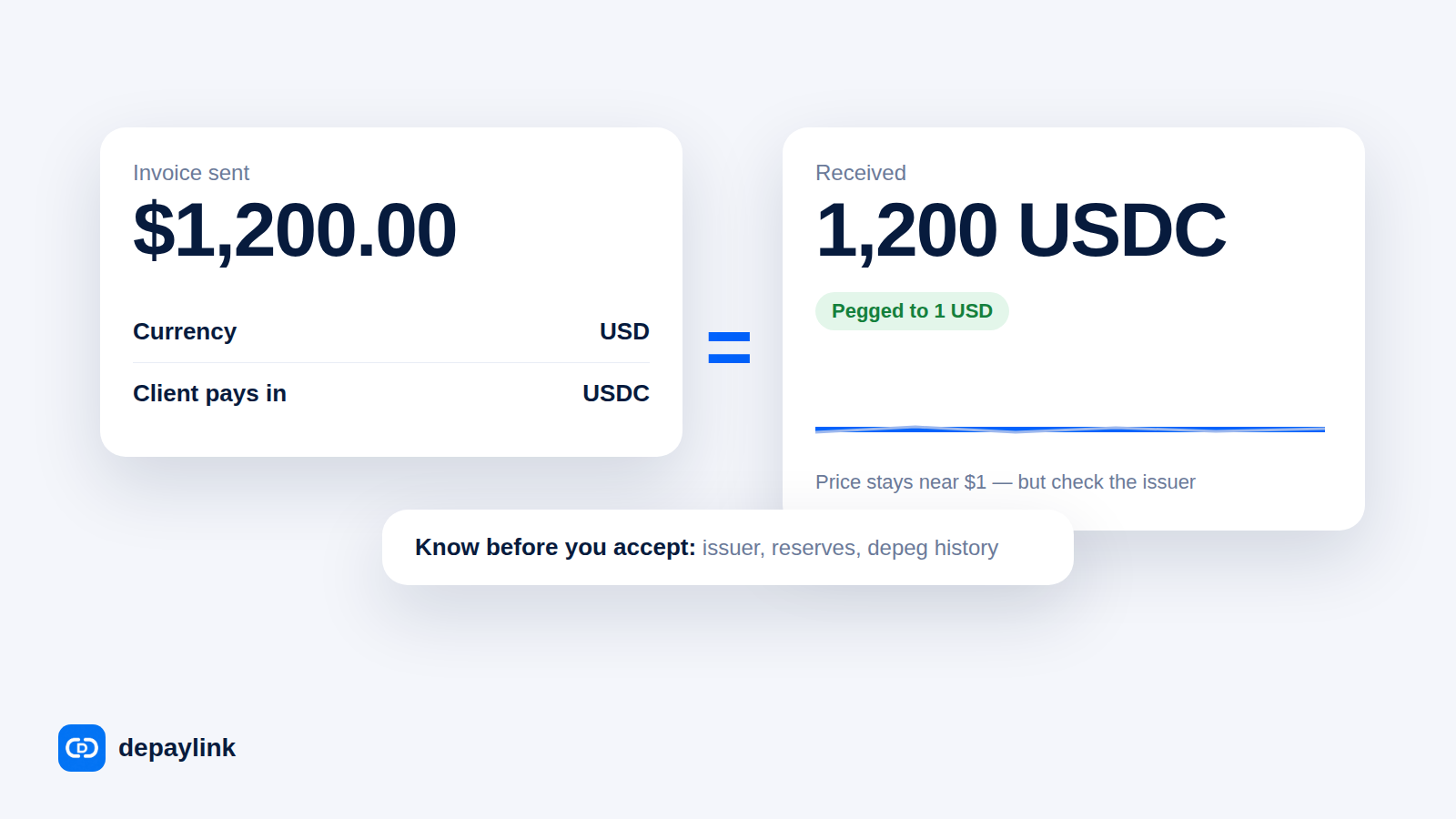
That design is why a 1,200 USDC payment behaves, day to day, like a $1,200 payment: its price barely moves, unlike SOL or Bitcoin.
The risks, honestly
Peg risk. In March 2023, USDC briefly traded below $1 after the issuer disclosed exposure to a failed bank. It recovered, but it showed that the peg depends on trust in the reserves and the issuer — not on the blockchain.
Issuer and reserve risk. You are relying on a company to manage reserves properly and honor redemptions. Read the issuer's published reserve information rather than a headline.
Regulatory risk. Stablecoin rules are changing in many jurisdictions. What you can hold, redeem or report may change over time.
Wallet and operational risk. Most losses are not from the stablecoin itself but from lost recovery phrases, phishing links, and sending to the wrong network.
Blacklisting risk. Like other regulated stablecoins, USDC can be frozen at the issuer's level for specific addresses. This is rare and tied to illegal activity, but it is a real property of the asset.
What it does well
Predictable amounts. You invoice $500, you receive roughly $500.
Speed and reach. A transfer between two wallets does not depend on bank hours or intermediaries.
Lower price risk than volatile coins between invoice and payment.
Practical safety habits
Don't leave more in USDC than you need. Convert or withdraw on a schedule that matches your costs.
Check the network on every request. USDC exists on several networks; a payment sent on the wrong one may not arrive where you expect.
Keep your receiving wallet secure. Offline backup of the recovery phrase; consider a hardware wallet for larger balances.
Log every payment with date and amount for accounting.
Know your off-ramp. Before relying on USDC, confirm how you would turn it into your local currency and what that costs.
How depaylink handles the payment side
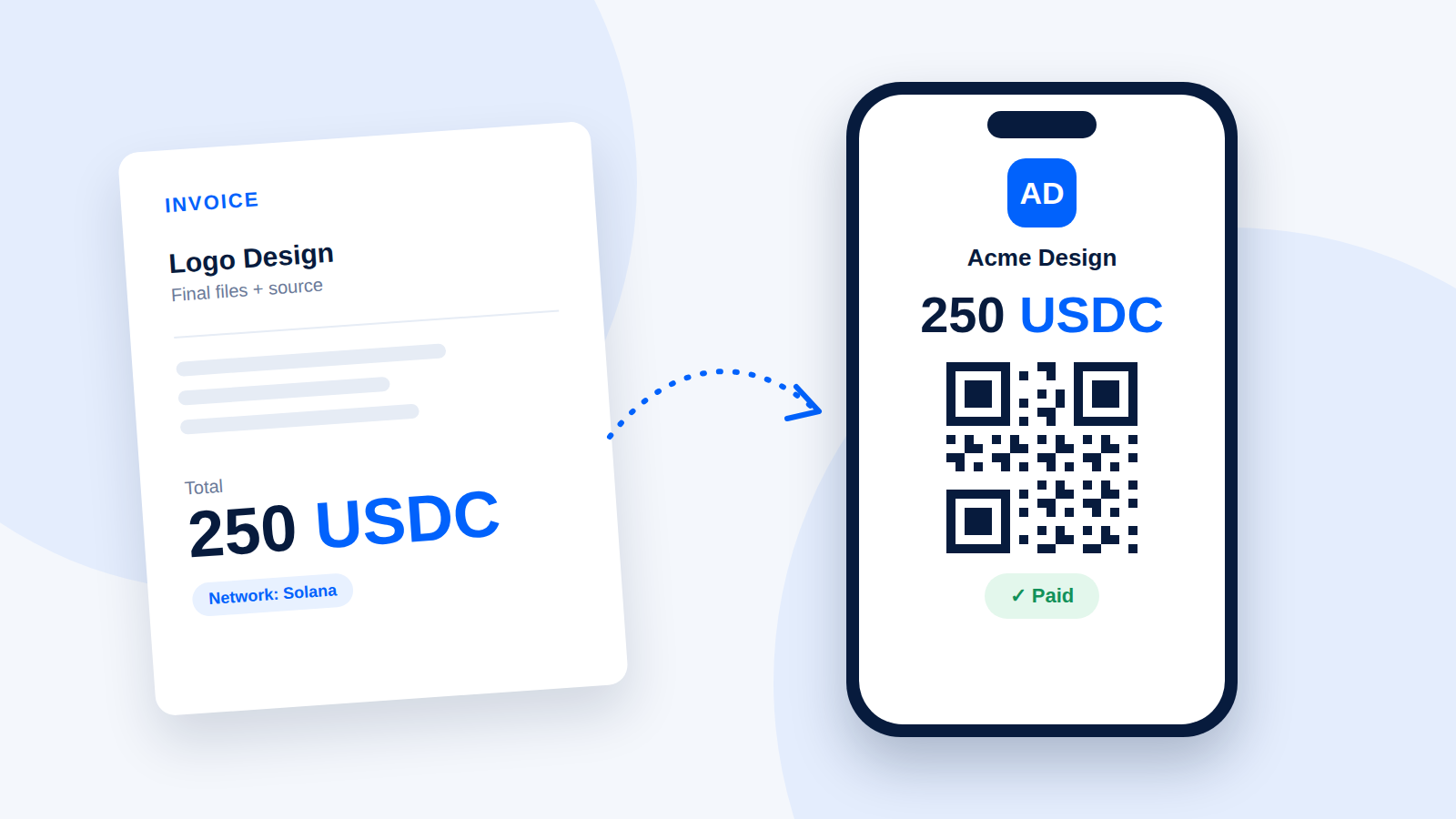
depaylink supports USDC and SOL on Solana. When you create a payment link, the funds go to your own wallet — depaylink doesn't hold them — and the payer sees the amount, currency and network on the payment page. That removes the "wrong network" class of mistakes, but the stablecoin risks above remain yours to weigh. If you want to understand the dollar-value difference with SOL, read our USDC vs SOL comparison.
This article is general information, not financial, tax or legal advice.
FAQ
Is USDC the same as a US dollar? No. It is designed to be redeemable for one dollar, but it is a token issued by a company, and its market price can deviate briefly.
Can USDC lose its peg? It has before, briefly, in March 2023. Reserve quality and redemption confidence are what keep it near $1.
Is USDC safer than SOL for invoices? It carries far less price movement, which makes invoicing easier, but it adds issuer and regulatory risk that SOL does not have.
Where should I keep USDC? In a wallet you control, with the recovery phrase stored offline. Keep only what you need in the asset.How to Accept Crypto Payments for Your Business