How to Accept Crypto Payments for Your Business
If you want to accept crypto payments, you need three things: a wallet to receive the funds, a payment request your customer can act on, and a way to verify that the right amount arrived. Everything else — plugins, checkouts, dashboards — is a convenience layer on top of those three.
The three building blocks
1. A wallet. This is where money lands. You hold the keys, so you control the funds. Pick a reputable wallet, write down the recovery phrase offline, and never share it with anyone — including anyone claiming to be "support."
2. A payment request. Your customer needs to know how much, in which asset, on which network and to which address. A wallet address alone answers only one of those four. Most payment mistakes happen here: a customer sends the right coin on the wrong network, or the wrong amount.
3. Verification. You need to confirm that a payment actually arrived, for the right amount, and match it to the right order. Blockchains are public, so this is checkable — but doing it by hand for every sale gets old quickly.
Four ways to set it up
Setup | Effort | Best for | Watch out for |
|---|---|---|---|
Share your wallet address | None | One-off payments from people you know | No amount or network guardrails; hard to match payments to orders |
Payment links | Low | Freelancers, creators, small businesses, invoices | Needs a provider you trust |
Checkout plugin for a store platform | Medium | Existing online stores | Plugin availability and maintenance |
Custom integration | High | Product teams with developers | Build and maintenance cost |
For most businesses that are just starting, payment links hit the sweet spot: no website changes, no developer, and every request carries the amount, currency and address in one place.
Choose what you will accept
Start narrow. Accepting one or two assets is easier to explain to customers and easier to account for than accepting ten.
Stablecoins such as USDC track the US dollar, so the amount you invoice is close to the amount you receive.
Native coins such as SOL can change in dollar value between invoice and payment, so decide in advance whose problem that is.
If you are unsure, quote prices in a stablecoin. Our comparison of USDC and SOL covers the trade-offs in detail.
A simple workflow
Decide your price in a stable unit (for example, dollars).
Create a payment request for that amount in the asset you accept.
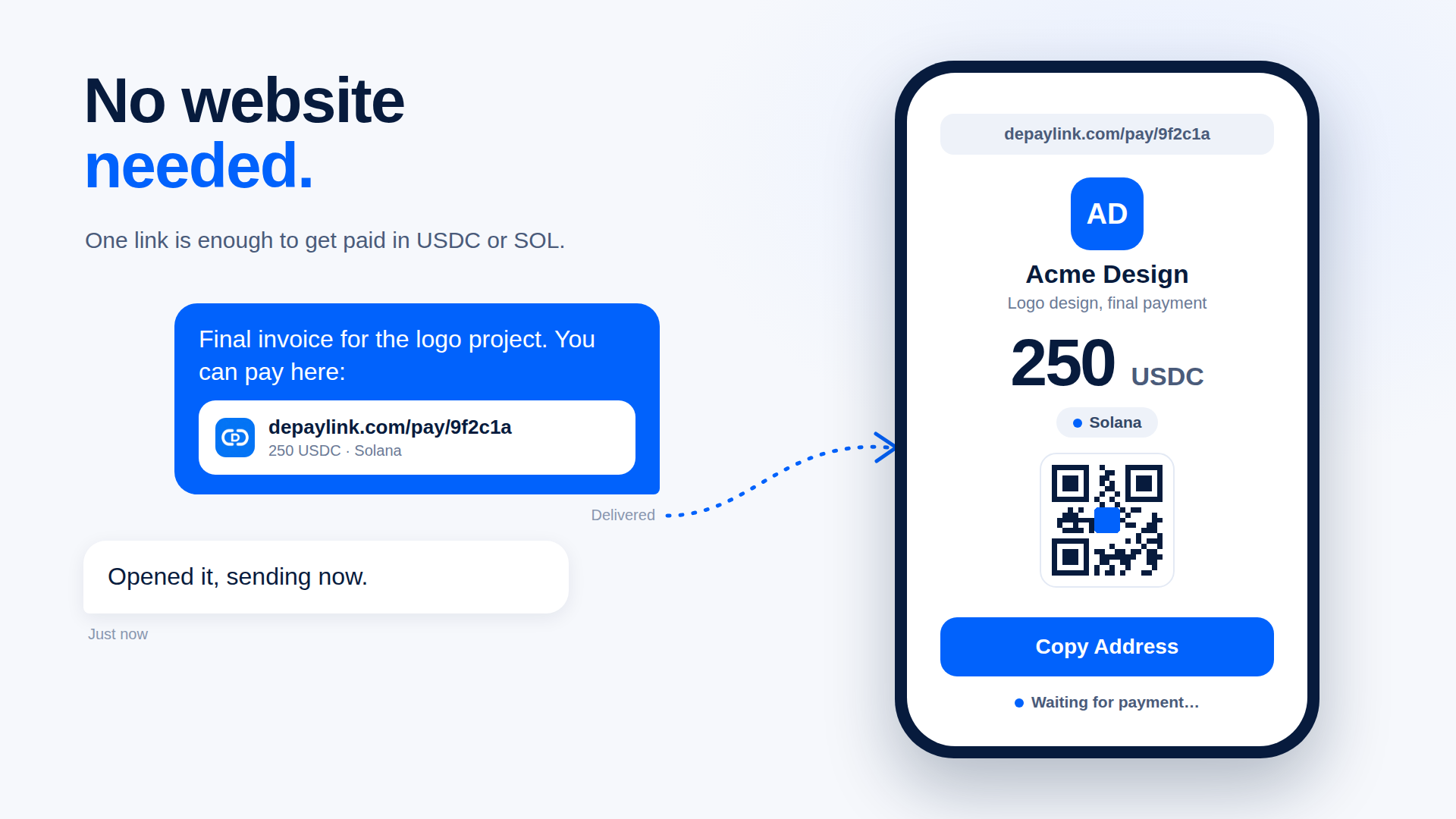
Send it to the customer by email, chat or invoice.
Wait for the payment to be confirmed on-chain.
Mark the order as paid and deliver the product or service.
Record the date, amount and the exchange rate at the time, for your books.
Where depaylink fits
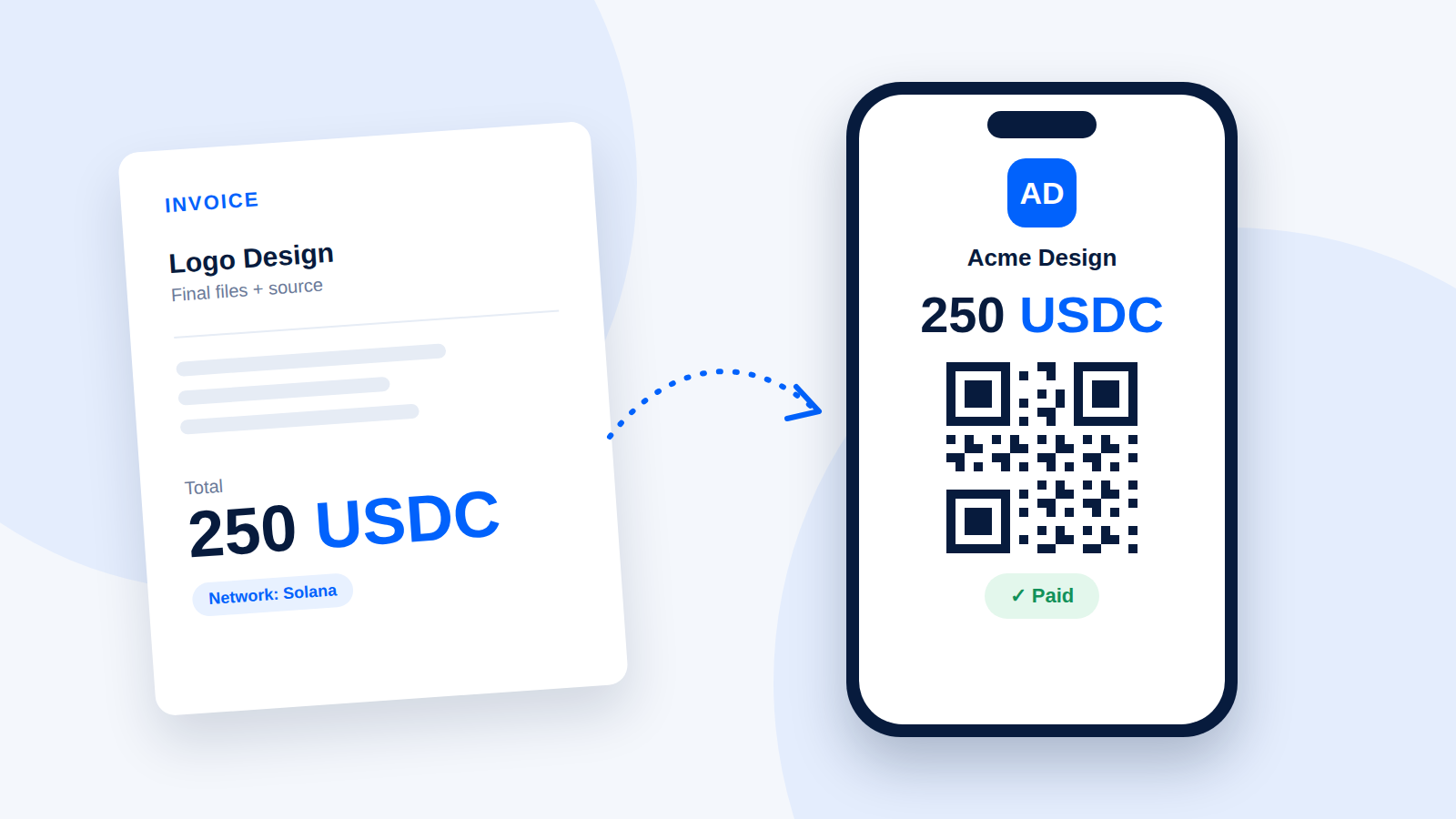
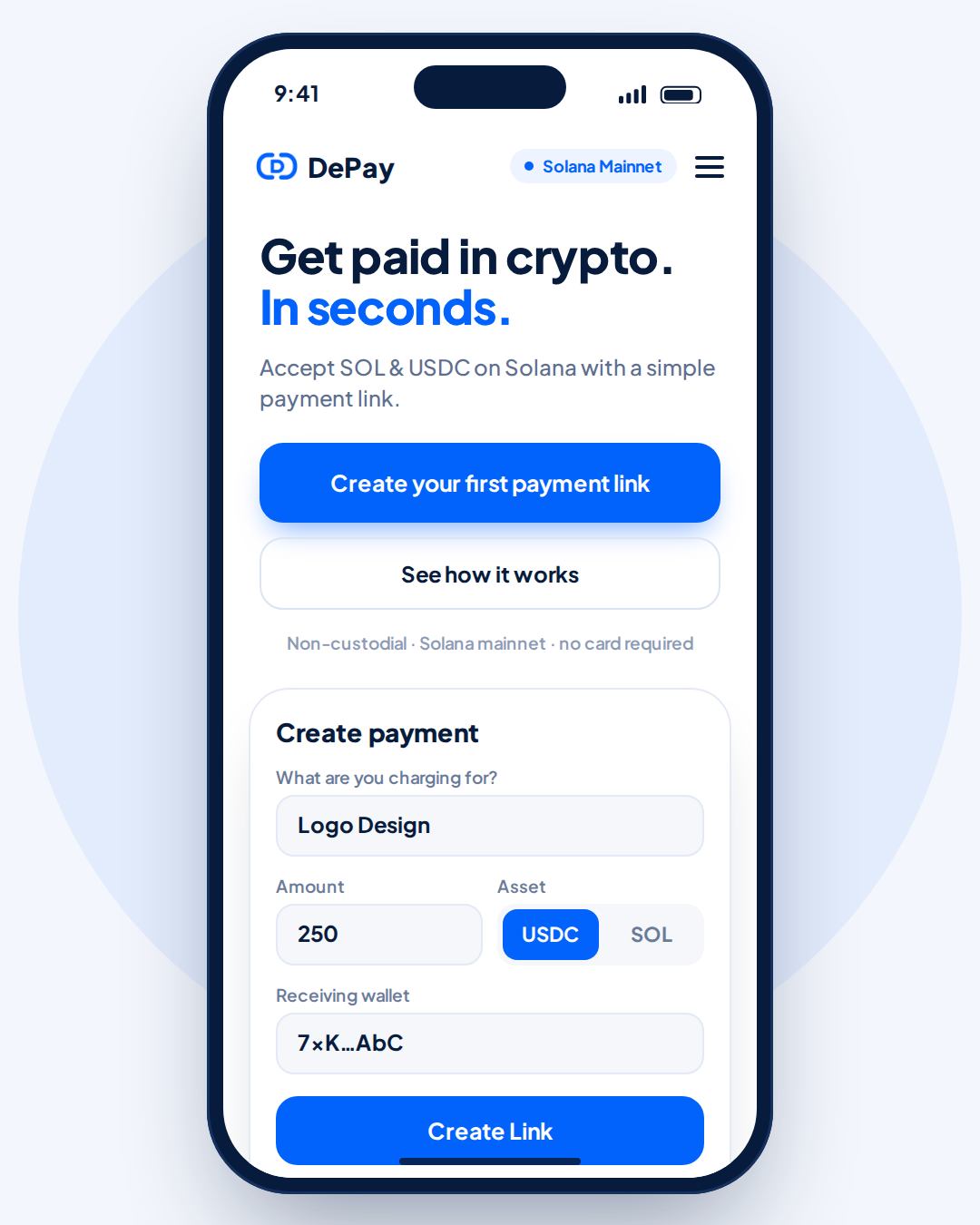
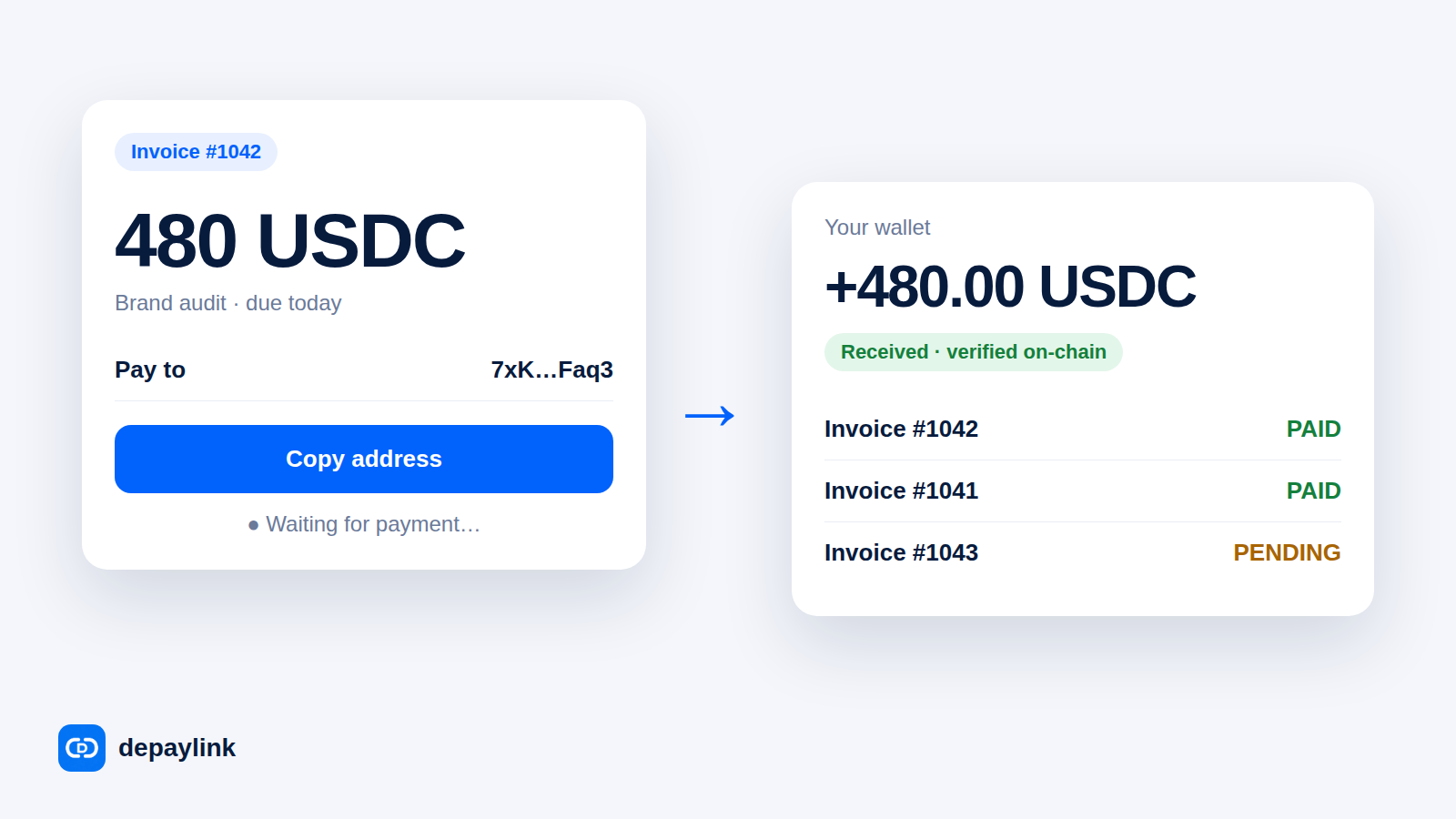
Steps 2 to 4 are where most of the friction is, and that is what depaylink handles. You create a payment link with an amount and currency (SOL or USDC on Solana), and the funds go to your wallet — depaylink does not hold them. The payer opens the link, gets a clean payment page with an address and QR code, and pays from their own wallet; there is no wallet-connect step. The dashboard shows each link as pending or paid so you do not have to check the chain by hand.
Mistakes that cost money
Wrong network. Always state the network on the request.
Reusing one address for everything. It works, but matching payments to orders becomes guesswork.
No refund policy. Crypto transfers cannot be reversed by a card network. Decide how you handle refunds before the first sale.
No records. Keep amount, date and rate for every payment.
Ignoring local rules. Tax and licensing treatment of crypto varies by country. This article is general information, not tax or legal advice — check with a qualified professional where you operate.
FAQ
Do I need a developer to accept crypto? No. A wallet plus a payment-link tool is enough for many businesses. Developers only become necessary for custom checkouts.
Are crypto payments reversible? No. Once confirmed, a transfer cannot be pulled back by the sender or by a card network. Refunds are a new payment you send.
Which crypto should I accept first? Most businesses start with one stablecoin, because pricing stays predictable.
Do I owe tax on crypto payments? Often, yes — it is usually treated as income at the value when received. Rules differ by country, so ask a tax professional.