How to Accept Crypto Payments for Your Business
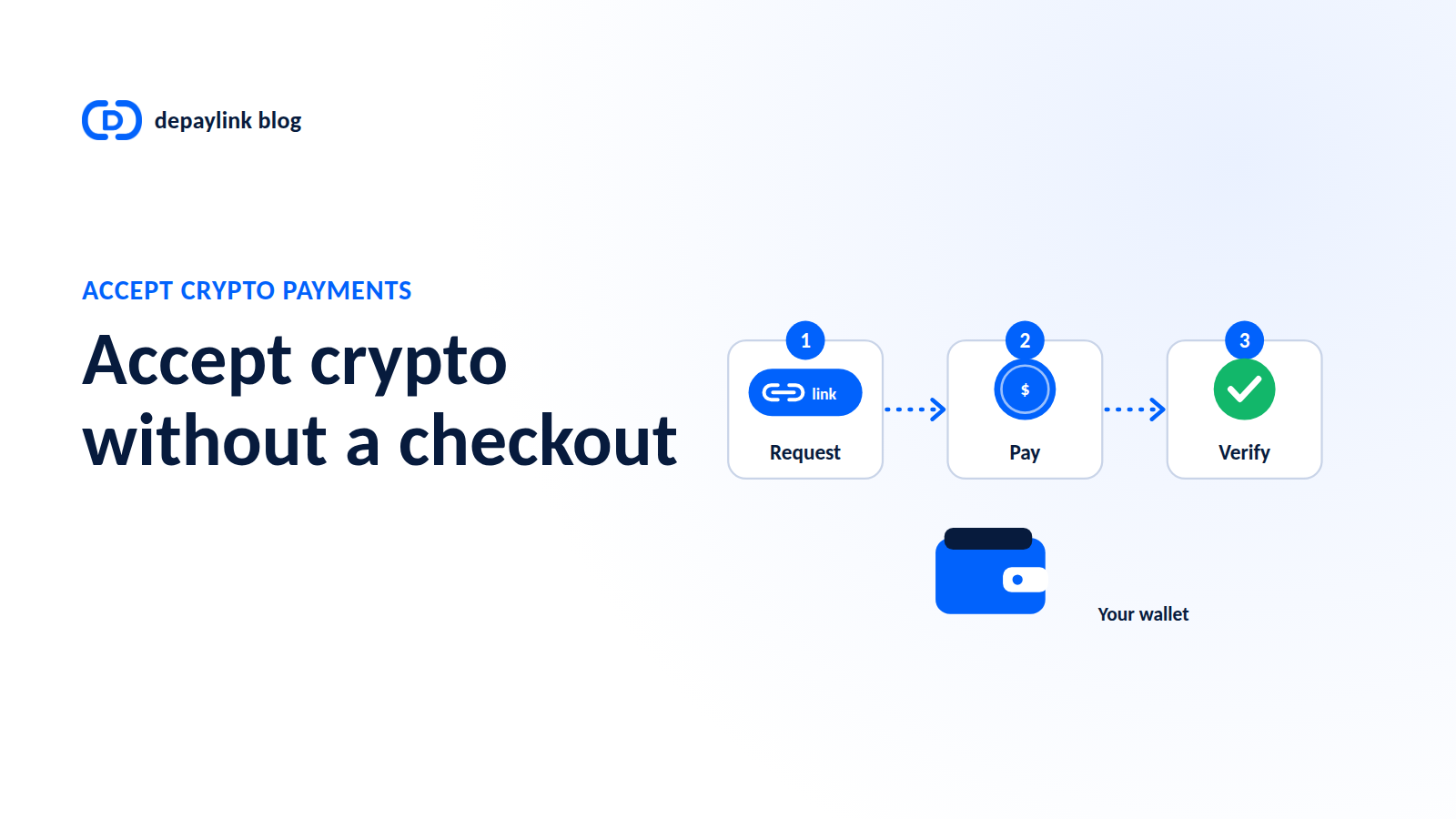
If you want to accept crypto payments for your business, you need three things: a wallet to receive the funds, a way to show customers what to pay, and a reliable way to confirm that the right amount arrived.
That's the whole system. Everything else, including fancy checkouts and plugins, is a different way of delivering those three pieces.
The three pieces of a crypto payment setup
1. A wallet you control
A wallet is where the money lands. The important question is who holds the keys.
Non-custodial wallet: you hold the keys. Payments arrive directly to you, and nobody can freeze or hold them on your behalf.
Custodial account (for example, on an exchange): a company holds the keys for you. It can be convenient, but you're trusting that company with your funds.
For a business, non-custodial usually means fewer parties between you and your revenue. The trade-off is responsibility: if you lose your seed phrase, nobody can recover it for you. Write it down offline and never share it.
2. A way to request payment
Your customer needs to know three things: how much, in what currency, and where to send it.
You can do this manually by pasting a wallet address into an email. It works, but it's easy to get wrong. One mistyped character and the funds go somewhere else, and blockchain transfers can't be undone.
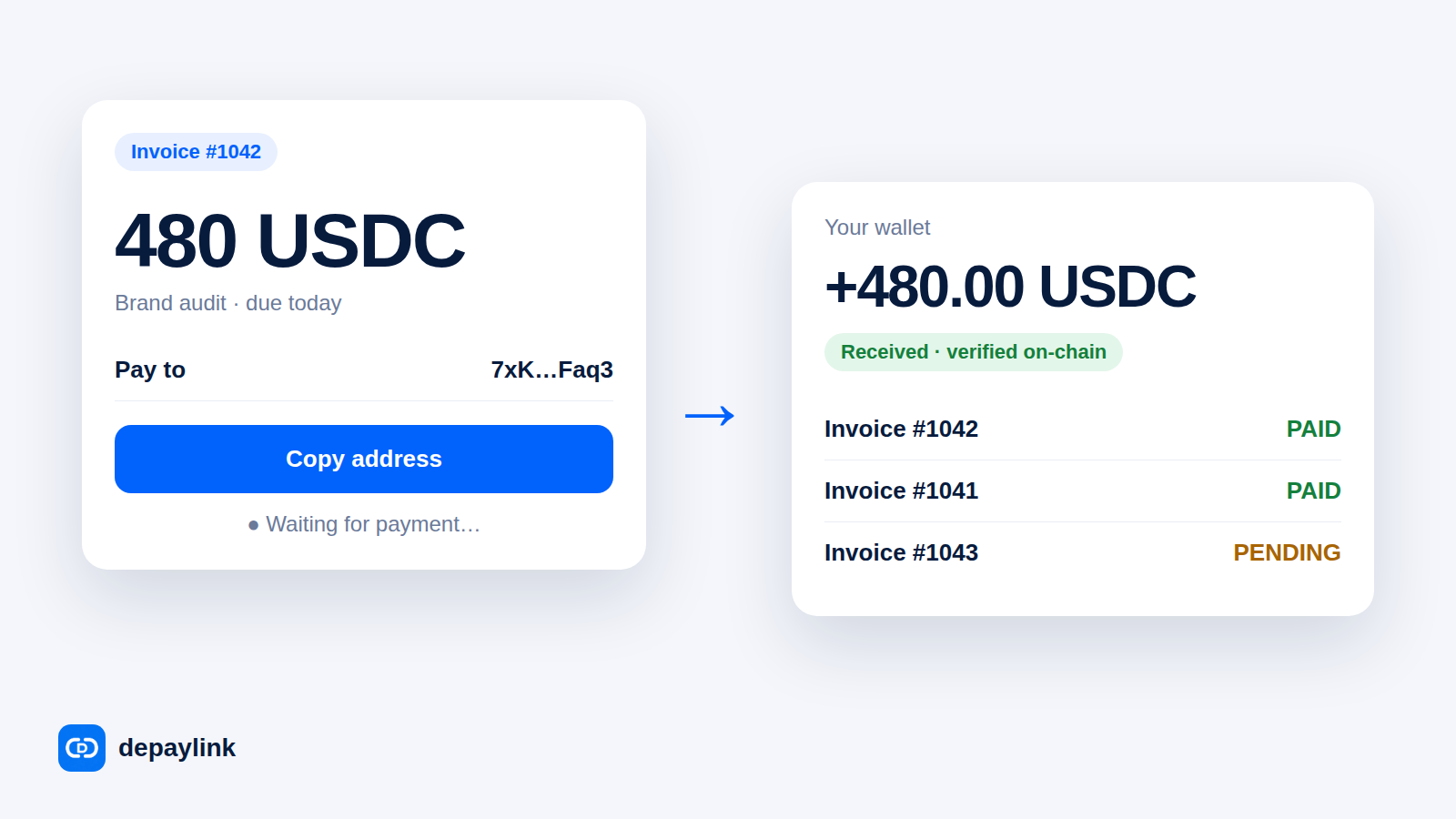
A payment link removes that risk. It bundles the amount, the currency and the destination into one URL the customer opens and pays from. You can send it by email, chat, DM or text.
3. A way to verify the payment
"I've paid" is not proof. Before you deliver anything, confirm on-chain that the correct amount, in the correct currency, reached your wallet.
You can check a block explorer by hand for every payment, or use a tool that verifies automatically. Manual checking is fine for a handful of payments a month; it gets tedious quickly beyond that.
Choose what to accept (and start with one)
Don't launch with ten currencies. Pick one or two:
Option | Why businesses pick it | Watch out for |
|---|---|---|
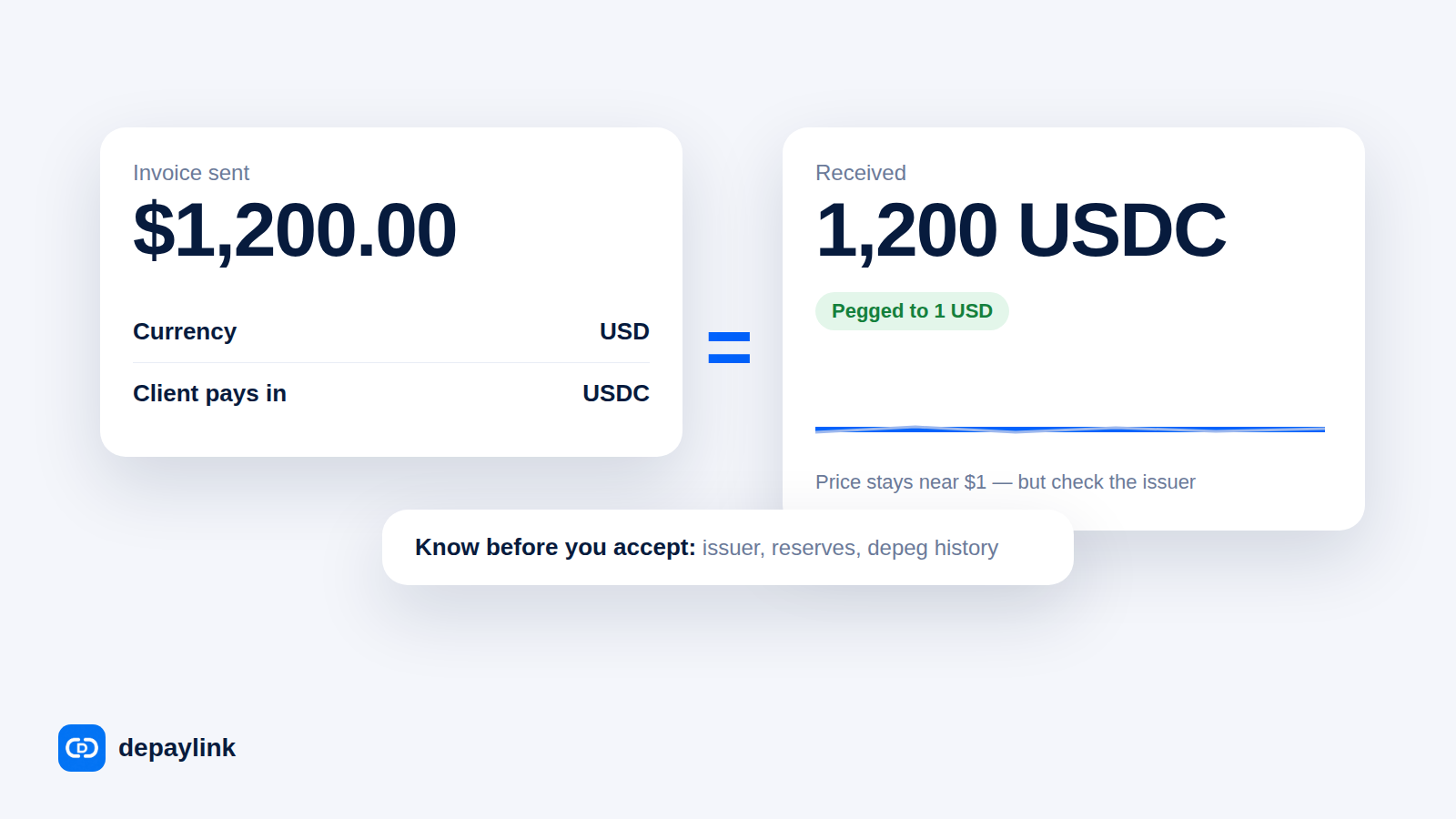
Stablecoin (e.g. USDC) | Priced like a dollar, so the invoice amount stays predictable | Make sure the customer sends on the network you expect |
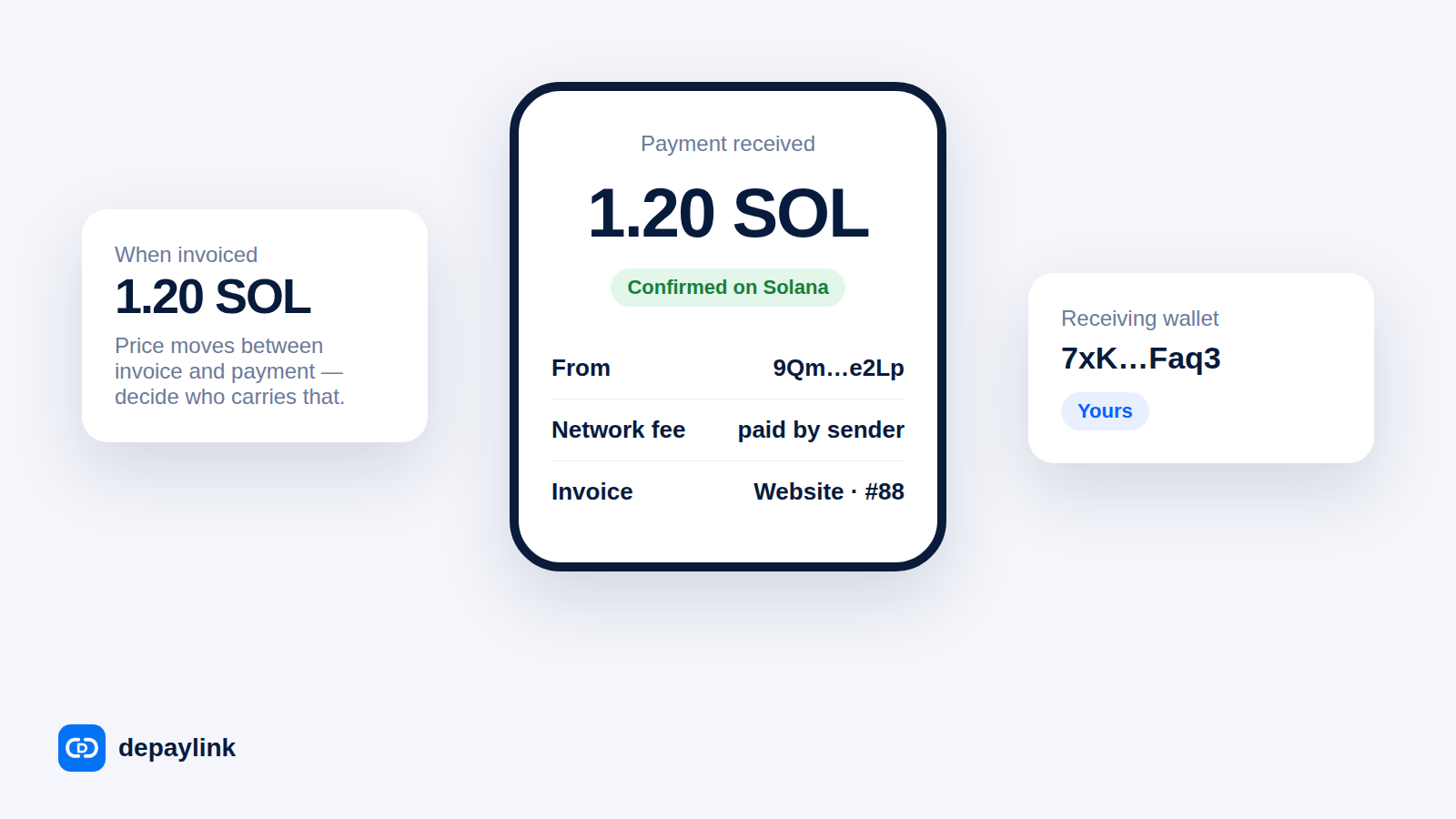
SOL | Customers who already hold it can pay instantly | The value of SOL moves, so decide how you'll handle that |
If you quote prices in dollars, a stablecoin is usually the easier starting point.
A practical setup in five steps
Set up a wallet you control and back up the seed phrase offline.
Decide what you accept and what network it's on. Keep it to one or two options.
Create a payment request for each sale with the exact amount, preferably as a payment link.
Verify on-chain before delivering the product or service.
Keep records. Note the date, amount, currency and transaction ID for every payment.
Mistakes to avoid on day one
Pasting a wallet address by hand. Use a link or QR code so nobody has to copy a long string.
Accepting the wrong network. The same token can exist on several networks. Tell customers exactly which one you use.
Treating volatility as a surprise. If you accept a volatile asset, decide in advance whether you convert it or hold it.
Skipping records. Many jurisdictions treat crypto received for goods or services as income. Keep clean records and talk to an accountant. This article is general information, not tax or legal advice.
Promising refunds like a card processor. Crypto transfers are final. A refund is a new payment you send, so write that into your terms.
Where a payment-link tool fits
You can assemble all of this yourself, but each piece takes time to maintain. A payment-link product handles the repetitive parts.
With depaylink, you create a payment link, share it with your customer, and they pay in SOL or USDC on Solana. The payment goes directly to your own wallet because depaylink is non-custodial, and the payment is verified on-chain. You don't need to build a crypto checkout yourself.
Whether you use a tool or do it manually, the three pieces stay the same: a wallet, a clear request, and proof of payment.
FAQ
Do I need a website to accept crypto payments? No. A shareable payment link, sent by email, chat or message, lets you collect payment with no website or custom checkout.
Which cryptocurrency should I accept first? Start with one. A stablecoin such as USDC keeps the amount predictable; SOL works if your customers already hold it. You can add more later.
Can a crypto payment be reversed? Not by a bank-style chargeback. Blockchain transfers are final once confirmed, so any refund is a new payment you send yourself.
Do I have to pay tax on crypto I receive? In many places, crypto received for goods or services counts as income. Rules vary by country, so check with a local accountant.