How to Accept USDC Payments: What to Check Before Your First One
To accept USDC payments, you need a wallet that supports USDC on a specific network, a way to tell your customer exactly where and how to pay, and a way to confirm the payment arrived. The step people most often get wrong is the second one, because USDC exists on more than one network.
What USDC is, in one paragraph
USDC is a stablecoin: a crypto token designed to track the value of one US dollar. That's why businesses like it for payments. If you invoice for $500, you aim to receive about $500 worth, rather than an amount that swings with the market. It is still a crypto token, not a bank account, and no stablecoin is entirely free of risk, so it's sensible to understand who issues it and how you plan to hold it.
The detail that causes most mistakes: the network
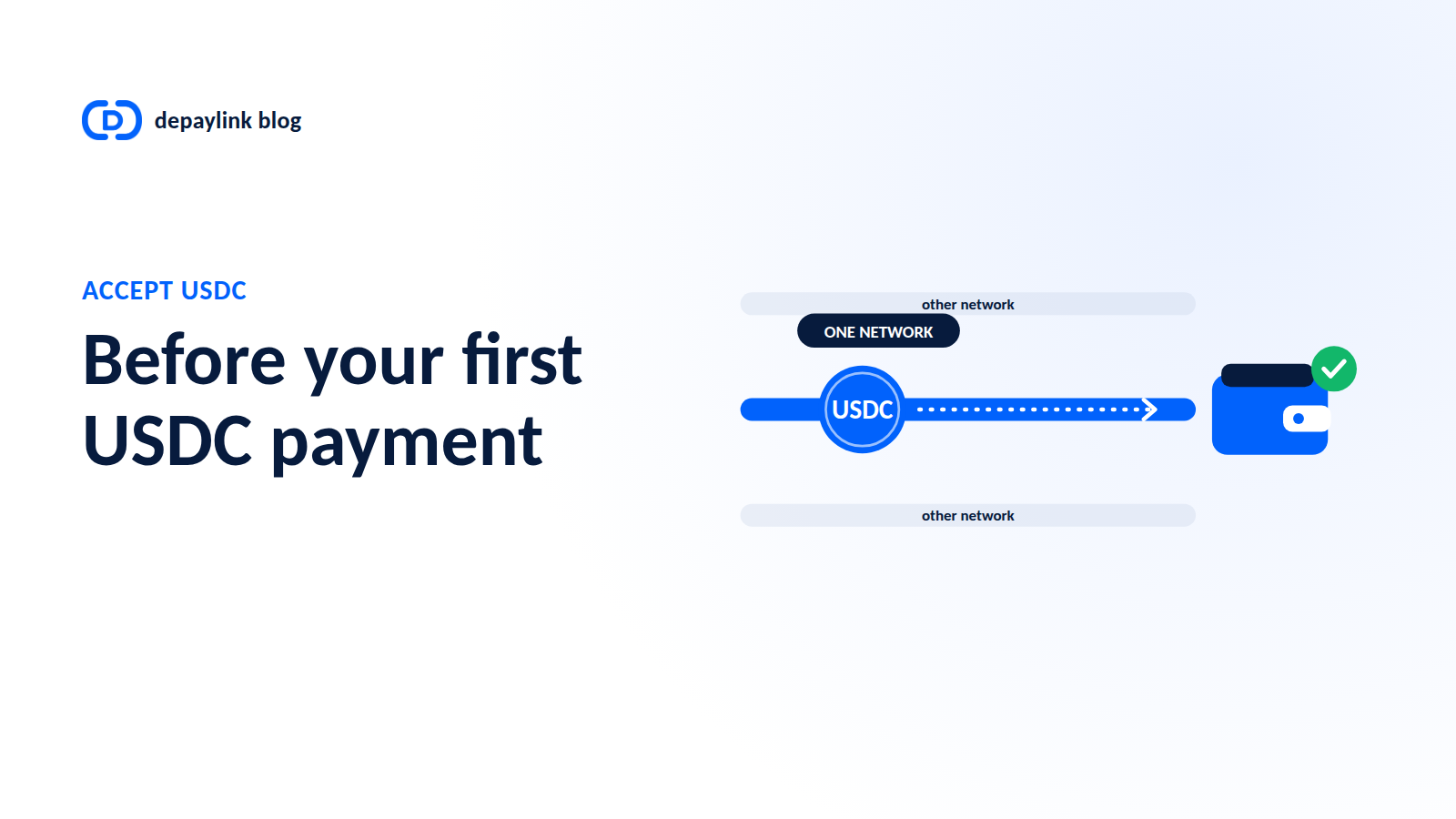
"USDC" isn't a single pipe. The same token can live on several blockchains, and each network has its own addresses and rules. A payment sent on a network your wallet doesn't support might not show up, and recovering it can be difficult or impossible.
So before anyone pays, decide on one network and say so clearly:
"Please pay in USDC on Solana."
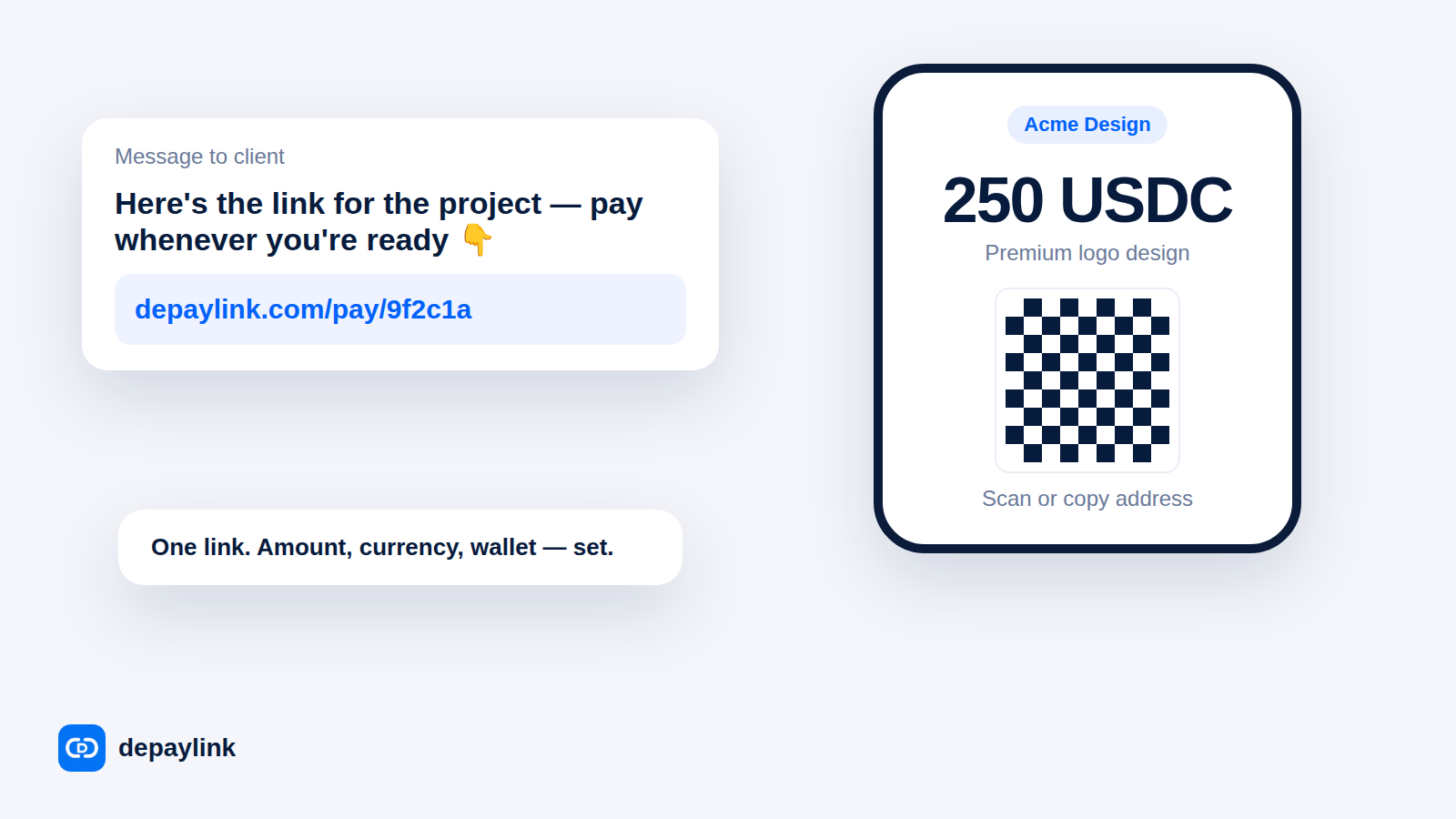
Or avoid the question entirely by sending a payment link that already specifies the network and currency.
A checklist before your first USDC payment
Pick the network. If your customers are comfortable with fast, low-fee transfers, Solana is a common choice.
Use a wallet you control. Back up the seed phrase offline.
Do a small test. Send a tiny amount from another wallet to confirm it arrives where you expect.
Give unambiguous instructions. Amount, currency, network, and destination, in one message.
Verify on-chain. Check the amount and token, not just a screenshot from the customer.
Record it. Date, amount, and transaction ID.
What your customer needs
For a customer to pay in USDC, they need:
A wallet holding USDC on the same network you've chosen.
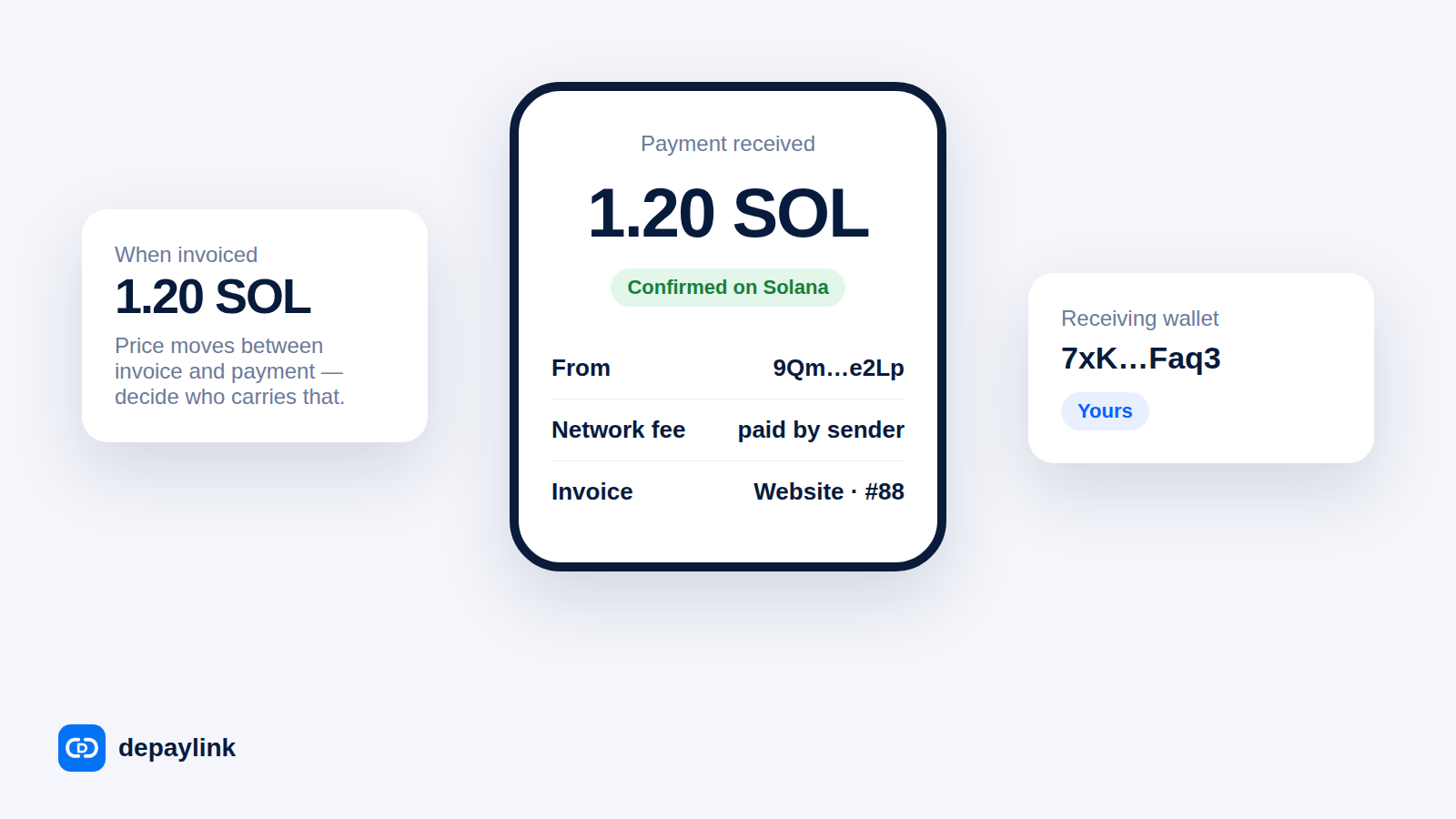
A small amount of the network's native token to cover fees. On Solana, fees are paid in SOL.
If the customer is new to crypto, the second point is the one that surprises them. Tell them up front, so the payment doesn't stall at the last step.
Pricing in dollars, getting paid in USDC
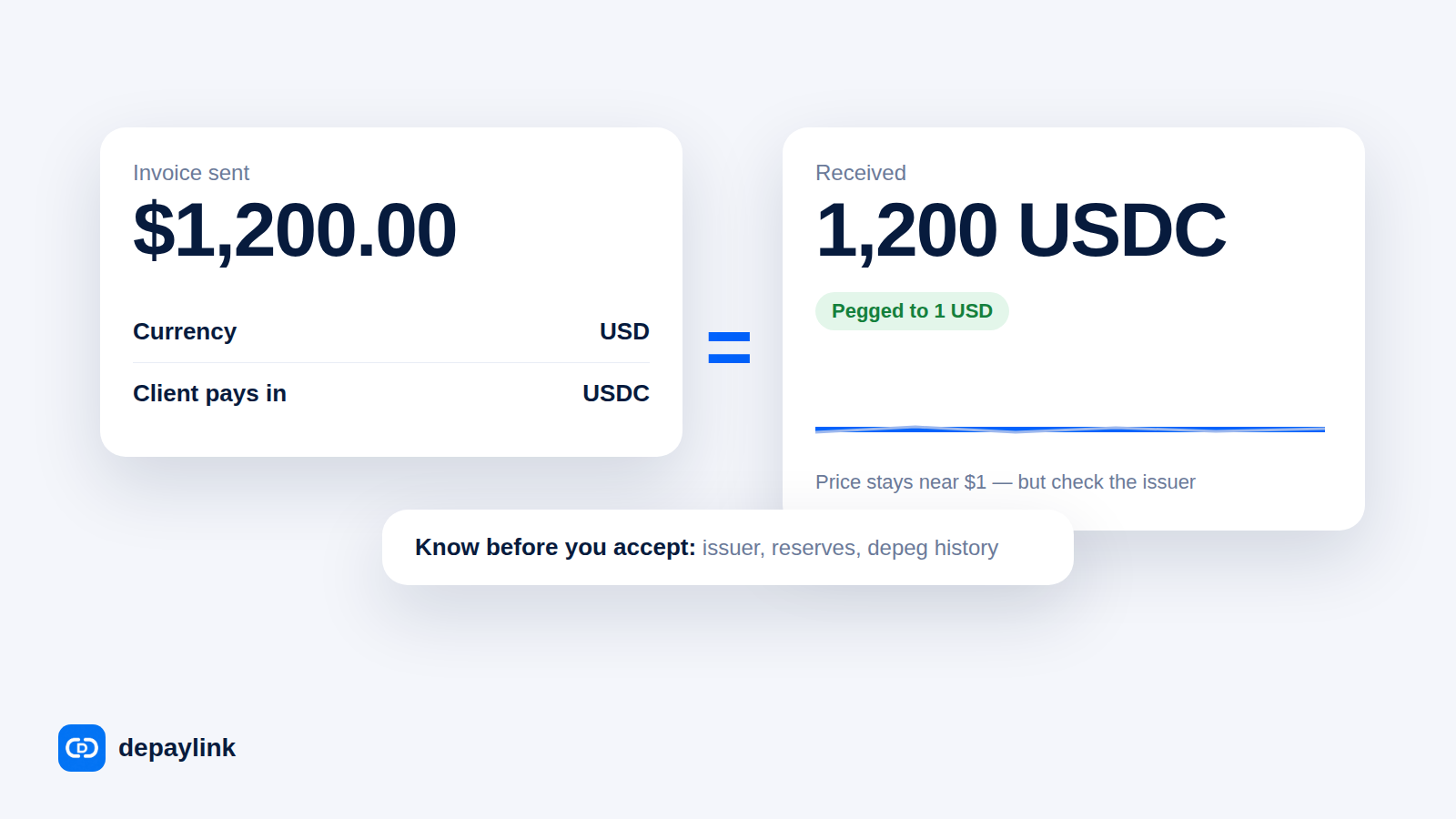
This is where USDC shines. Because it targets a dollar value, you can quote in dollars, accept USDC, and keep your bookkeeping simple. With a volatile asset, you'd need to decide how to convert the price at the moment of payment.
That doesn't remove all considerations. Think about:
How you'll hold it. Keep it as USDC, or convert it to local currency when you need to.
Fees when converting. Moving between crypto and local currency usually involves a third-party service with its own costs. Check them before you rely on them.
Taxes. Many jurisdictions treat crypto received for work or goods as income. This is general information, not tax advice; check local rules.
Where a payment link helps
The network mistake and the "which address?" mistake both disappear when the payment details are fixed in a link.
With depaylink, you create a payment link, share it with your customer, and they pay in USDC (or SOL) on Solana. The payment goes directly to your own wallet since depaylink is non-custodial, and it's verified on-chain. You don't have to explain networks in an email thread or double-check addresses by eye.
The checklist above still applies whichever way you collect: choose one network, give clear instructions, verify, record.
FAQ
Is USDC the same as a US dollar? USDC is a stablecoin designed to track the value of one US dollar. It is a crypto token, not a bank deposit, and no stablecoin is risk-free.
What happens if a customer sends USDC on the wrong network? Funds sent on a network your wallet address doesn't support can be hard or impossible to recover. Always state the network clearly or use a link that fixes it for them.
Do I need SOL to receive USDC on Solana? Receiving doesn't require you to send anything, but the sender pays network fees in SOL. If you later move USDC out of your wallet, you'll need a small amount of SOL for fees.
Can I price my services in dollars and get paid in USDC? Yes. That's one of the main reasons people use it: the amount on the invoice and the amount received stay aligned.