What Is a Crypto Payment Link and How Does It Work?
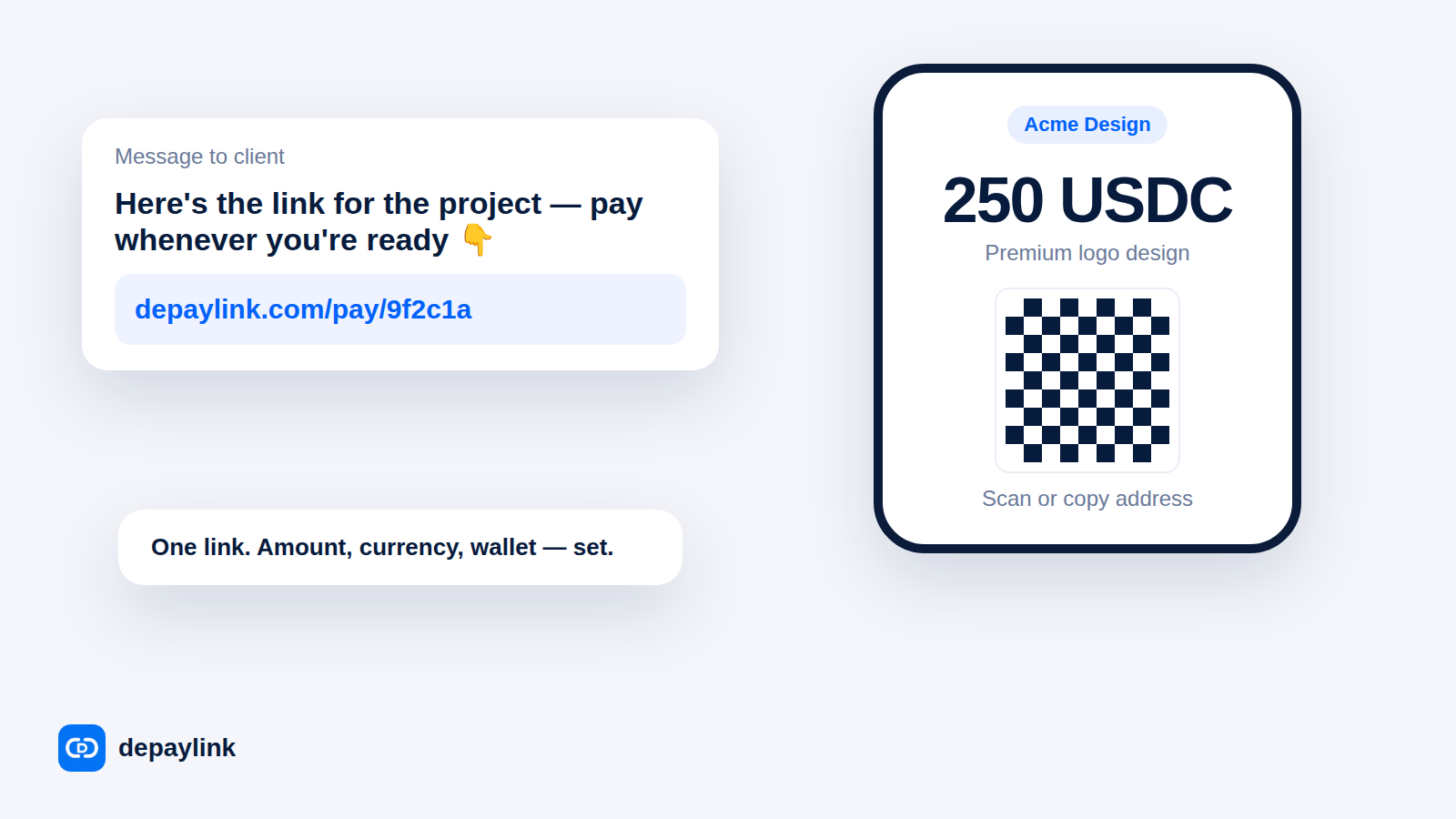
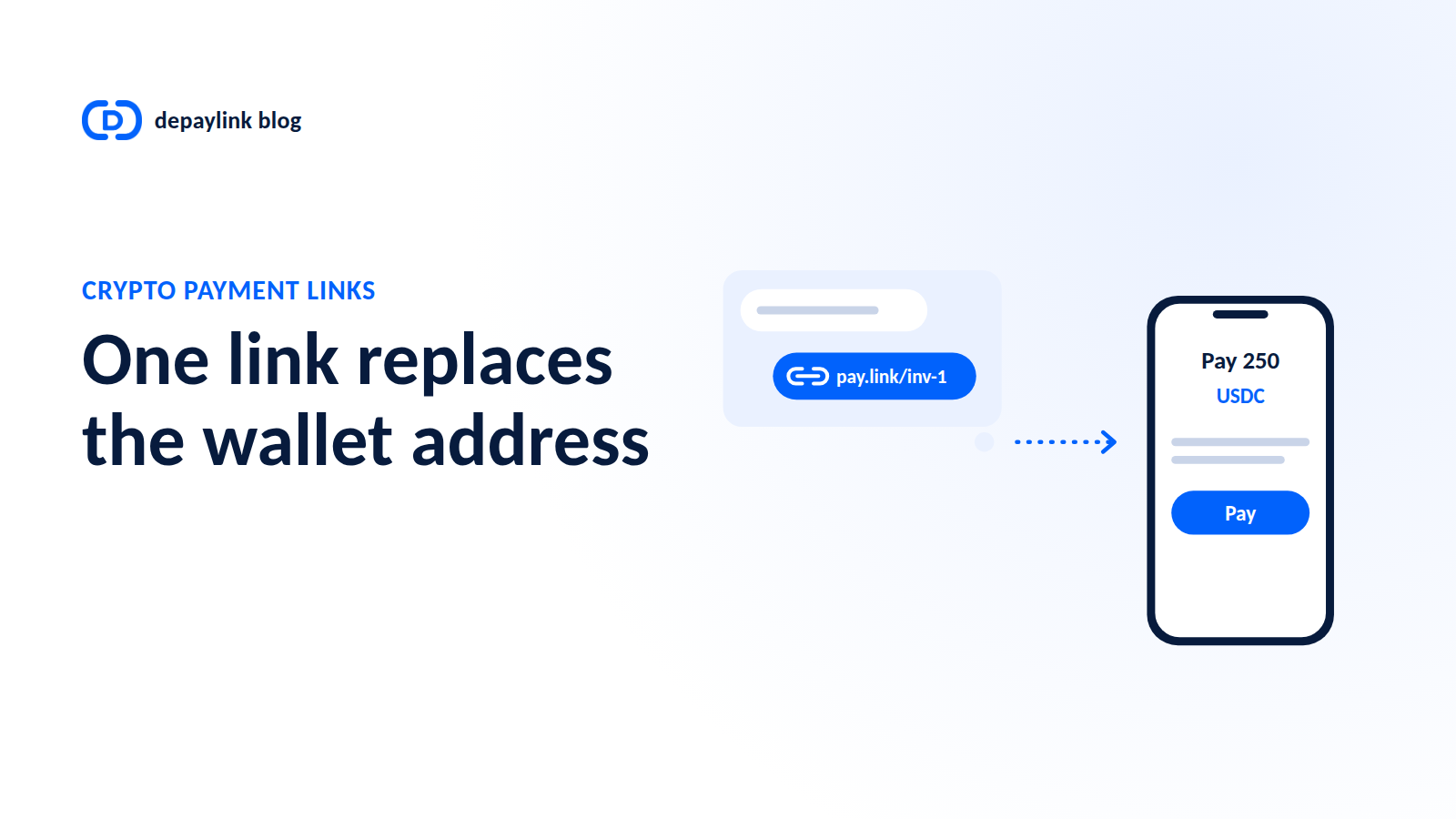
A crypto payment link is a URL that contains everything a customer needs to pay you: the amount, the currency and the destination. Instead of sending a wallet address and hoping it gets copied correctly, you send one link, and the customer opens it and pays.
The problem it solves
The manual way to request crypto looks like this:
You message your wallet address.
The customer asks which network.
You explain.
They copy the address, maybe mistype it, and send.
You check an explorer to confirm.
Every step is a chance for something to go wrong, and blockchain transfers can't be reversed. A payment link compresses that conversation into one action.
How a payment link works
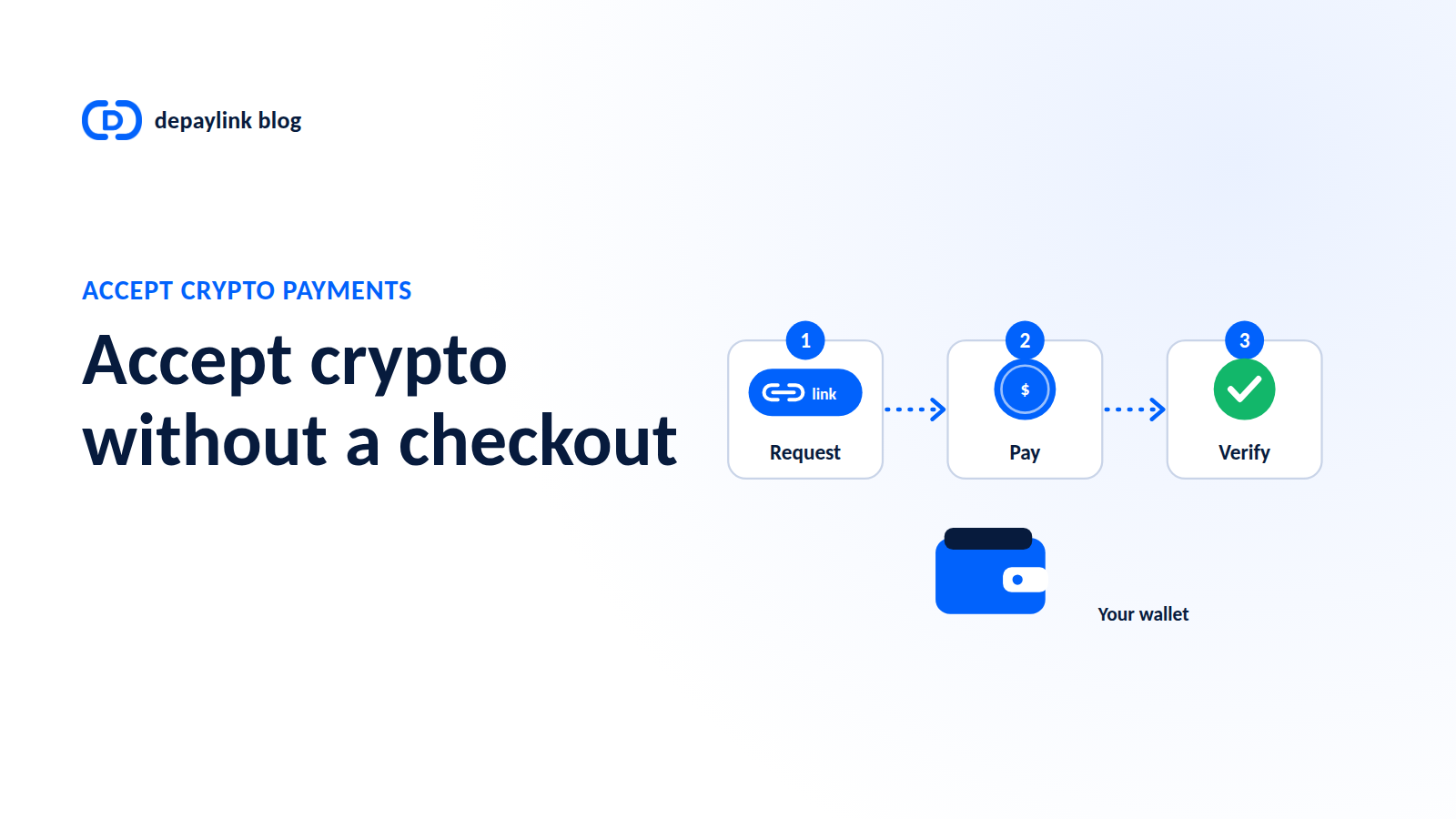
You create the link. You set the amount and the currency you want.
You share it. Email, chat, DM, a text message, or a QR code.
The customer opens it and sees what they're paying for.
They approve the payment from their wallet.
The funds go to your wallet, and the payment is verified.
The details of steps 4 and 5 depend on the provider. The key question to ask of any provider is: where does the money go?
Custodial vs non-custodial links
Custodial | Non-custodial | |
|---|---|---|
Who holds funds first | The provider | You, in your own wallet |
Payout step | Usually a withdrawal | None; it arrives directly |
Main trade-off | Convenience of an account | You manage your own wallet security |
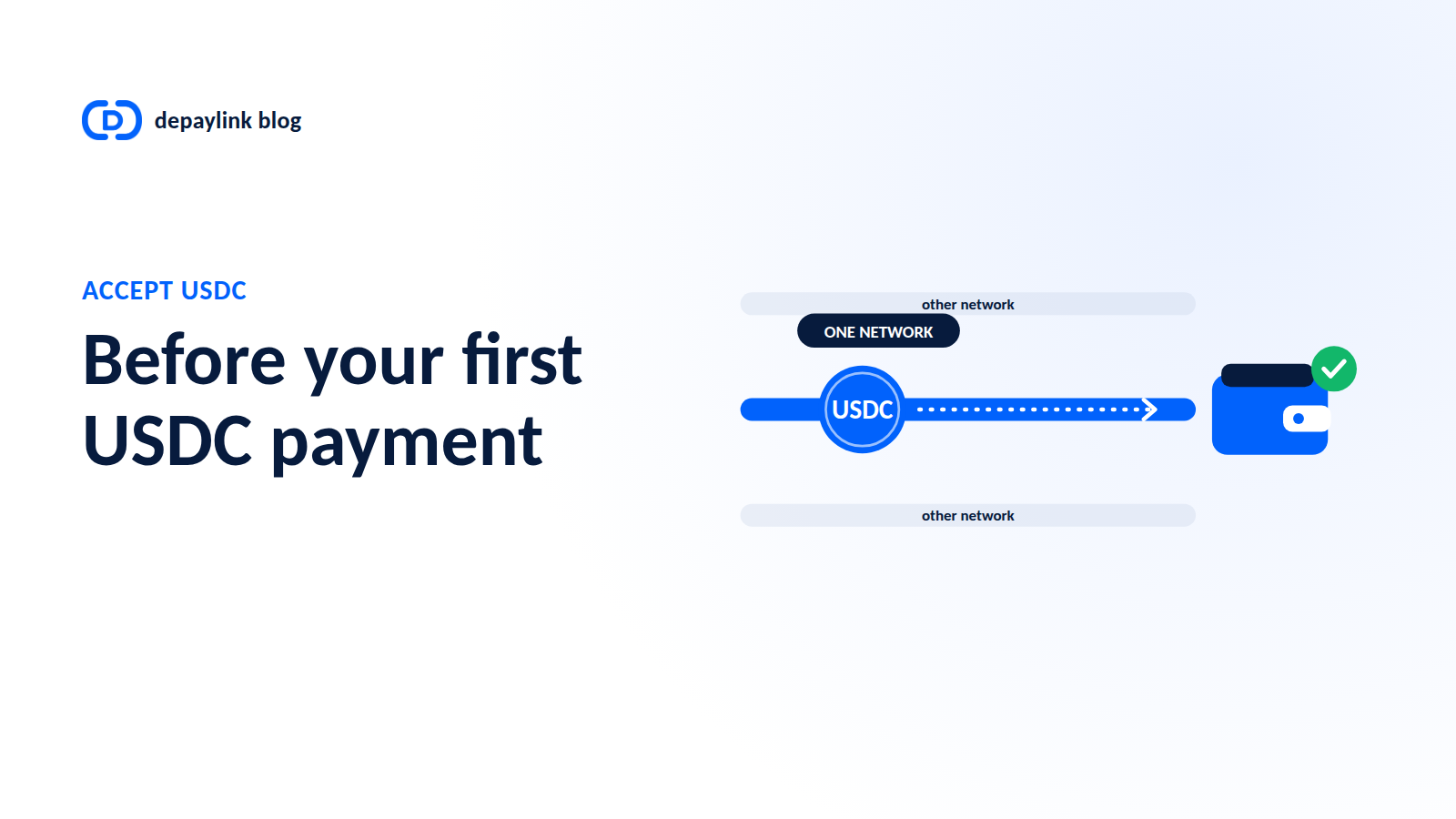
depaylink is non-custodial: the customer pays in SOL or USDC on Solana, and the payment goes to your own wallet.
When a payment link makes sense
Freelance and client work. Send a link with the invoice or the project confirmation.
Selling something simple. One product, one price, no need for a full store.
Chat-based sales. Customers who buy through DMs or messaging apps.
Occasional crypto payments. You don't want to build a crypto checkout for a handful of sales.
When it may not be enough
If you run a large store with a cart, inventory and automated order fulfilment, you may eventually want deeper integration. A payment link is the lightest way to start, not necessarily the last step.
What to check before using one
Which currencies and network are supported? (For depaylink: SOL and USDC on Solana.)
Where does the payment go?
How is it verified? On-chain verification is the strongest answer.
What does your customer see? Try it yourself first.
How will you record it? Keep the transaction ID with the order.
The short version
A payment link is a wrapper around a payment request. It doesn't change how crypto works; it removes the copy-and-paste friction around it. If your customers can open a link, they can pay.
FAQ
Do I need a website to use a payment link? No. That's the main advantage. You can share the link by email, chat, DM or text, and the customer pays from it.
Is a payment link the same as an invoice? Not exactly. An invoice is a document requesting payment. A payment link is the mechanism for paying. You can attach a link to an invoice or send it on its own.
Does the money pass through the link provider? That depends on the provider. With depaylink, which is non-custodial, the payment goes directly to the merchant's own wallet.
Can I reuse one link for many customers? It depends on how the link is configured. For a fixed-price product it can work; for custom work, a separate link per payment makes verification clearer.