Crypto Payments Glossary: 25 Terms Every Merchant Should Know
Crypto payments come with their own vocabulary, and a few misunderstood words cause most early mistakes. This glossary explains the terms merchants and freelancers meet first, in plain language, with a note on why each one matters when you take a payment. The examples use Solana and USDC, but most terms apply to any network.
Wallets and keys
Wallet. Software or hardware that holds the keys controlling funds and lets you send and receive. Why it matters: whoever holds the keys controls the money.
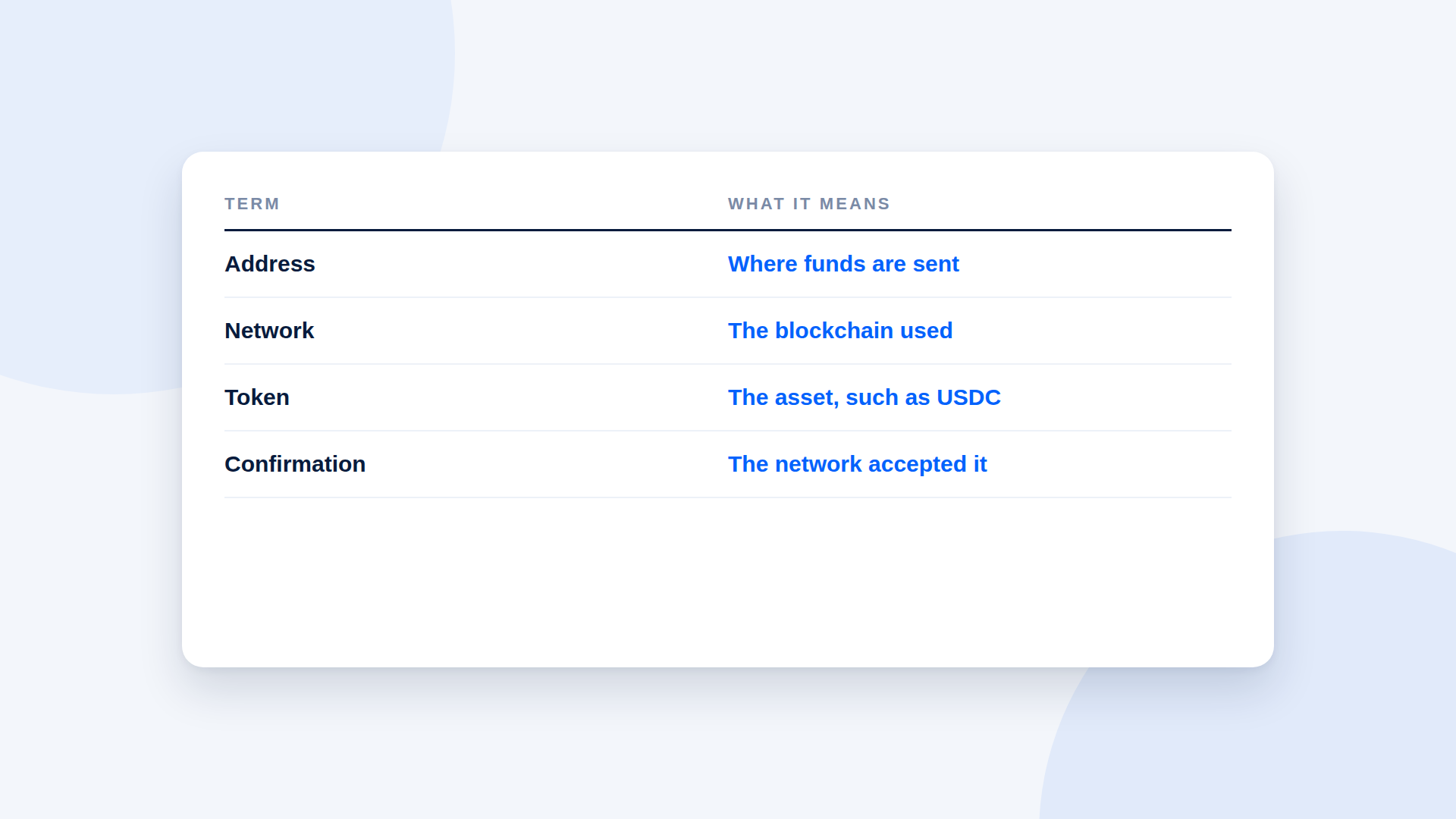
Wallet address. A public string that identifies where funds should be sent, like an account number. Why it matters: it is safe to share; it lets people pay you, not take funds.
Private key. The secret that authorises transfers from a wallet. Why it matters: never share it.
Recovery phrase (seed phrase). A list of words that can restore a wallet and everything in it. Why it matters: write it down offline; no genuine service will ask for it.
Self-custody (non-custodial) wallet. A wallet where you hold the keys, not a company. Why it matters: nobody can freeze it, and nobody can recover it for you.
Custodial account. An account where a company, such as an exchange, holds the assets for you. Why it matters: easy to use, but you depend on the provider.
Networks and assets
Blockchain / network. The shared ledger that records transfers, such as Solana. Why it matters: the same token can exist on several networks, and funds sent on the wrong one may be lost.
Token. An asset that lives on a network, such as USDC. Why it matters: check you received the real token, not a lookalike.
Native token. The network's own asset, used to pay fees. On Solana it is SOL. Why it matters: payers need it even when they send USDC.
Stablecoin. A token designed to track a currency such as the US dollar. Why it matters: steadier prices, but not risk-free.
USDC. A dollar-pegged stablecoin issued by Circle, available on several networks, including Solana. Why it matters: always say "USDC on Solana".
SPL token. The standard Solana uses for tokens other than SOL, including USDC on Solana. Why it matters: you may see the term in wallets and explorers.
Peg / depeg. The target value of a stablecoin and the event of it drifting away. Why it matters: a stablecoin can briefly trade below its target.
Transactions
Transaction. The signed instruction to move funds from one address to another. Why it matters: every payment is one.
Transaction signature (ID). A unique identifier you can use to look a transaction up. Why it matters: keep it with the order.
Network fee. A fee paid to the network to process a transaction, usually by the sender. Why it matters: it is separate from any tool's fee.
Confirmation. The network's acceptance of a transaction. Solana reports levels such as processed, confirmed and finalized. Why it matters: deliver after confirmation, not after "sent".
Block explorer. A website for looking up transactions and addresses. Why it matters: an independent way to check a payment.
Irreversibility. Completed transfers cannot be recalled by a processor. Why it matters: verify before you deliver, and write a refund policy.
Payment tools
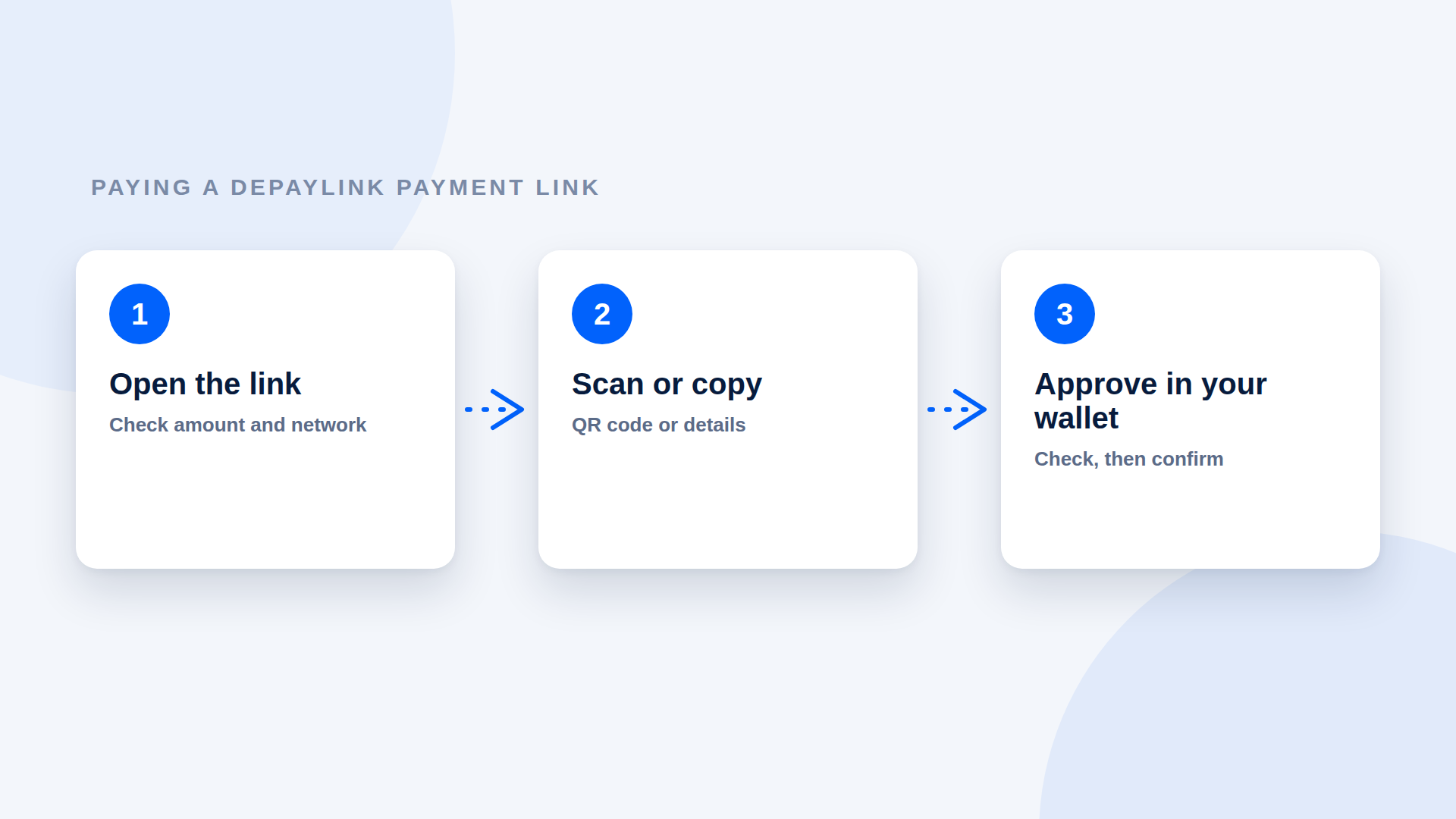
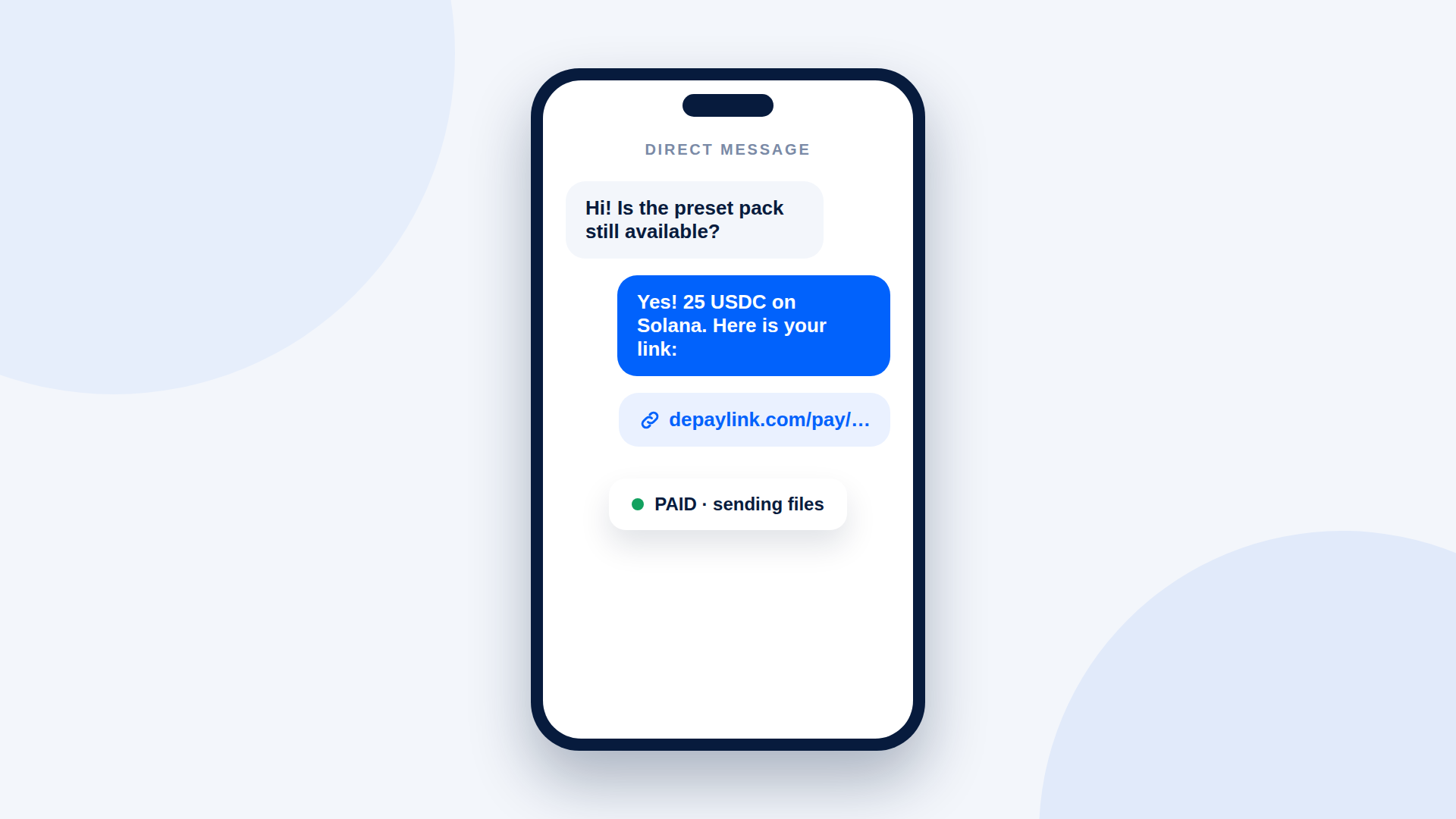
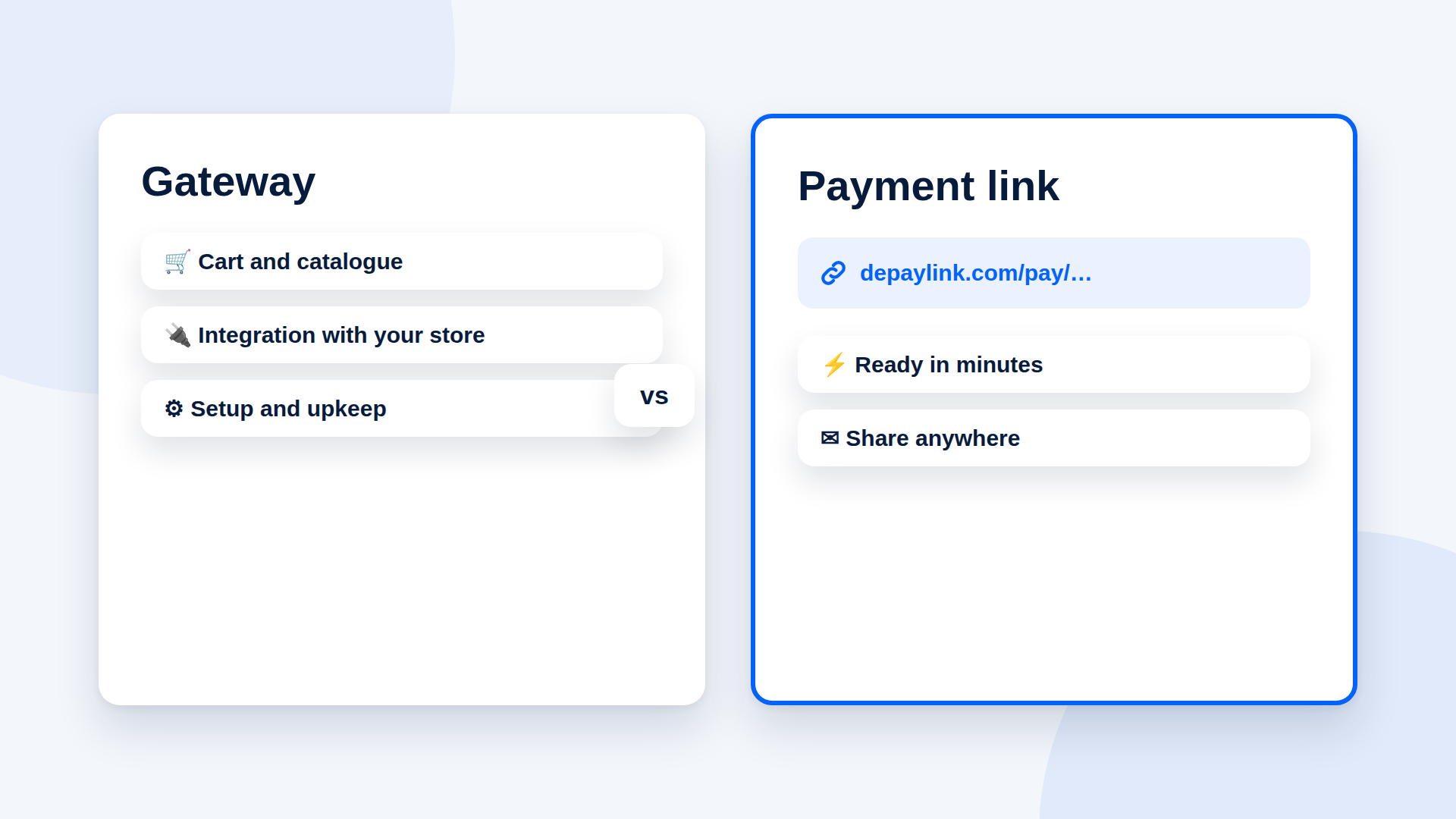
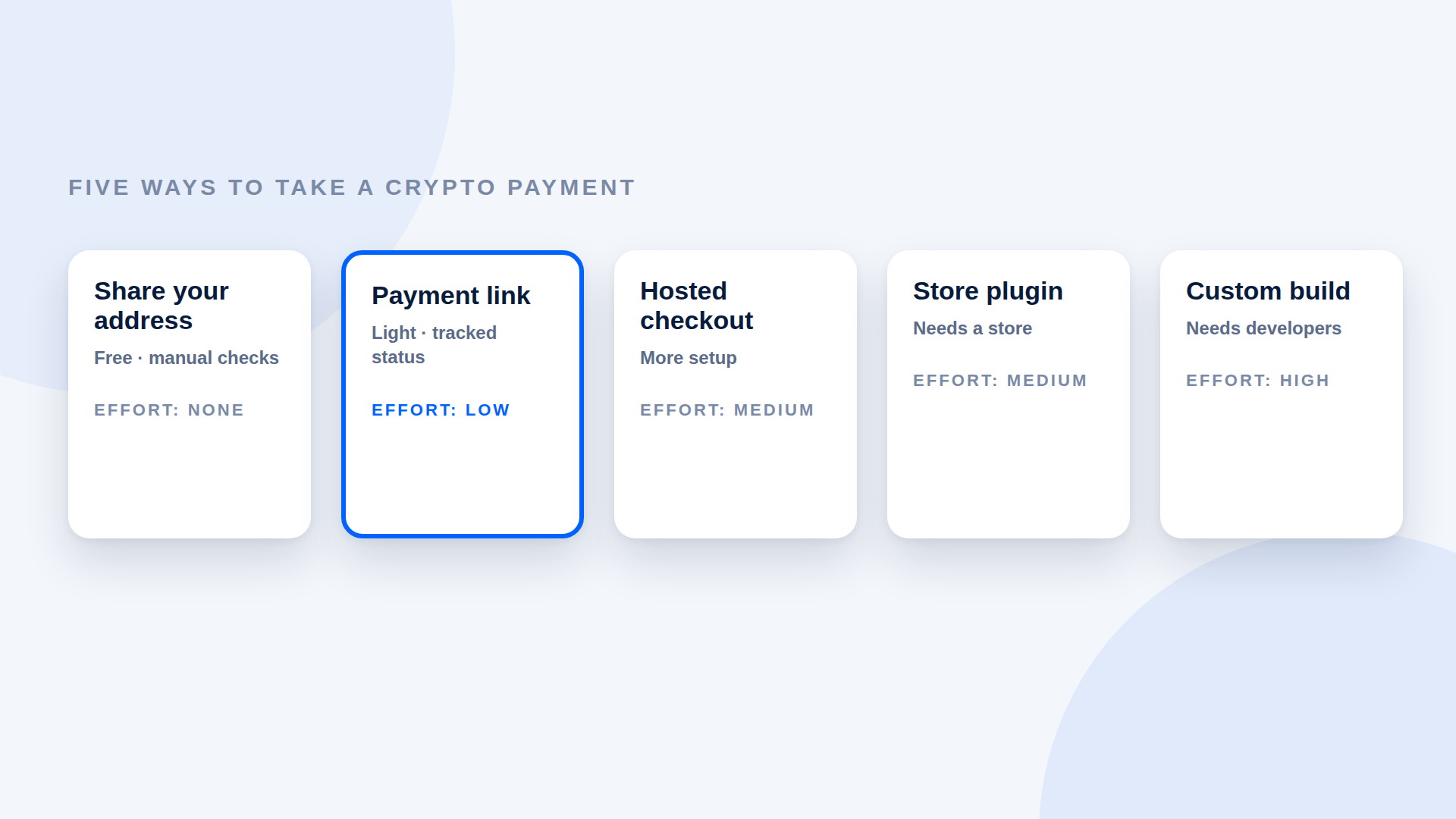
Payment link. A URL that carries an amount, asset and destination so the payer can pay. Why it matters: it replaces copying an address by hand.
Payment gateway / processor. A service that helps merchants accept payments, sometimes holding funds. Why it matters: check custody and fees.
Verification. Checking that a payment's amount, asset and destination match the request. Why it matters: it separates a real payment from a fake screenshot.
KYC / KYB. Identity checks on individuals or businesses, required by some providers. Why it matters: it affects how quickly you can start.
Money in and out
On-ramp / off-ramp. Services that convert local currency into crypto (on) or crypto into local currency (off). Why it matters: the off-ramp is how most freelancers reach their bank.
Spread. The gap between the quoted exchange rate and the market rate. Why it matters: a hidden cost in conversion.
How to use this glossary
Keep three terms in mind first: network, confirmation and recovery phrase. Mistakes with those three cause most losses. If a customer uses a term you do not know, check it before you reply.
Where depaylink fits
depaylink creates SOL and USDC payment links on Solana. Funds go straight to the wallet address you enter, customers do not need an account, and each payment is checked on-chain, amount, asset and destination, before it is marked as paid. Network fees may apply, and depaylink does not take a percentage of your payments.
FAQ
What is the most important term for merchants? Network. Naming it on every request prevents most wrong-chain payments.
What is the difference between an address and a recovery phrase? The address is public and safe to share; the recovery phrase controls the wallet and must never be shared.
Do I need to learn all of these? No. Start with wallet, network, token, confirmation and verification.
How to Pay a Crypto Payment Link: A Step-by-Step Guide for CustomersHow to Accept Crypto Payments From Instagram and Social Media CustomersCrypto Payment Gateway vs Payment Link: Which Do You Need?