A small business can accept crypto with a wallet, a way to show customers what to pay, a process for confirming payment, and a plan for refunds and records. You do not need a developer or a new point-of-sale system to start. You do need to make a few decisions first.
Start with the reason
Ask why you want to accept crypto. Good reasons are specific: customers have asked, you sell to international buyers, or you want a payment option with no card processor in the middle. "Everyone is doing it" is not a plan. A clear reason tells you how much effort is worth spending.
Decision 1: Which asset?
| Option | Why choose it | Watch out for |
|---|---|---|
| USDC (stablecoin) | Prices stay in dollars, simple accounting | Stablecoin risk; confirm your cash-out route |
| SOL | Customers who hold it can pay directly | Price swings between sale and cash-out |
Many small businesses start with one stablecoin on one network and add more later.
Decision 2: Which wallet?
Use a wallet you control, ideally separate from personal spending. Keep the recovery phrase offline and decide who in the business can access it. If more than one person handles payments, agree on a process before money moves.
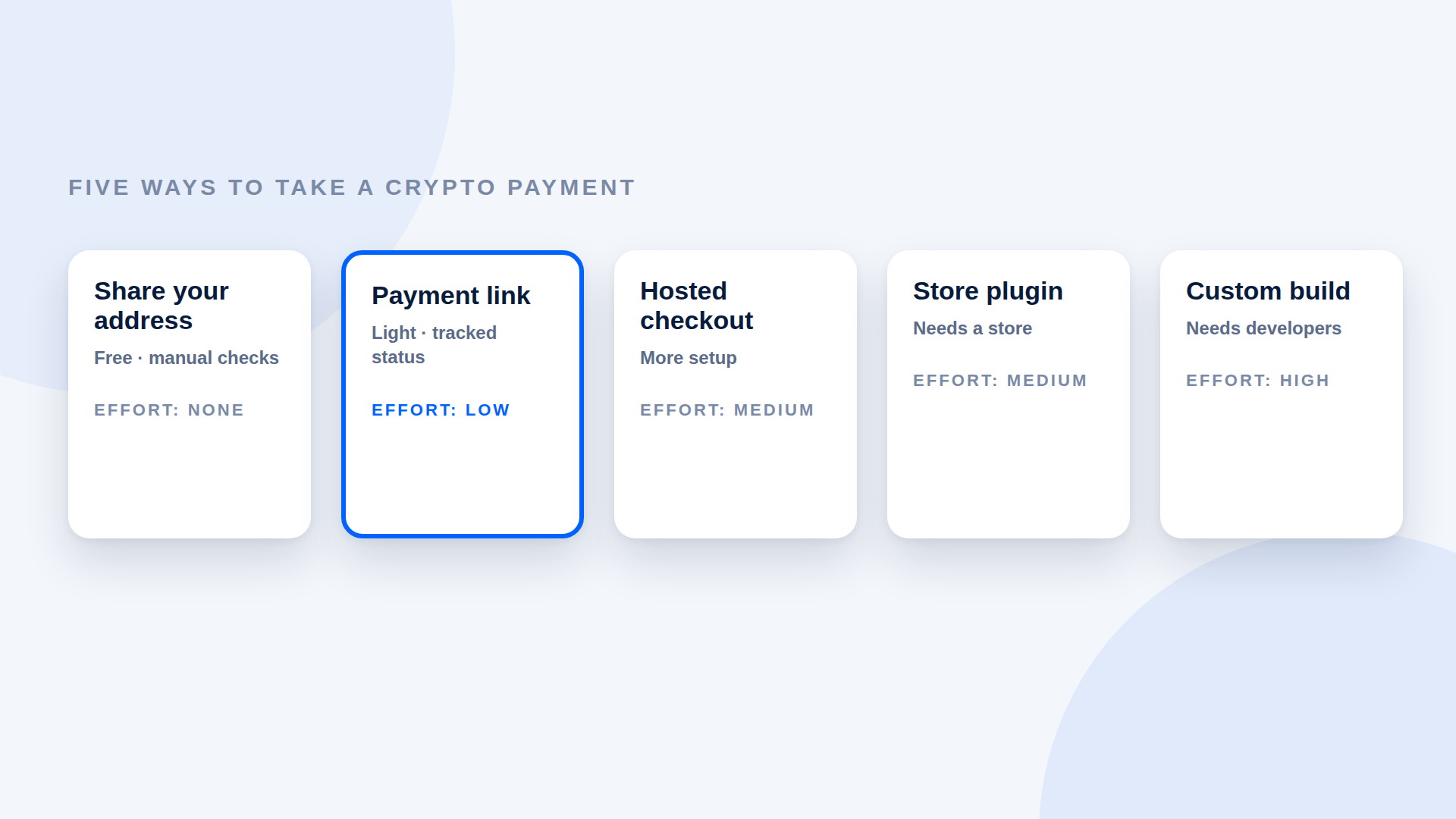
Decision 3: How will customers pay?
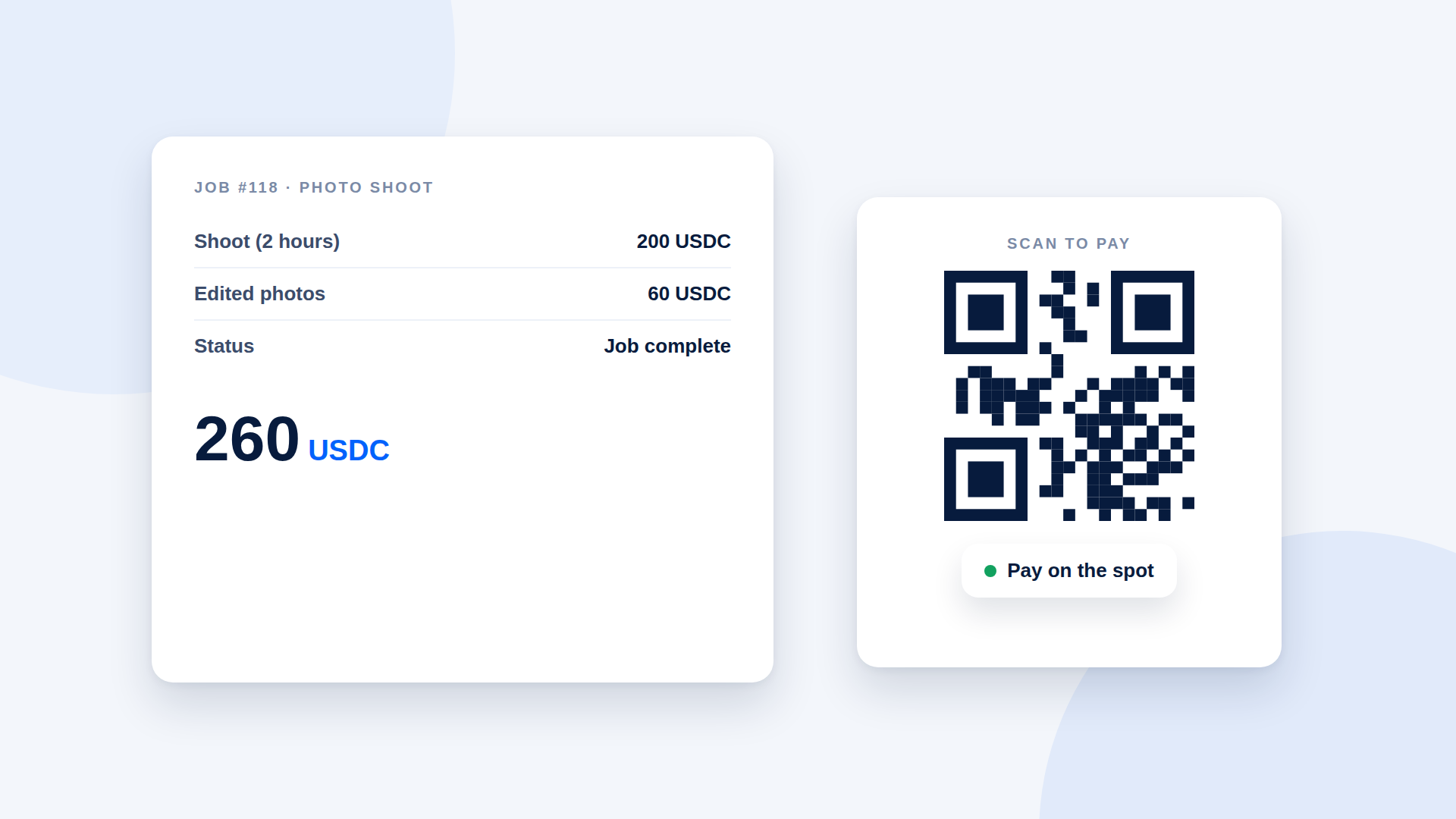
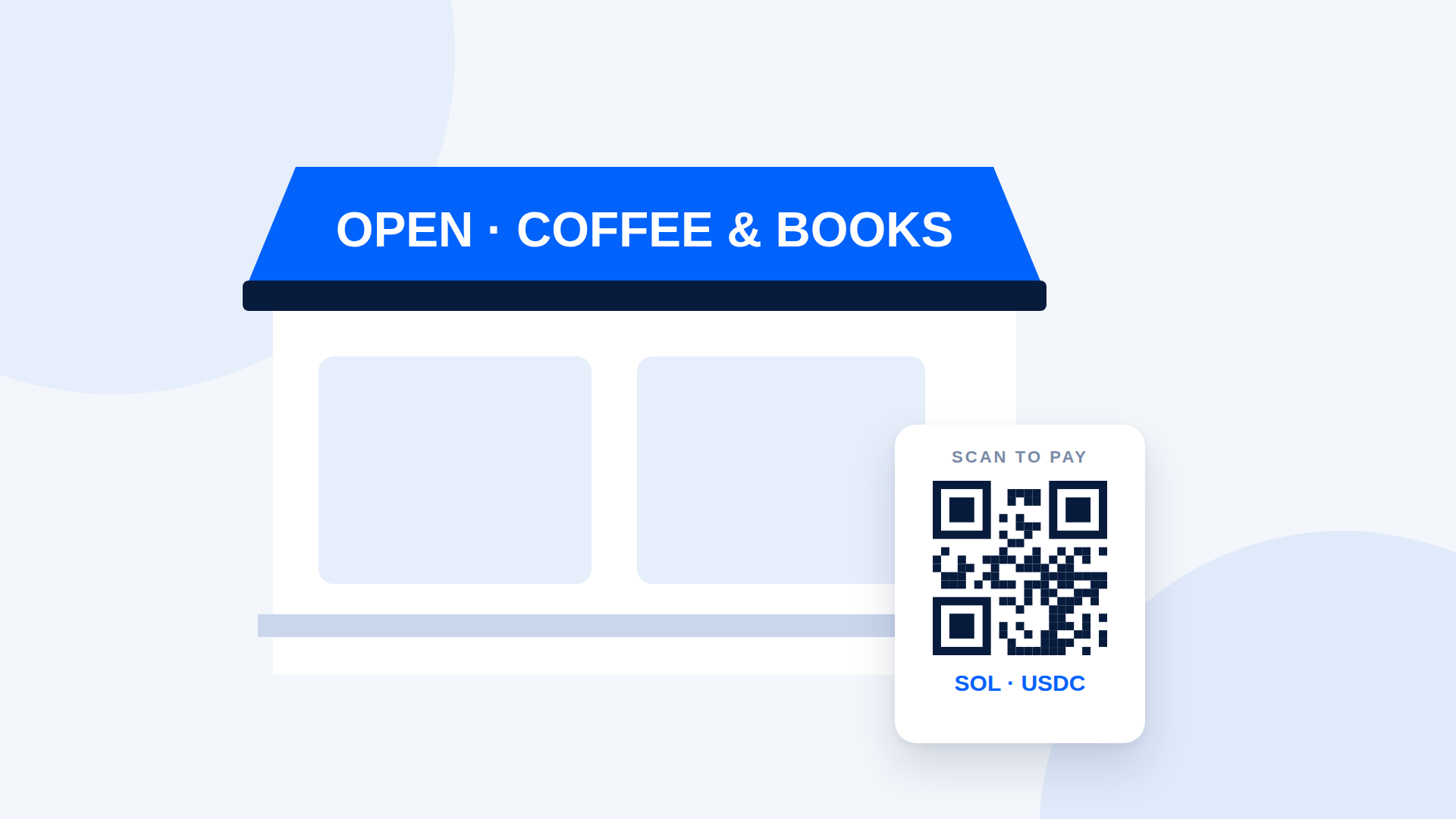
In person. Show a QR code at the counter that encodes the amount, or a link on a tablet. The customer scans, pays and shows you the confirmation.
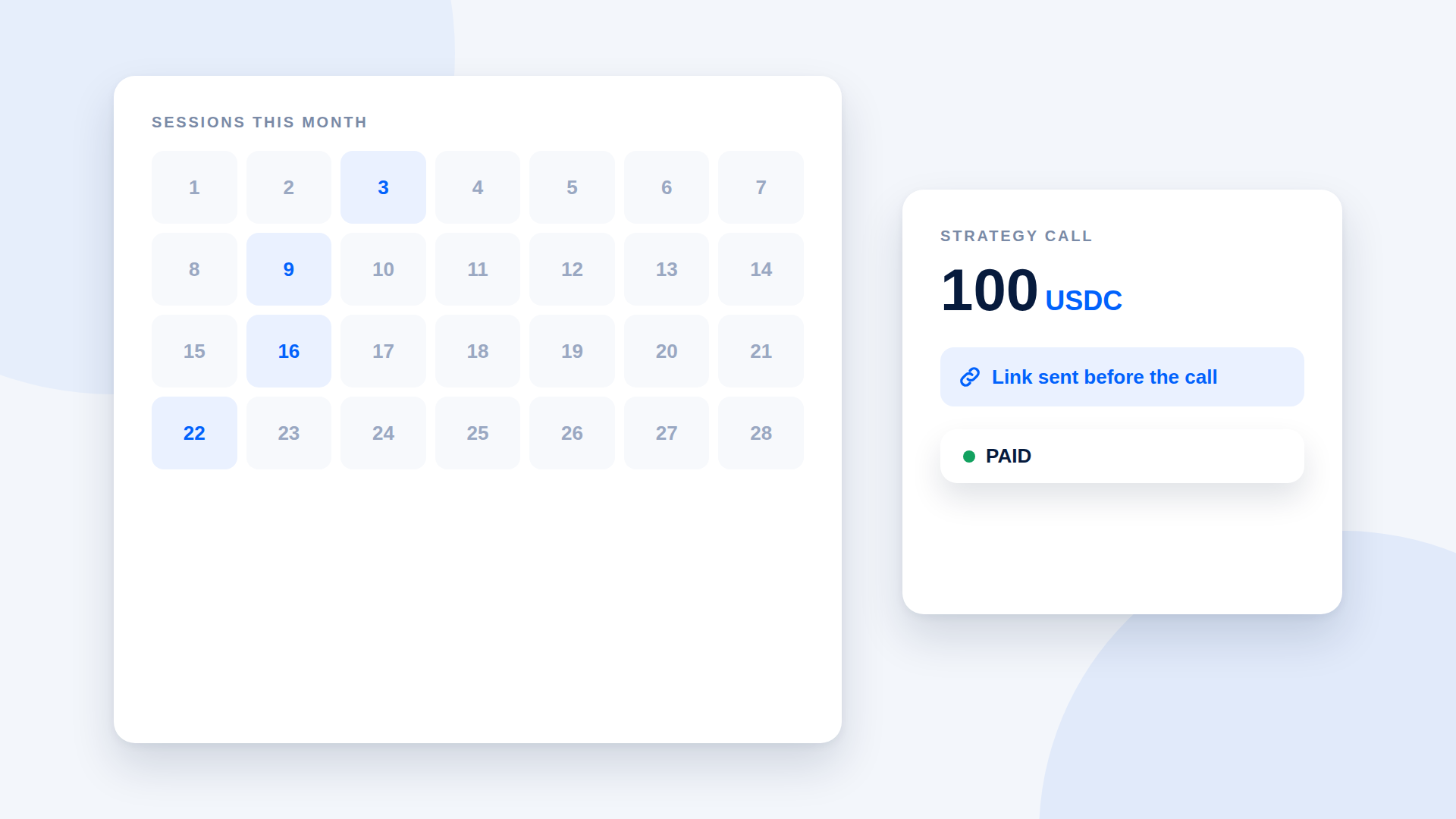
Online. Send a payment link by email or chat for a specific order.
For invoices. Put a link in the invoice so the payment instruction is one click.
A static QR code for your address cannot carry a different amount for each sale, so for in-person payments a tool that generates a request per sale is more reliable.
Decision 4: How will you confirm payment?
Never hand over goods on a customer's screenshot. Check that a transaction exists with the right amount, asset and destination. A payment tool that verifies on-chain does this for you, and you can also use a block explorer.
Decision 5: Refunds and disputes
Crypto payments cannot be reversed by a processor. Put a written refund policy where customers can see it, and handle refunds by sending a new payment. Decide in advance whether you refund in the same asset or at the original dollar value.
Decision 6: Records and tax
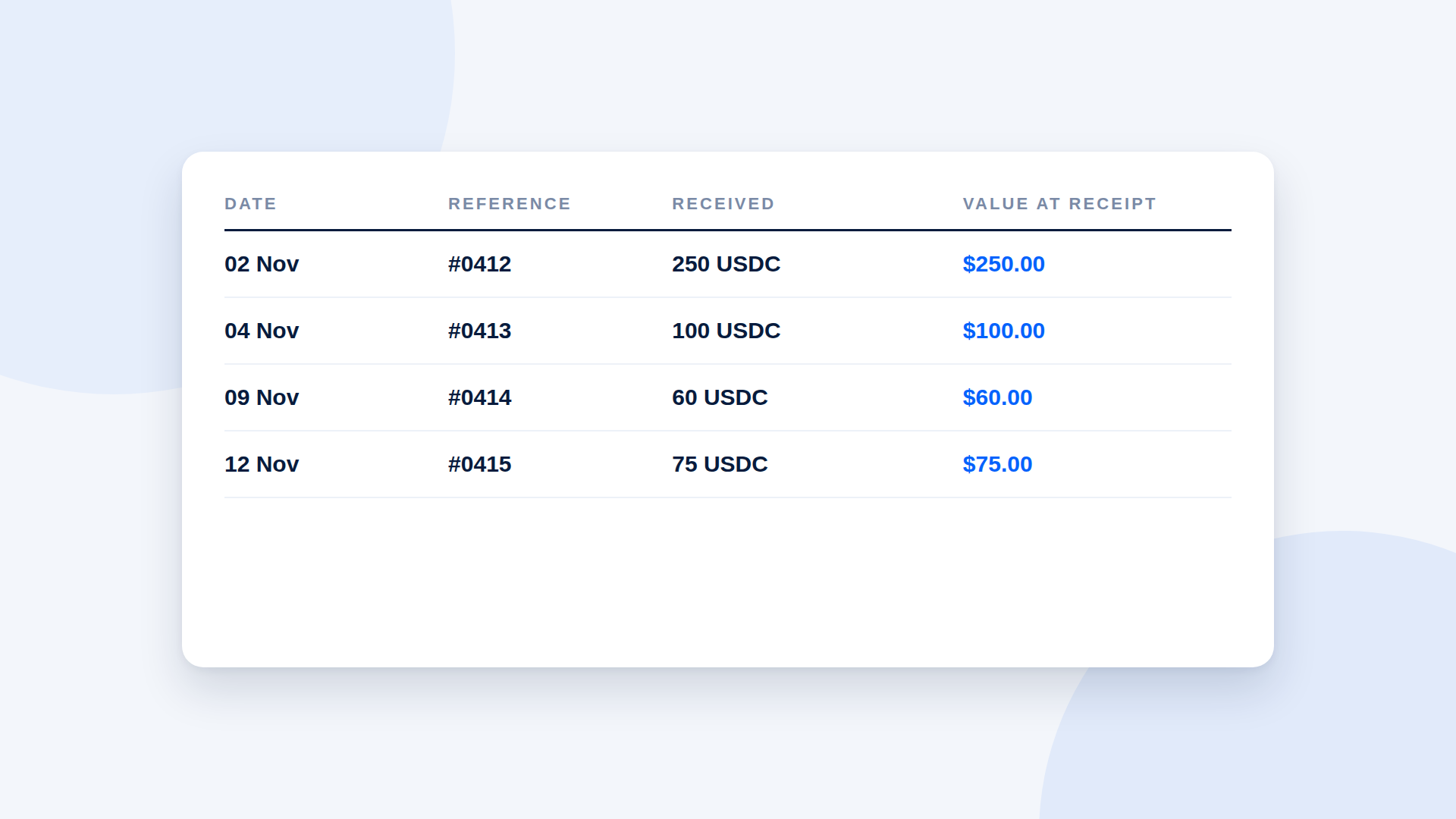
Record each sale: date, reference, amount in crypto and its value in your local currency at the time. Tax and accounting treatment differs by country and changes over time, so speak to a local accountant before you start.
A simple first-week plan
- Create a business wallet and back it up.
- Choose one asset and one network.
- Make a test payment to yourself for a small amount.
- Create your first payment link or QR code.
- Write a two-line refund policy.
- Take one real payment and record it.
Where DePayLink fits
DePayLink lets a small business create SOL and USDC payment links and QR codes on Solana without building a checkout. Funds go straight to your wallet, and DePayLink checks each payment on-chain before marking it as paid. Pro adds custom branding, custom payment pages and analytics.
Frequently asked questions
Do I need special equipment?
No. A phone or tablet showing a QR code or link is enough to start.
Will customers actually pay in crypto?
Some will, many will not. Treat it as an extra option, not a replacement for cards or cash.
Do I need to tell my accountant?
Yes. Crypto income needs to be recorded and reported according to local rules.
Is it safe to show a QR code in my shop?
Display a code you generated yourself and check it periodically so nobody replaces it with their own.