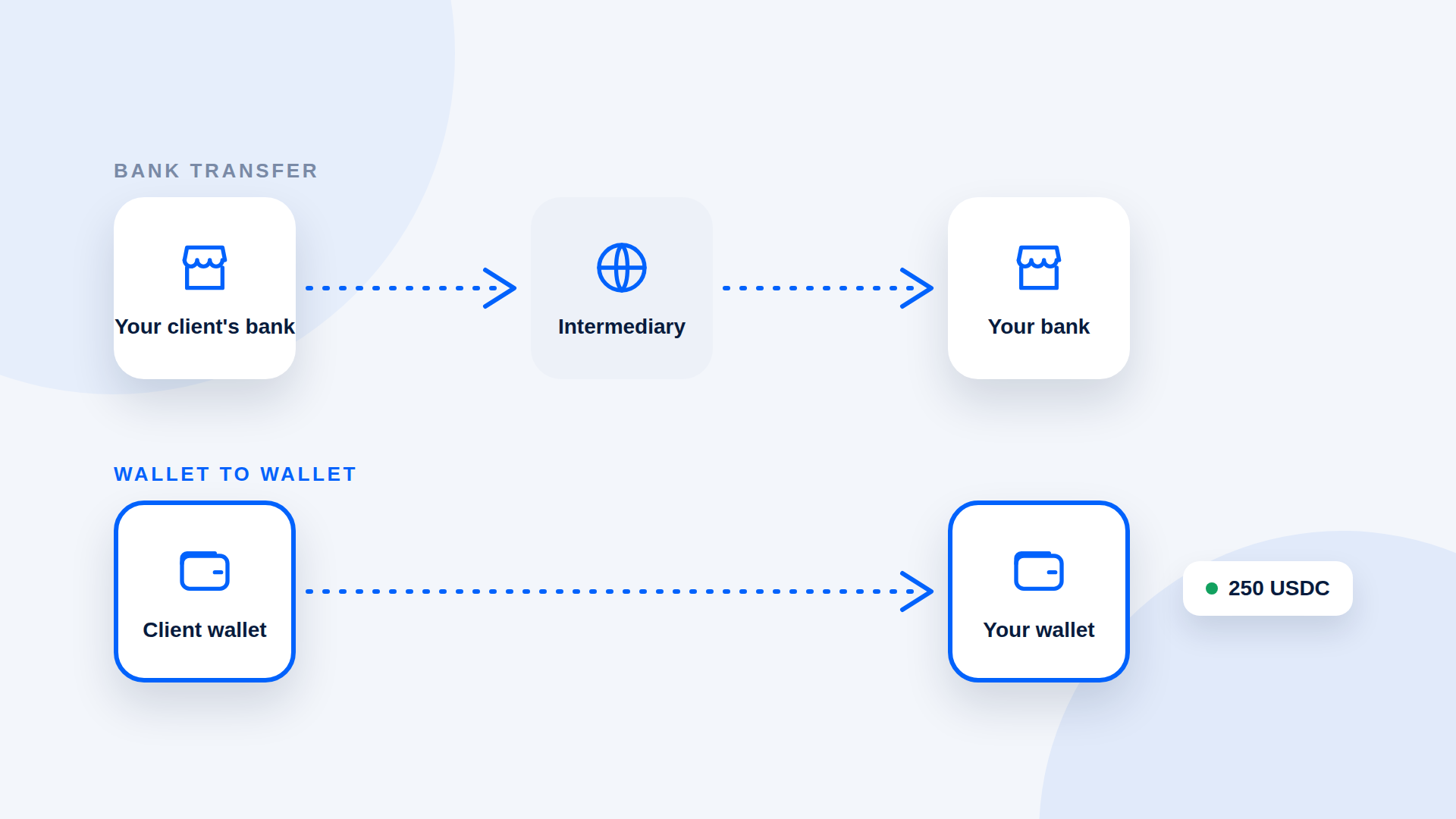
For international payments, a bank transfer is familiar, widely accepted and handled by regulated institutions, but it can involve intermediaries, fees and exchange-rate margins you do not control. A crypto transfer goes wallet to wallet with no intermediary bank, but both sides need wallets and a way to convert to local currency. Neither is better in every case.
How an international bank transfer works
Your client instructs their bank to send money to your account. Depending on the countries and currencies involved, the payment may pass through one or more intermediary banks before reaching yours. Along the way there can be fees from each bank and a currency conversion at a rate set by the bank.
How a crypto transfer works
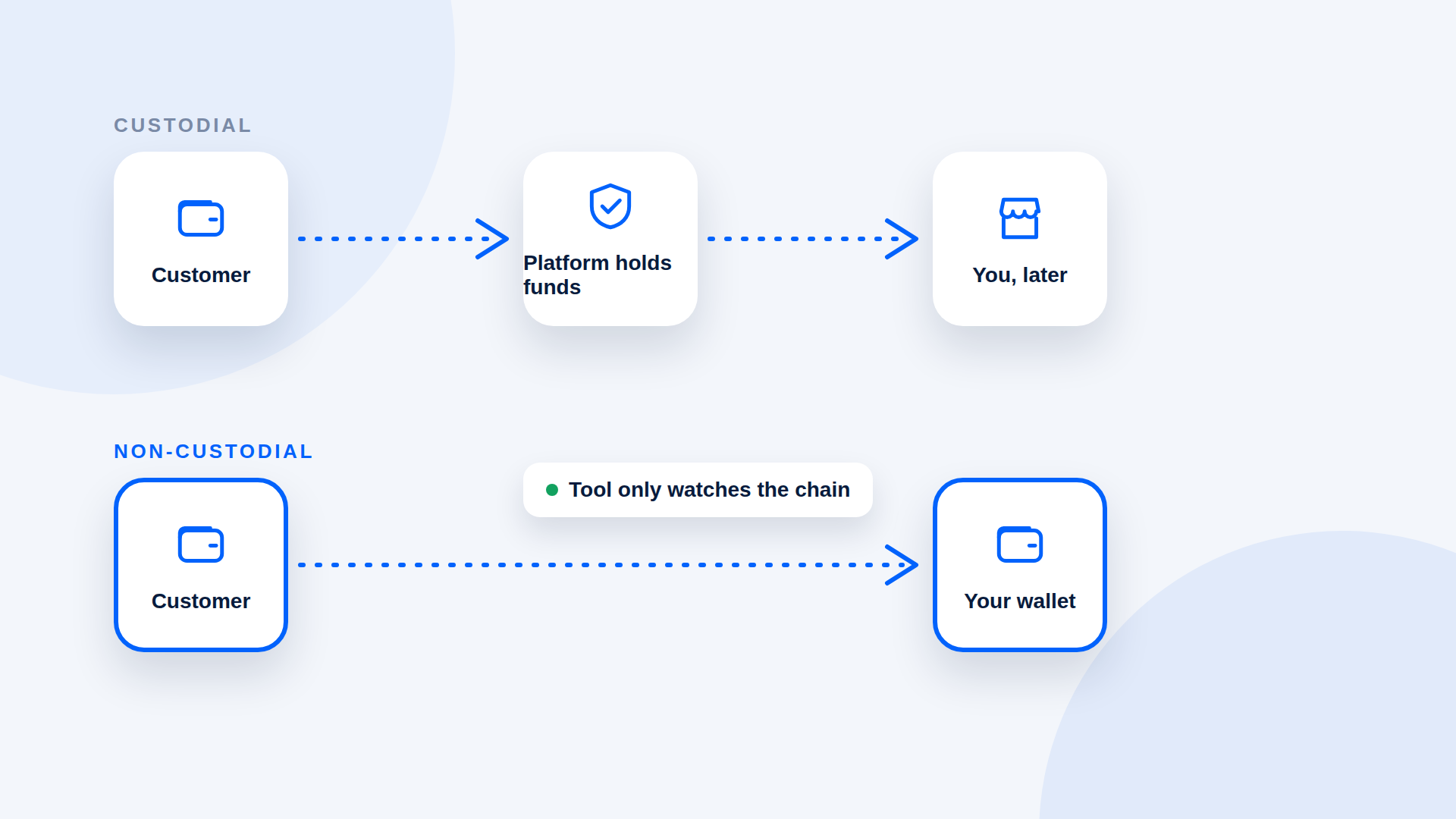
Your client sends a stablecoin such as USDC from their wallet to yours on a network such as Solana. There is no intermediary bank. Once the network confirms the transfer, the funds are in your wallet. If you need local currency, you convert through an exchange or similar service.
Side by side
| Bank transfer | Crypto (USDC on Solana) | |
|---|---|---|
| Intermediaries | Often one or more banks | None between wallets |
| What you need | A bank account | A wallet, plus a way to cash out |
| Client needs | Their bank account | A wallet holding the asset |
| Costs to ask about | Sending fee, intermediary fees, exchange-rate margin | Network fee, exchange or off-ramp fees |
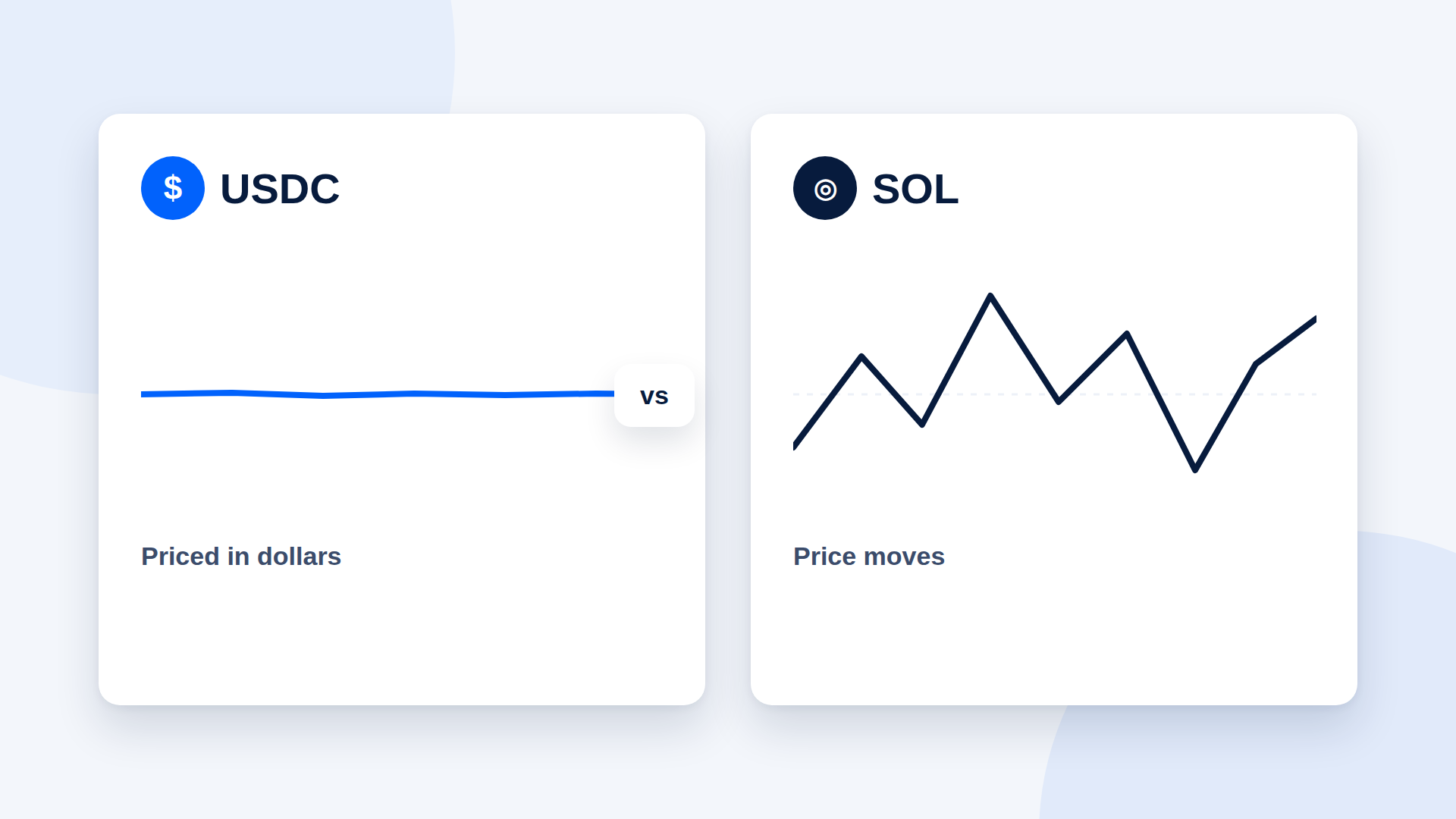
| Currency risk | Set by conversion at the bank | Low with a stablecoin until you convert |
| Reversibility | Bank-level recalls possible in some cases | Not reversible by a processor |
| Consumer protections | Established frameworks | Fewer by default |
| Regulation | Mature | Varies by country and changing |
Costs vary between banks, countries and services, so compare actual quotes, not averages.
Where crypto can make sense
- Clients and freelancers in different countries with awkward banking routes
- Clients who already hold stablecoins, such as crypto-native companies
- Smaller payments where fixed bank fees feel large
Where a bank transfer is better
- Clients who do not use crypto and have no reason to start
- Large amounts where your accountant or compliance team wants a bank trail
- Situations where you need dispute protections or standard remittance details
- Countries where your cash-out route for crypto is unreliable
Questions to ask before you decide
- What will my client actually pay in total, including fees?
- What will I actually receive in my local currency, after conversion?
- How will I turn crypto into money I can spend, and does that work in my country?
- How will I record this for tax?
- Does my client's finance team accept paying in crypto?
A sensible approach
Offer both. State the bank details on your invoice, and add a payment link for USDC for clients who prefer it. Let them choose, and track which one works better in practice.
Where DePayLink fits
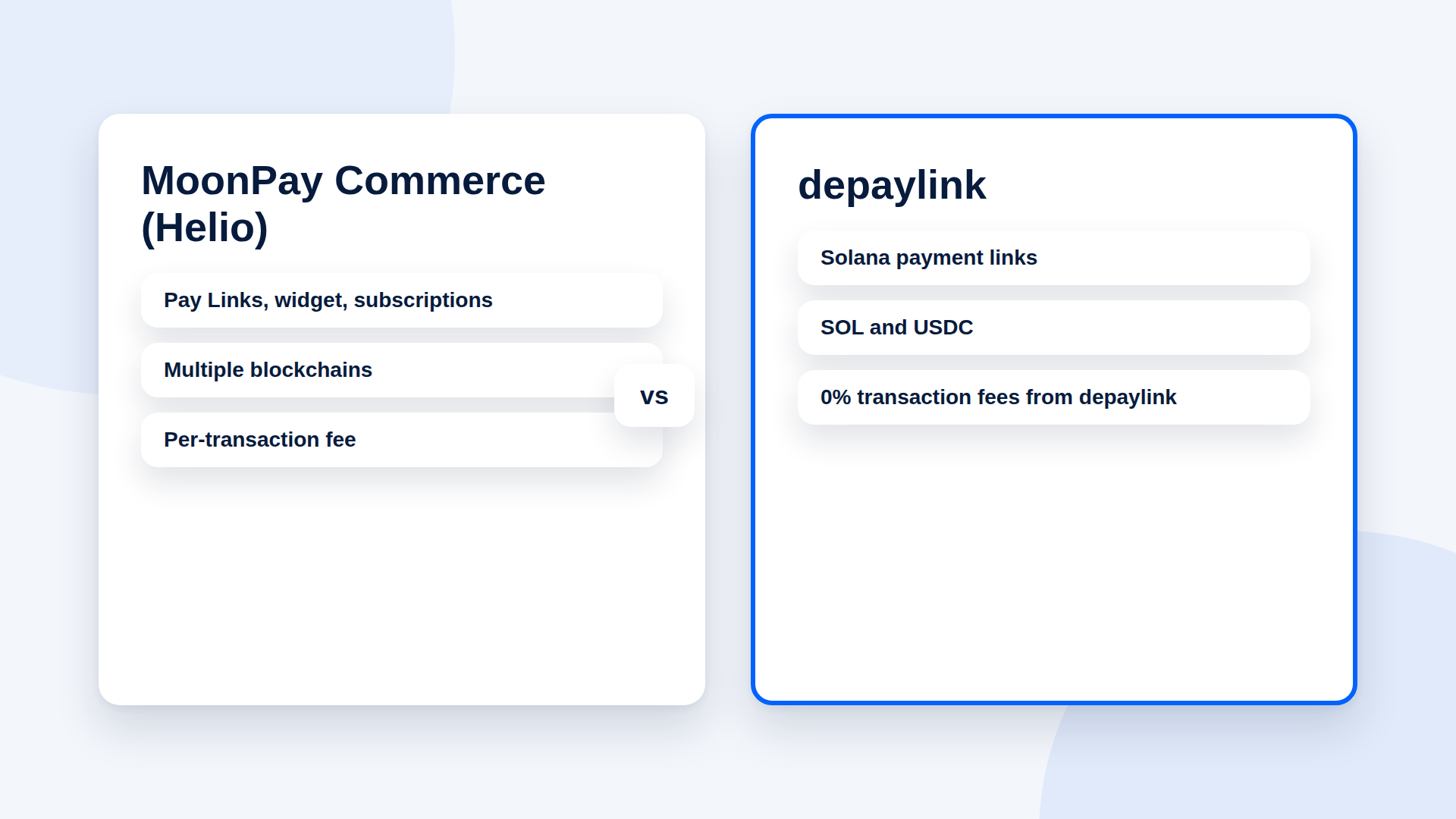
DePayLink creates SOL and USDC payment links on Solana. The client pays directly to your wallet, and DePayLink checks the transfer on-chain before marking it as paid. It does not hold funds and it does not take a percentage of your payments. Cashing out to local currency is a separate step through whichever service you use.
Frequently asked questions
Is crypto cheaper than a bank transfer?
It can be, but total cost depends on network fees, cash-out fees and exchange rates. Compare real quotes for your route.
Is it legal to get paid in crypto from abroad?
Rules depend on your country and your client's. Check with a local professional.
Do clients need to understand crypto?
They need a wallet and the right token. Keep a bank option available.
Which is faster?
Crypto transfers are often faster, but speed depends on the route and network, and cash-out adds time.