What Happens If a Customer Underpays, Overpays or Pays Late? Crypto Payment Edge Cases
Most crypto payments arrive exactly as requested, but the edge cases are where merchants lose time or money: a short payment, an overpayment, a late payment or the wrong token. The safest rule is to treat a payment as complete only when the amount, asset and destination all match, and to handle every other case deliberately.
The cases at a glance
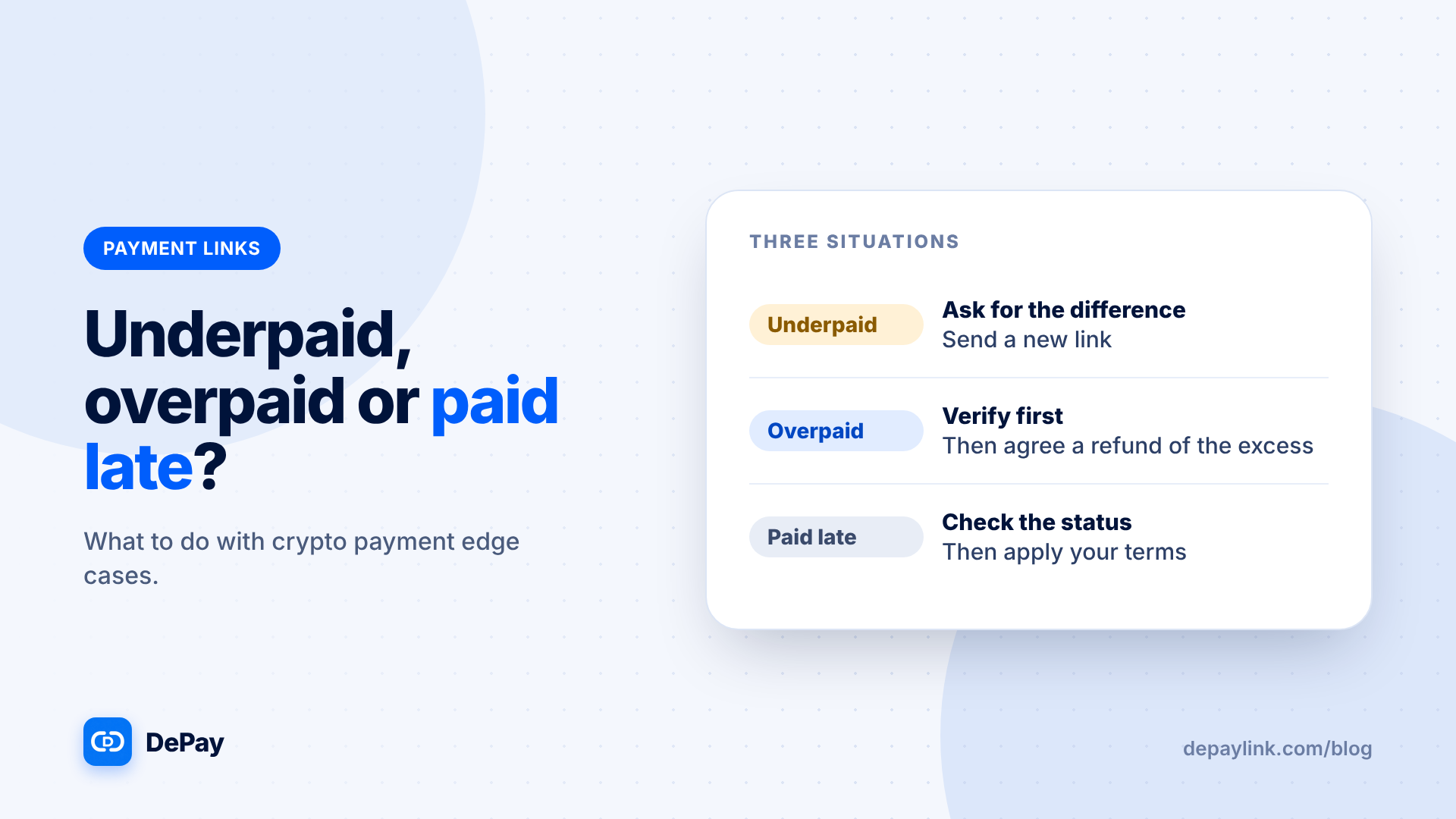
| Situation | What it usually means | What to do |
|---|---|---|
| Underpaid | Customer forgot the fee, edited the amount or an exchange deducted a fee | Ask for the difference with a new link |
| Overpaid | Typing error or fee confusion | Verify the payment, then agree a refund of the excess |
| Paid late | After the due date | Apply your terms; check the status first |
| Wrong token | A different asset arrived | Do not treat as payment; agree next steps |
| Wrong network | Funds sent elsewhere | Check recoverability before promising anything |
| Duplicate payment | The customer sent twice | Refund the extra after verifying both |
Underpayment
A short payment is the most common case. Reasons include exchange withdrawal fees, a customer editing the amount, or a misunderstanding about who pays the network fee.
What to do
- Do not deliver, or deliver only what has been paid for.
- Tell the customer the exact shortfall.
- Send a new link for the difference.
Script:
"The payment shows 245 USDC against 250 USDC due. Could you send the remaining 5 USDC with this link? [link]"
Overpayment
An overpayment is a risk, partly because of a known scam: overpay, then ask for a refund to a different address.
What to do
- Verify the original payment is real and confirmed.
- Confirm in writing where the refund should go; prefer the sending wallet, but confirm exchange addresses can receive.
- Refund only the excess, noting the transaction.
Late payment
State late terms upfront: due date, any pause on work and any late fee. When a payment arrives after the due date, check whether it covers the full amount, then resume work as your terms say.
Wrong token
A transaction that succeeds in the wrong token does not satisfy the request. Do not treat it as payment. Agree whether to refund it and ask for the correct token, or accept it at a rate you both confirm in writing.
Wrong network
Funds sent on the wrong network may be lost. Contact the customer immediately, collect the transaction details and do not promise recovery. Prevent it by naming the network on every request.
Duplicate payment
If a customer sends twice, verify both, keep the invoice amount and refund the extra, with a written record.
How a payment tool helps
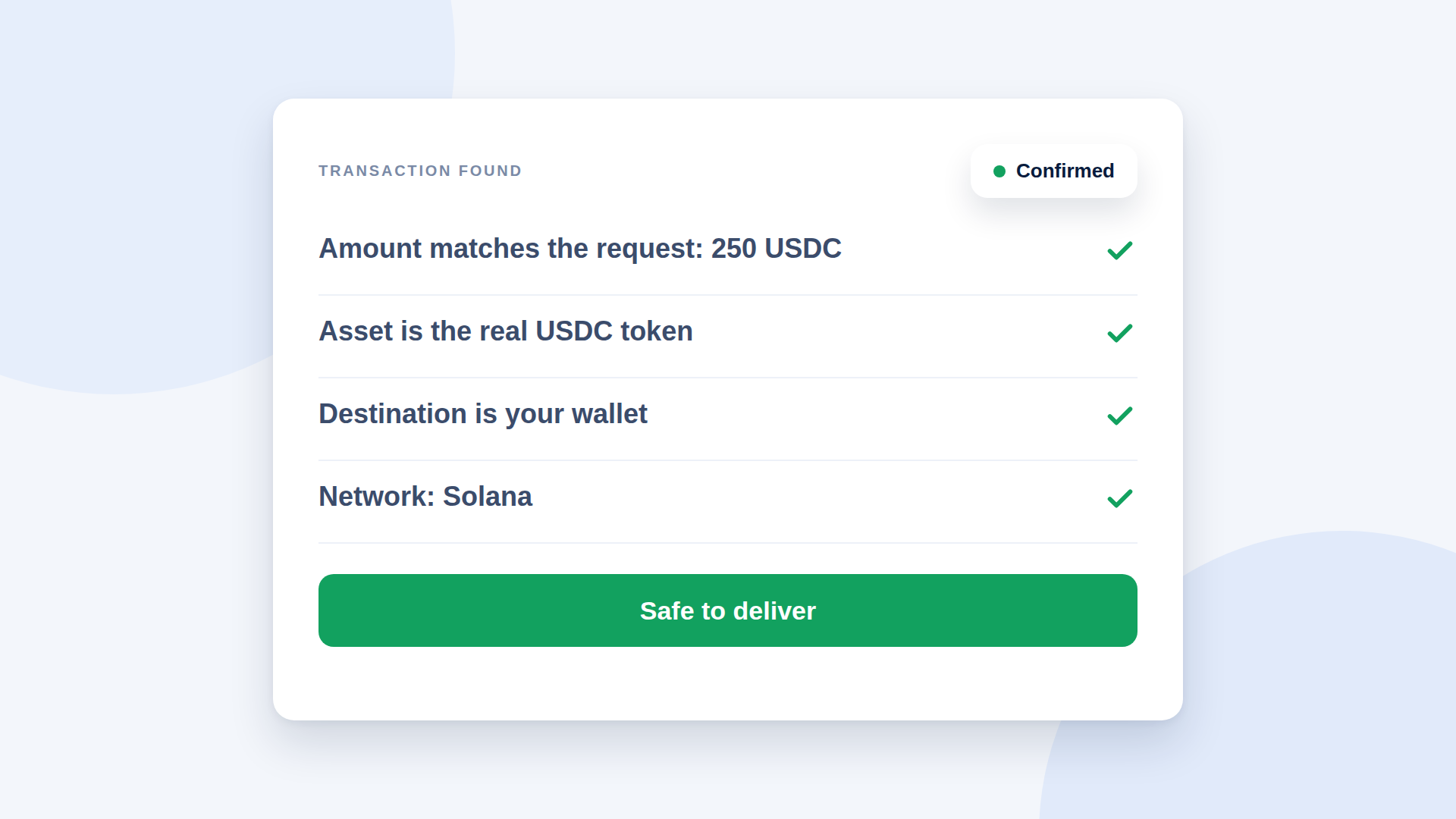
A tool that checks amount, asset and destination before marking a link as paid makes shortfalls and wrong tokens visible immediately. You still decide what to do next.
Policy template
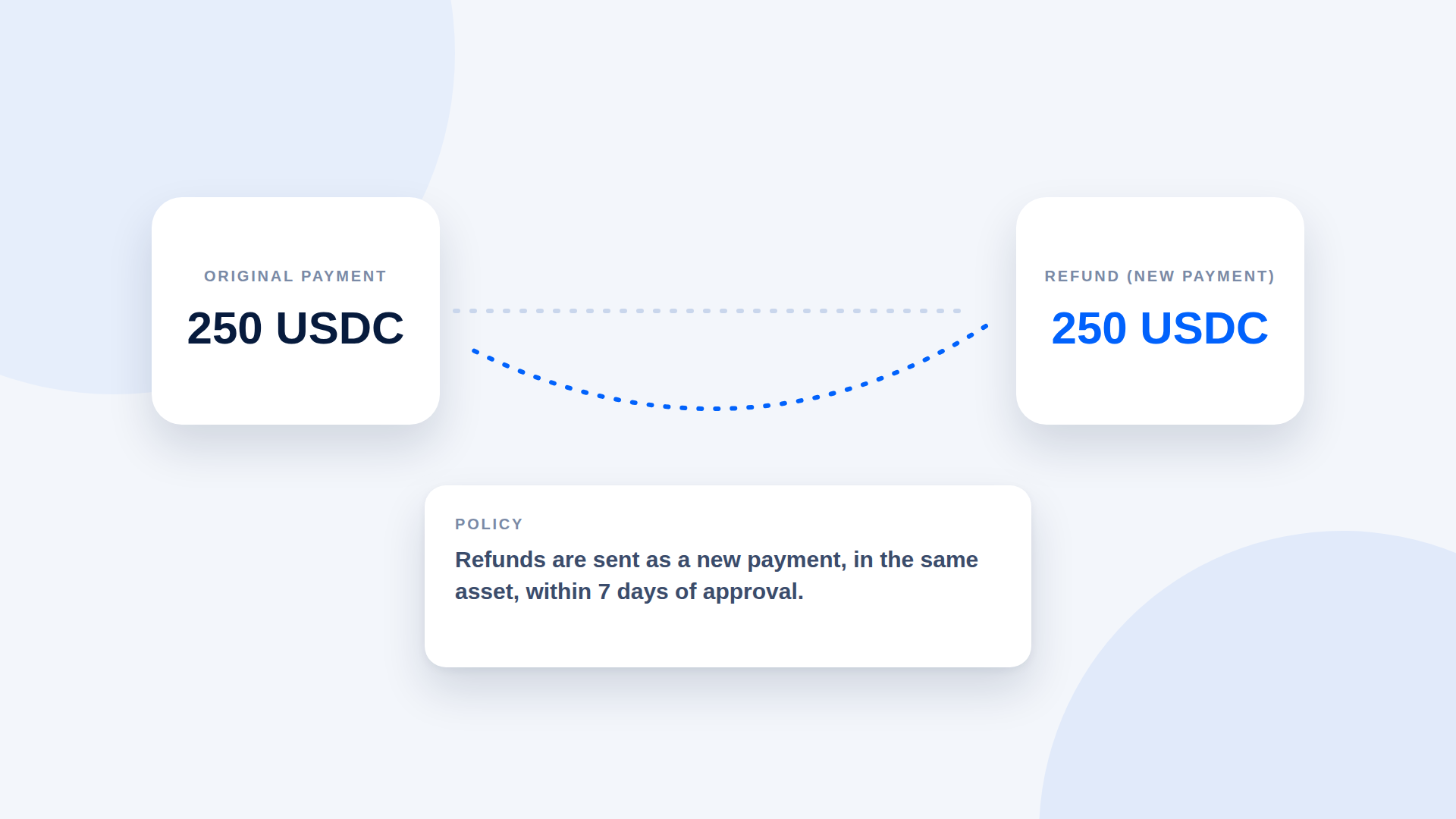
"Payments must match the amount and asset on the invoice. Shortfalls, overpayments and payments in other assets will be handled case by case; refunds are sent as a new payment to an address you confirm in writing."
Keep the record
For each exception, note the invoice, the transaction signature, what was received, what you did and when.
Where depaylink fits
depaylink creates SOL and USDC payment links on Solana. Funds go straight to the wallet address you enter, customers do not need an account, and each payment is checked on-chain, amount, asset and destination, before it is marked as paid. Network fees may apply, and depaylink does not take a percentage of your payments.
Further reading
- Crypto Payment Refunds: How to Write a Refund Policy That Works
- How to Verify a Crypto Payment Before You Deliver
FAQ
Should I accept a short payment? Only if you choose to, in writing. Otherwise ask for the difference.
Is overpayment a scam? Sometimes. Verify the original payment before refunding.
Can I refund to an exchange address? Confirm it can receive transfers from outside; many users prefer a wallet they control.