Why Solana for Payments? Speed, Cost and Trade-offs Merchants Should Know
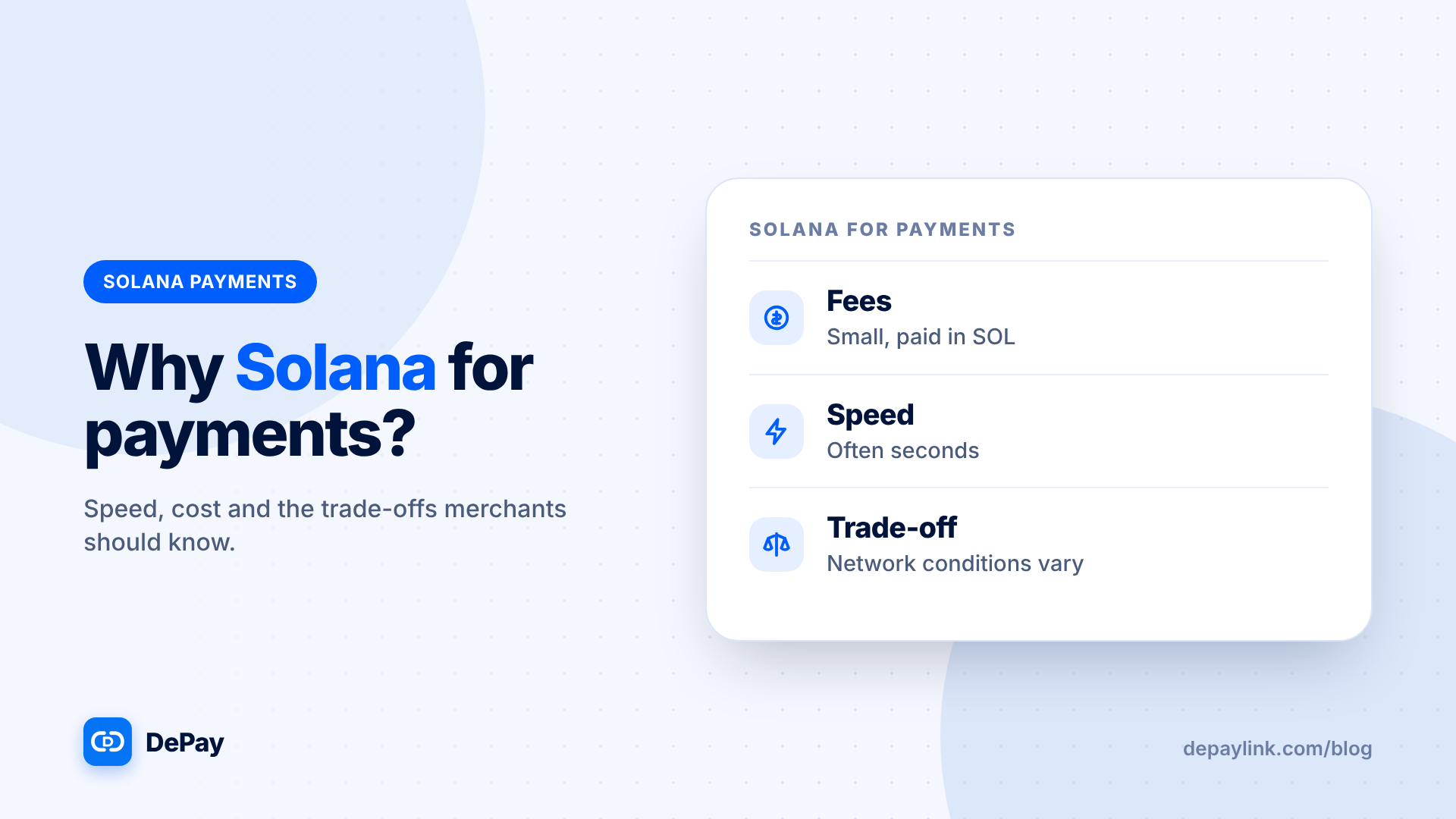
Solana is popular for payments because transactions generally confirm quickly and network fees are small, which suits invoices, tips and small purchases. It also has trade-offs: like any network it can have congestion or outages, customers need a Solana wallet, and it is only one of several places stablecoins live. This guide sets out the case for Solana and the cases against, so you can decide with open eyes.
What makes Solana attractive
- Speed. Transactions generally confirm in a short time, so customers do not wait long.
- Low fees. Network fees are small relative to many other networks and are paid in SOL. Fees are set by the network and can change.
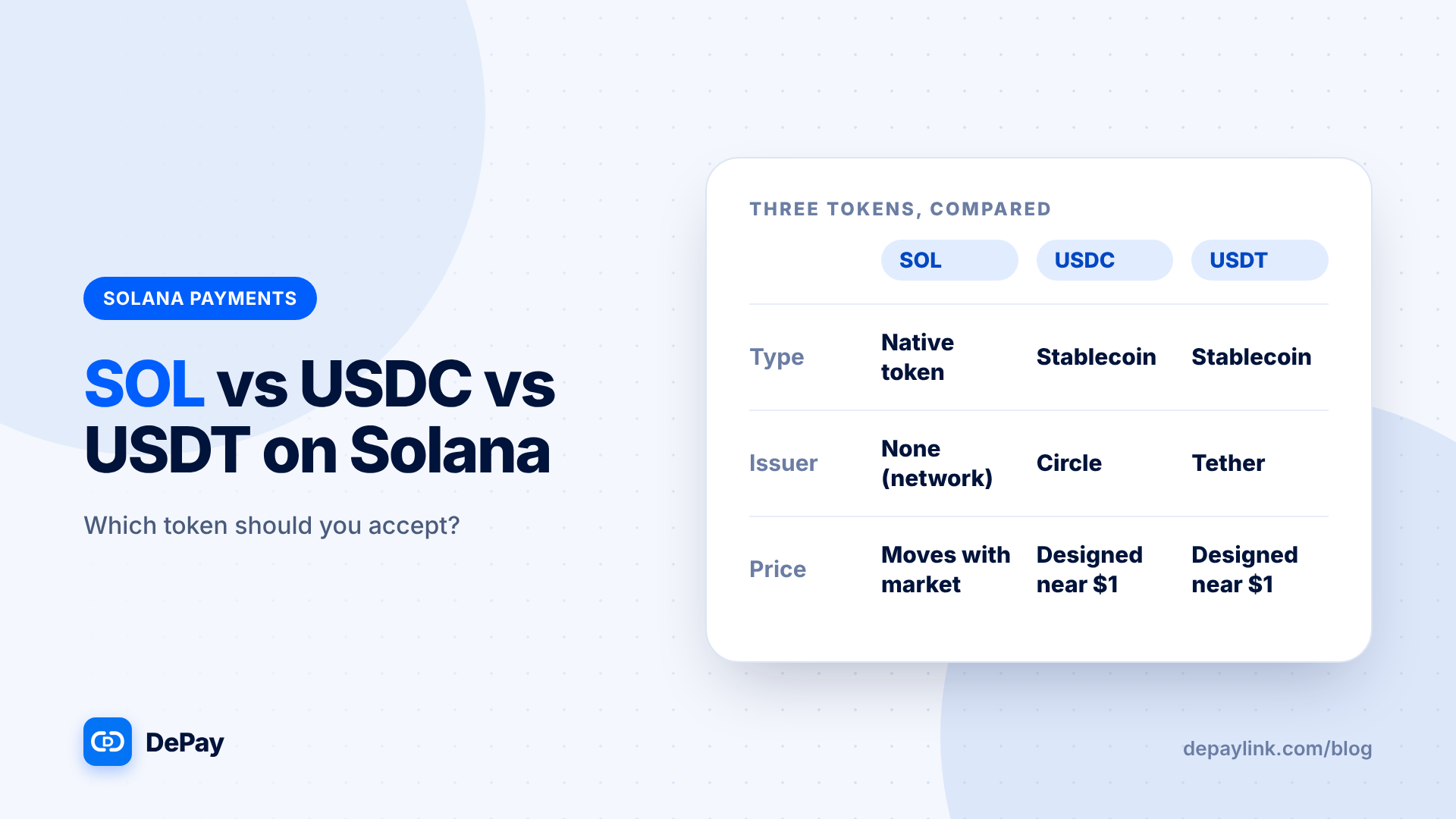
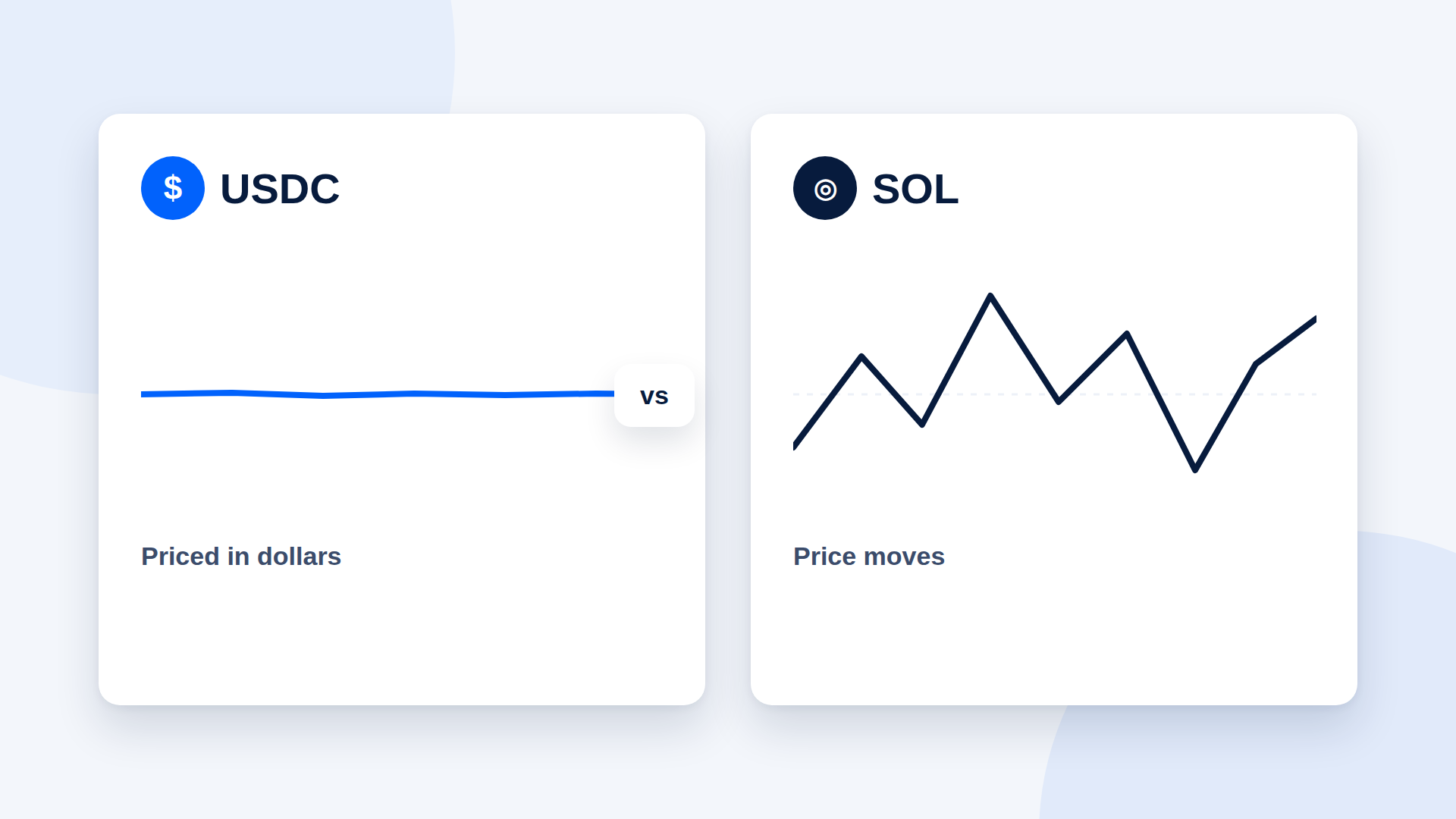
- Stablecoin availability. USDC is available on Solana, so you can price in dollars.
- Wallet ecosystem. Many wallets support Solana, which helps customers pay by QR code.
- Fits small payments. Low fees make small amounts practical.
What to weigh against it
- Network reliability. Like any network, Solana has experienced disruptions in the past. A payment tool cannot fix a network problem.
- Customer reach. Your customers must have a Solana wallet and the right token. Many crypto users hold assets on other networks.
- Choice of tokens. Some stablecoins and tokens are more widely available on other networks.
- Wrong-network risk. If customers hold USDC elsewhere, they must bridge or choose the Solana option, and mistakes happen.
- Regulatory and tax uncertainty. Applies to all crypto payments, not just Solana.
Side by side: who it suits
| Situation | Solana a good fit? |
|---|---|
| Freelancer with crypto-native clients | Often yes |
| Creator taking small tips | Often yes |
| Merchant whose customers hold stablecoins on another network | Check where customers hold funds |
| Business needing fiat payouts and invoicing in one account | A custodial platform may fit better |
A decision test
Ask three questions:
- Where do my customers already hold stablecoins? If it is Solana, great.
- How small are my payments? Smaller payments benefit more from low fees.
- Do I need anything the network cannot provide? For example, built-in fiat conversion or chargeback-style protection.
Making Solana easier for customers
- Say "USDC on Solana" every time.
- Tell customers they need a little SOL for the network fee.
- Offer a fallback method.
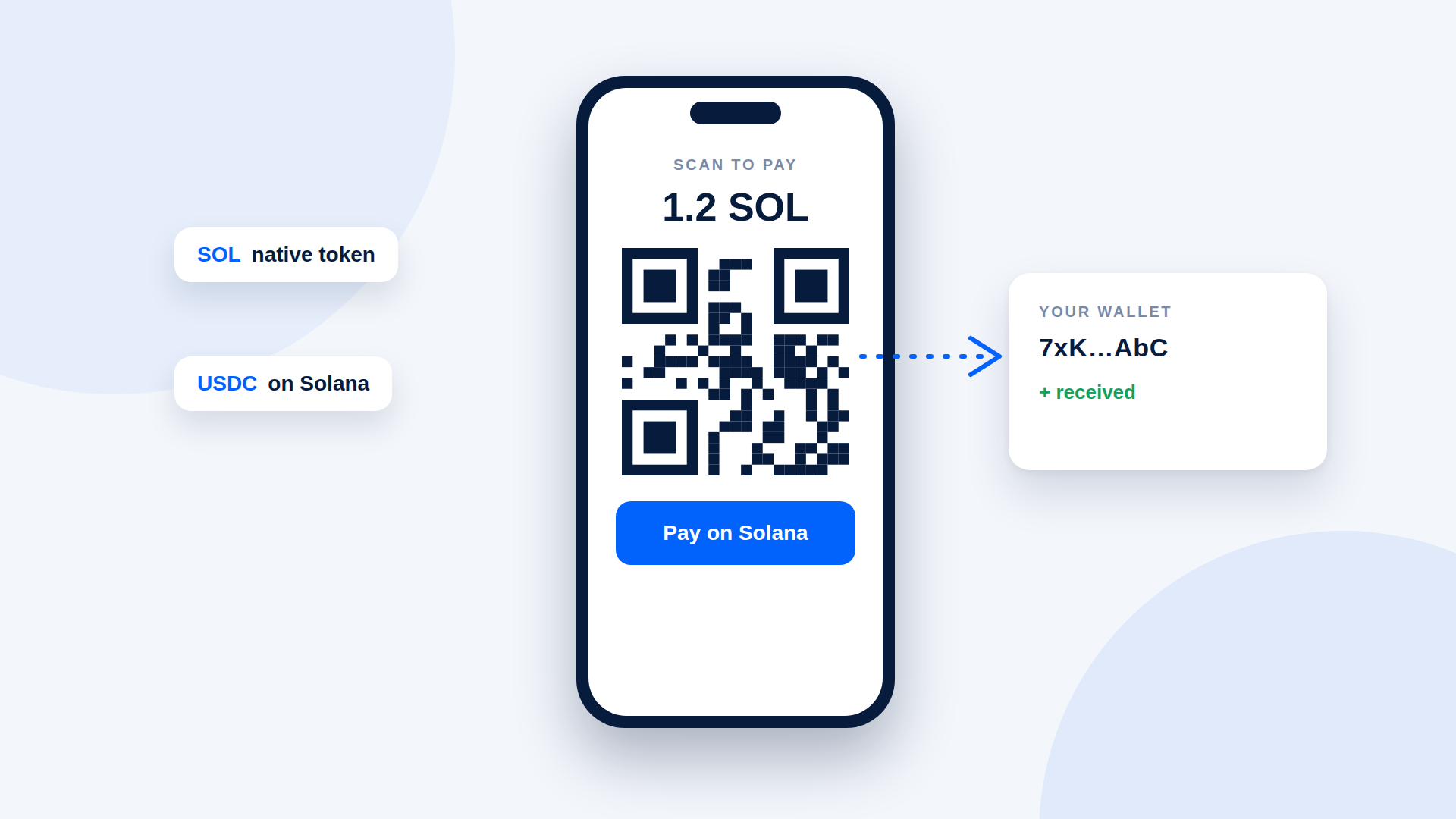
- Provide a QR code and a link.
Risks you manage regardless of network
- Wallet security
- Verifying each payment before delivery
- Refund policy, since payments are not reversible by a processor
- Records for tax
Do not choose a network for hype
Choose it because your customers use it and your costs work. If most of your clients pay on a different network, a tool for that network may serve you better.
What this means for your setup
For many freelancers and small sellers, one stablecoin on one low-fee network is the simplest setup that works. Start there, test with real payments and revisit if your customers change.
Where depaylink fits
With depaylink you create a payment link for the exact amount in USDC or SOL, share it anywhere, and let depaylink watch Solana for the transfer. It never holds your money: the customer pays your wallet directly, and the link flips to paid only when amount, asset and destination match.
Further reading
FAQ
Is Solana the best network for payments? It depends on where your customers hold funds. It is a strong option for low-fee stablecoin payments.
Has Solana had outages? Yes, like other networks it has had disruptions in the past; check current status when it matters.
Do I need SOL to accept USDC? Not to receive, but senders need SOL for fees.