SOL vs USDC vs USDT on Solana: Which Token Should You Accept?
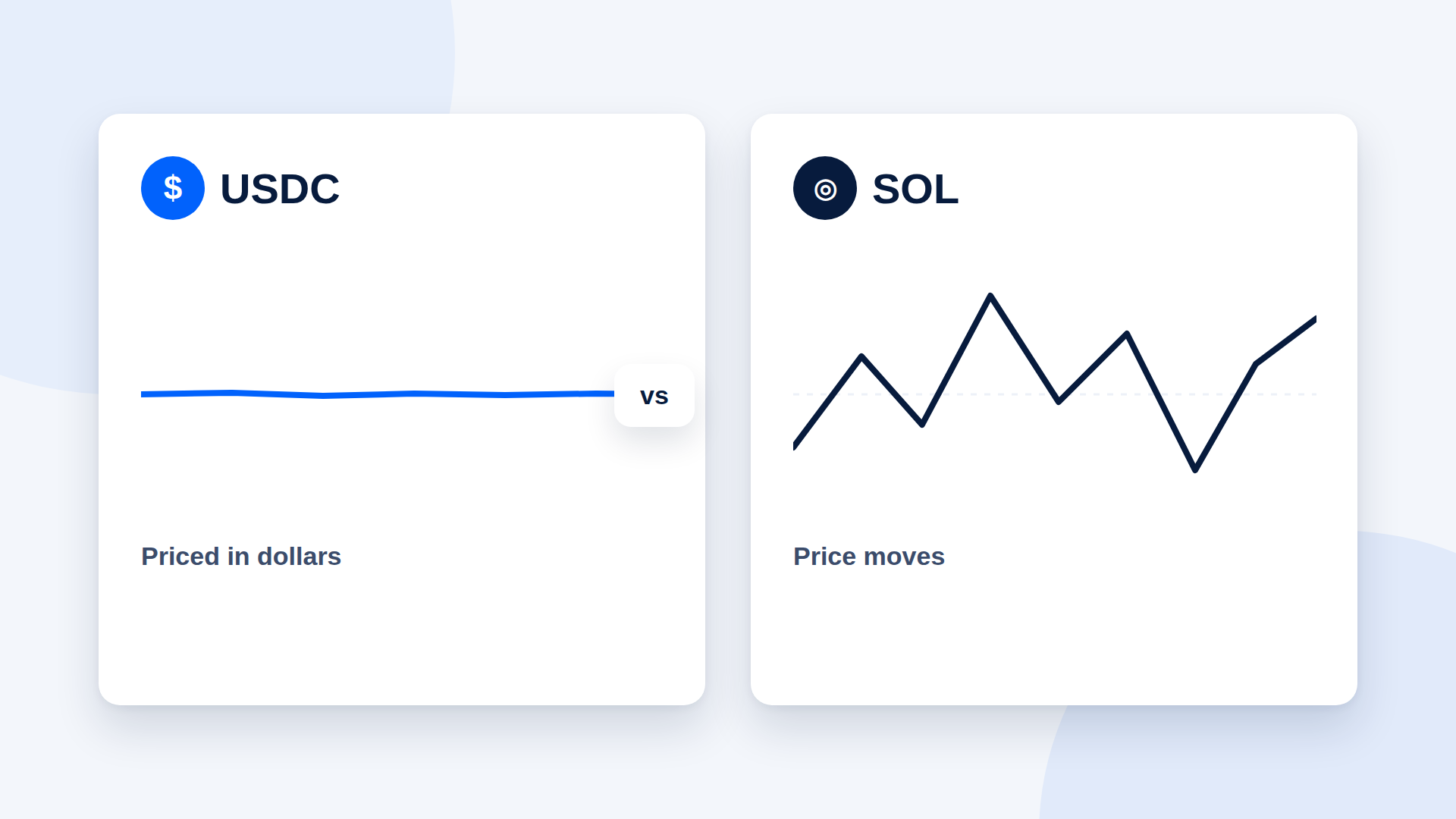
For most merchants pricing in dollars, a stablecoin is simpler than SOL, and the choice between USDC and USDT depends on who your customers are and what you are comfortable relying on. SOL is the network's native token: its price moves, and every Solana transaction needs a little of it for fees. This guide compares the three so you can choose which to accept.
What each token is
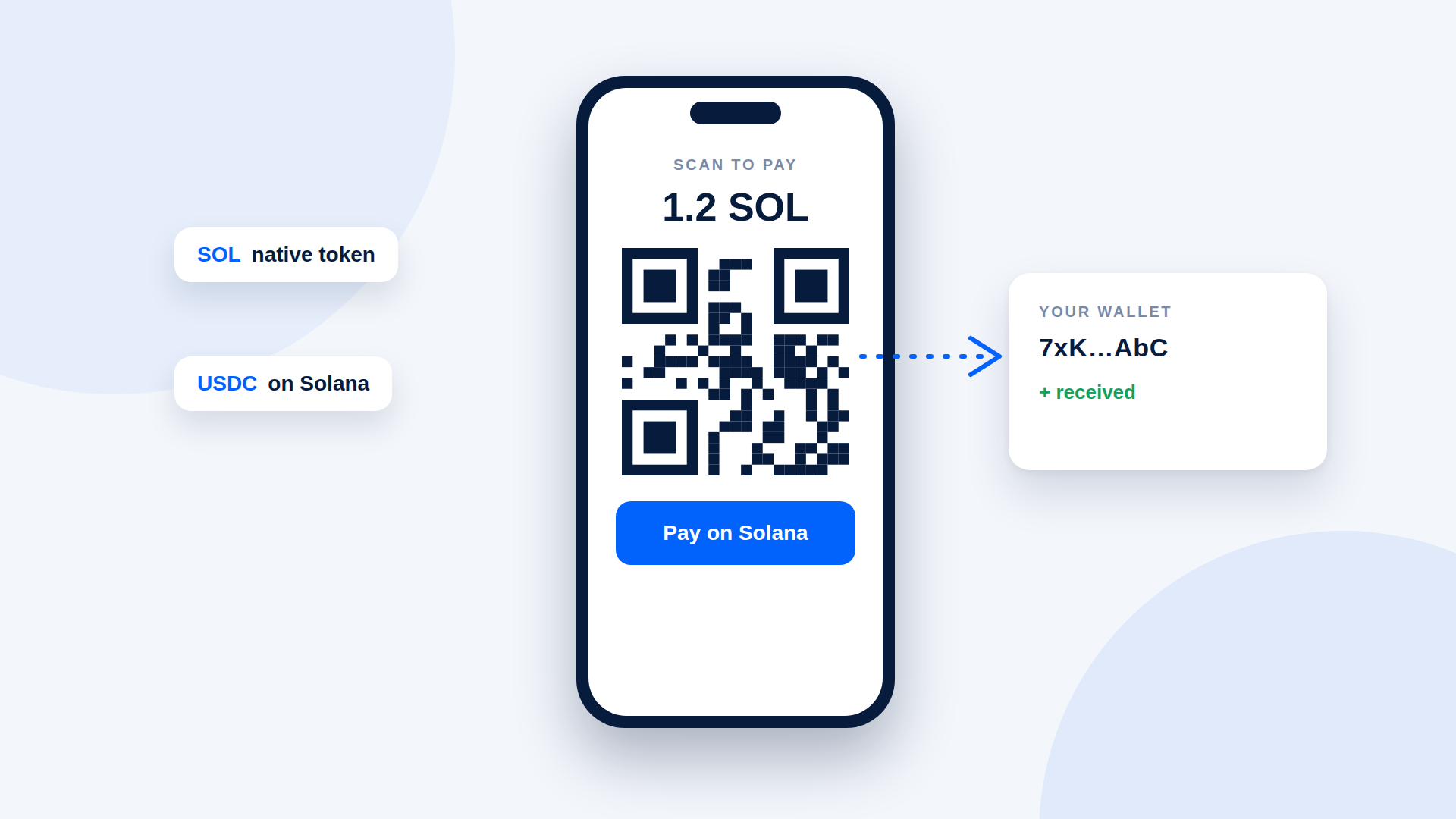
SOL is the native token of Solana. It pays network fees and trades freely, so its dollar price changes.
USDC is a stablecoin issued by Circle, designed to track the US dollar.
USDT is a stablecoin issued by Tether, also designed to track the US dollar.
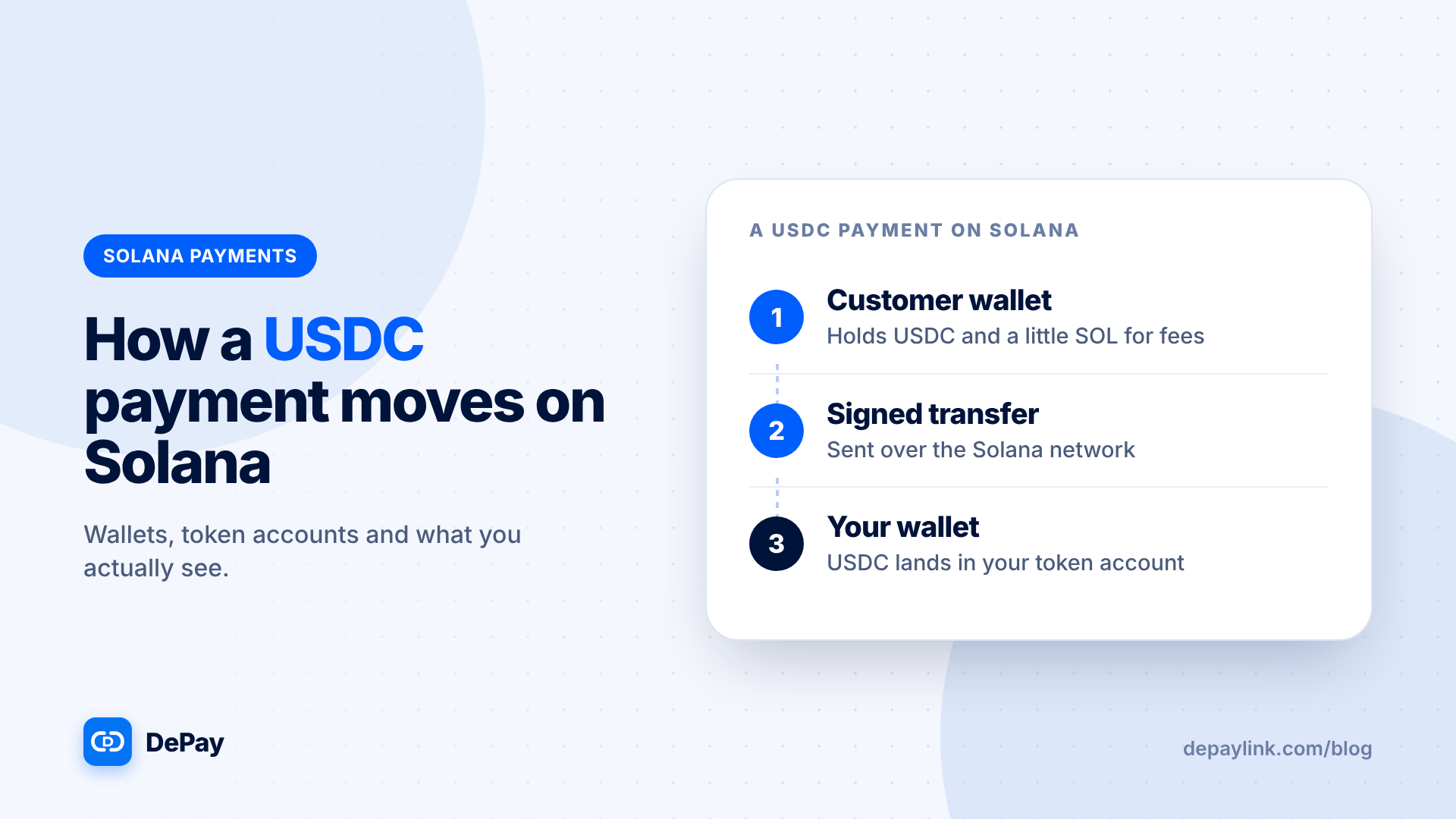
Both stablecoins exist on several networks, including Solana. On Solana they are tokens held in token accounts.
Side by side
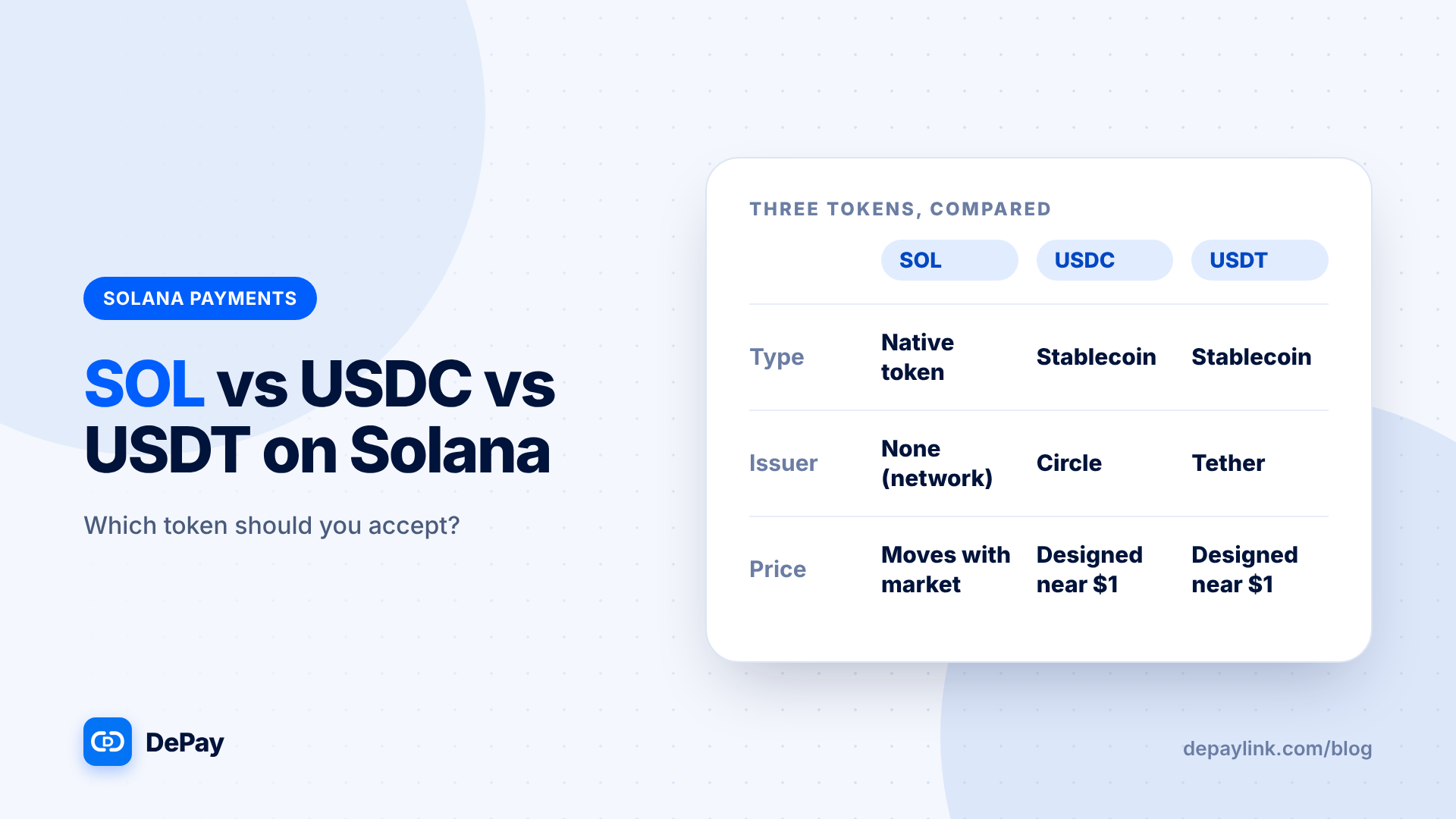
| SOL | USDC | USDT | |
|---|---|---|---|
| Type | Native token | Stablecoin | Stablecoin |
| Issuer | None (network) | Circle | Tether |
| Price vs USD | Moves with the market | Designed near $1 | Designed near $1 |
| Pays network fees | Yes | No | No |
| Best for | Fees; customers who hold SOL | Dollar pricing | Dollar pricing, where customers hold it |
| Main risk | Price swings | Peg and issuer risk | Peg and issuer risk |
How to choose
Choose SOL if
- Your customers already hold it and prefer paying with it
- You are comfortable with price movement, or convert quickly
Choose USDC if
- You price in dollars and want predictable amounts
- You want a stablecoin whose issuer publishes information you are comfortable reviewing
Choose USDT if
- Your customers commonly hold it
- You have reviewed its issuer's information and accept the risks
Check the issuer
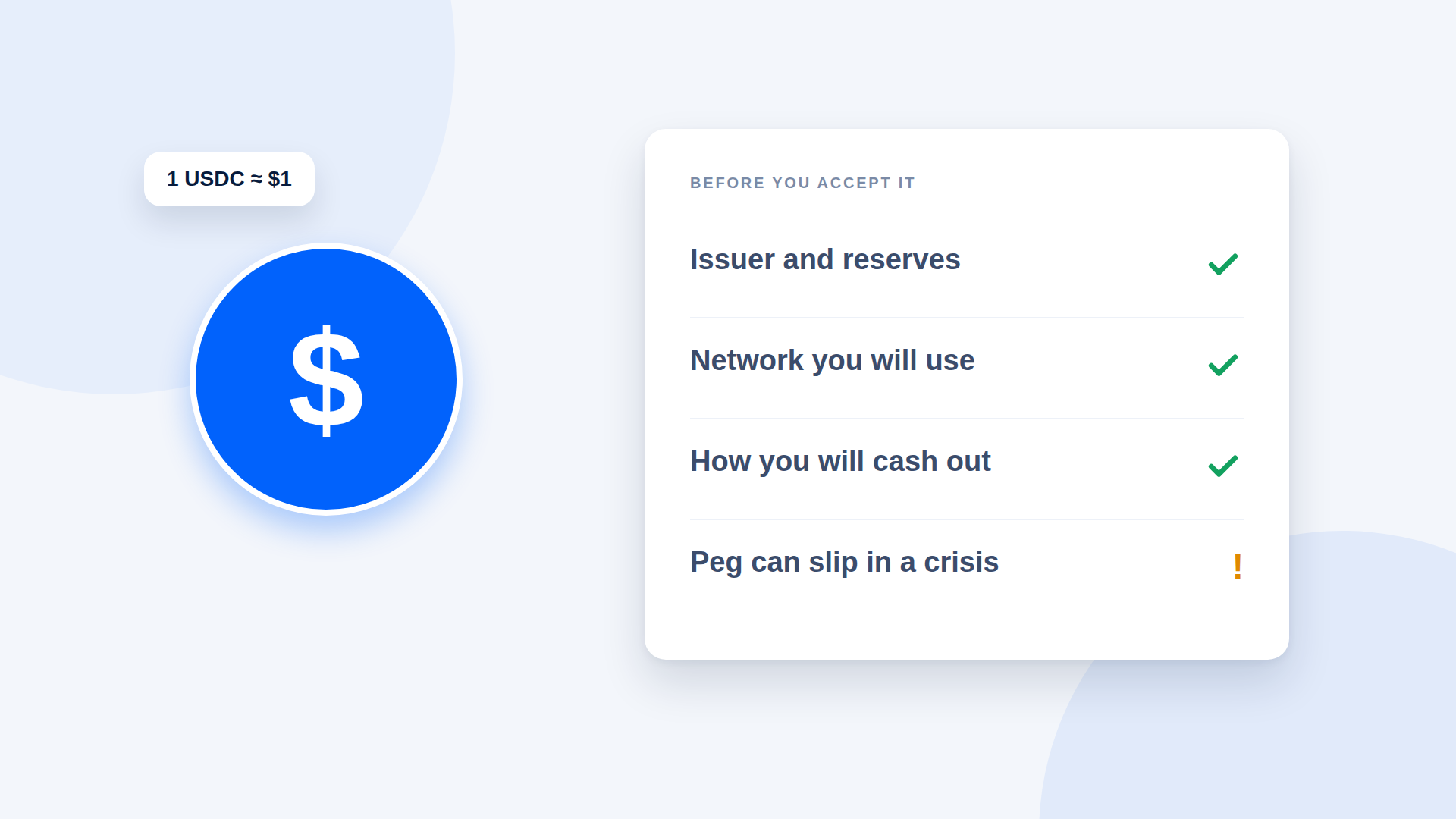
Stablecoins differ in who issues them, how reserves are held and reported, where they are available and how they treat addresses. Read each issuer's own published materials, not a summary. Rules and availability differ by country.
Accept one or several?
Each extra token adds explaining to do and mistakes to catch. Many merchants accept one stablecoin and optionally SOL. If you accept several, create a separate payment request for each token so the amount is unambiguous.
Verification matters more with several tokens
Lookalike tokens exist. Check that the received token is the real one, not just a matching name, and that the amount matches the request.
Practical setup
- Pick a main stablecoin.
- State it and the network on every invoice.
- Add SOL only on request, with an agreed rate at invoice time.
- Verify token, amount and destination on every payment.
Cash-out and tax
Your off-ramp may support some tokens and not others. Check before you choose. Tax treatment depends on your country, so ask a local accountant.
What this guide does not do
It does not recommend a token as an investment, and it does not rank the issuers' financial strength. Its purpose is to help you choose what to accept.
Where depaylink fits
depaylink is a non-custodial payment-link tool for SOL and USDC on Solana. You enter the amount, the asset and your wallet, then share the link or its QR code. The customer pays directly to your wallet without connecting a wallet to the page, and depaylink verifies amount, asset and destination on-chain before marking the payment as paid. depaylink supports SOL and USDC on Solana.
Further reading
- USDC vs SOL for Payments: What Is the Difference?
- Is USDC Safe to Accept as Payment? What Businesses Should Check
FAQ
Which is safer, USDC or USDT? Both carry stablecoin risks; compare each issuer's published information and your own comfort.
Can I accept all three? Yes, if your tool supports them, but keep requests unambiguous.
Why do customers need SOL if they pay in a stablecoin? Network fees are paid in SOL.