Crypto Payment Scams: How to Avoid Fake Payments and Fake Confirmations
Almost every crypto payment scam aimed at sellers depends on one thing: you treating something other than the blockchain as proof of payment. A screenshot, a message saying "sent", a transaction hash in an email. Verify the transfer yourself, in your own wallet or dashboard, and most of these tricks stop working.
Here are the patterns that show up most, and what to check for each.
1. The edited screenshot
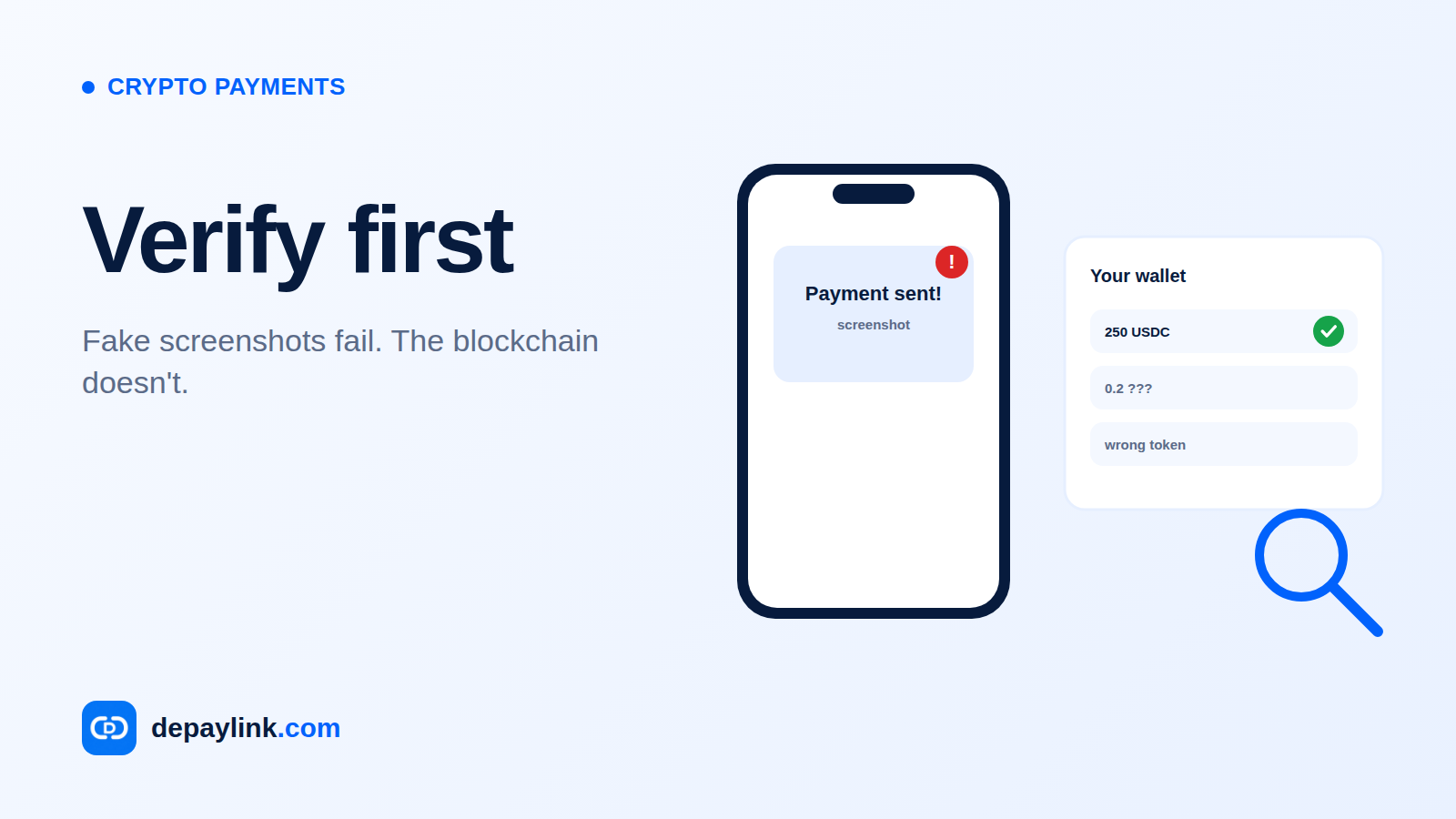
A buyer sends a screenshot of a "successful" transaction. Screenshots are trivial to edit, and some are fabricated entirely.
What to do: ignore the screenshot. Look at your receiving wallet or payment dashboard. If the funds are not there and final, the order is not paid.
2. The lookalike token
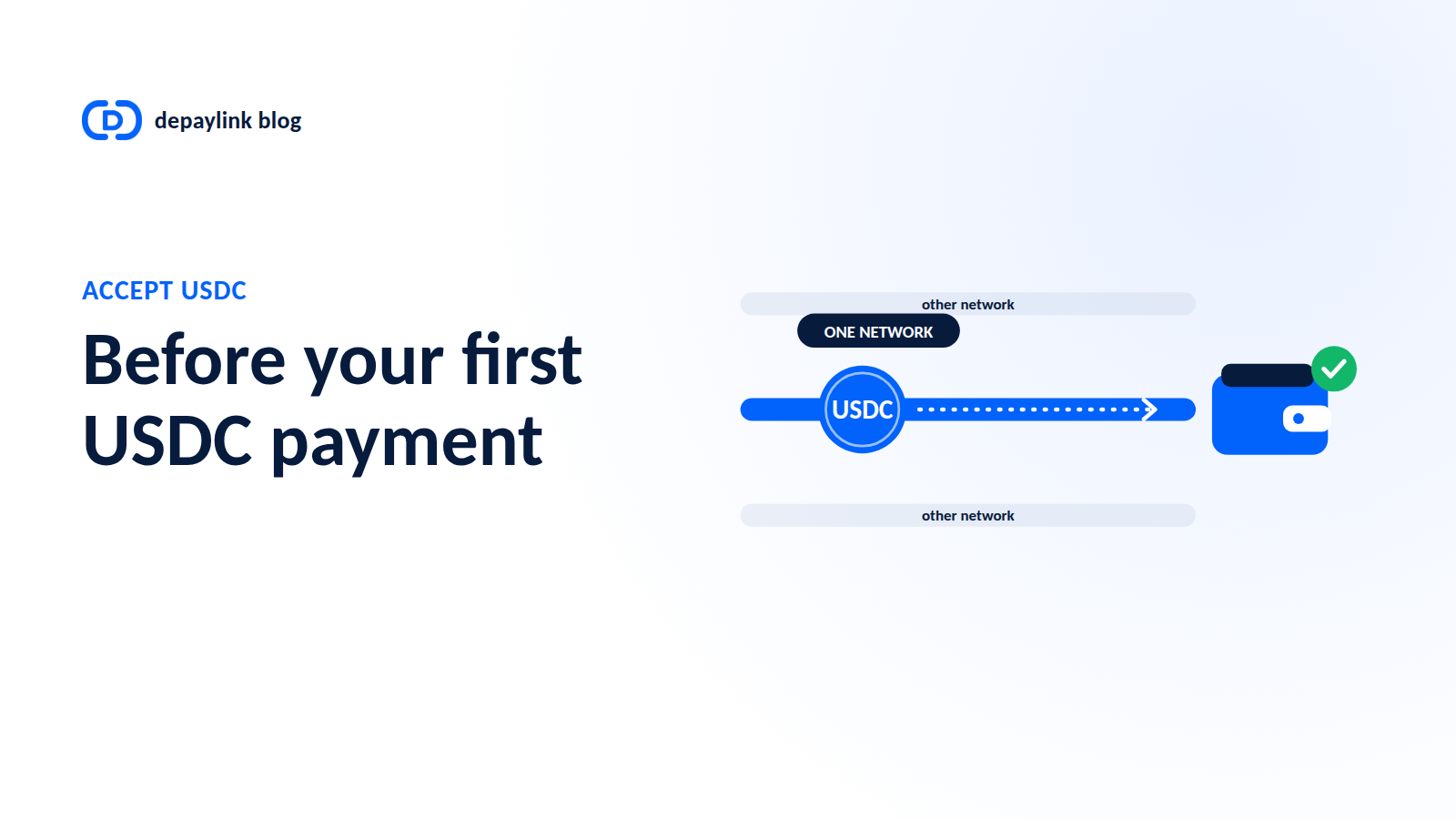
Anyone can create a token with the name "USDC" and a similar logo. The buyer sends it, your wallet shows a balance with a familiar name, and you ship. The token is worthless.
What to do: check the token's identifier (its mint address on Solana) against the one published by the real issuer. Do not rely on the name or icon. A payment tool that verifies the exact asset for you removes this risk.
3. The wrong amount, "fixed" by overpayment
A buyer pays less than agreed, or pays more and asks you to refund the difference. In the worst version, the "overpayment" never really arrived or came in a lookalike token, and you send a refund of real money.
What to do: refund only against confirmed, verified funds, and only to the address that sent them. Do not refund to a different address sent by email or chat.
4. The hash without the transfer
Some scammers send a real transaction hash that belongs to a different transfer, for a different amount or to a different wallet, and say it is theirs.
What to do: open the transaction in a block explorer and confirm three things: recipient is your address, asset is correct, amount is correct.
5. Pressure and urgency
"I need it shipped today", "the payment is pending but will arrive", "my wallet is slow". Urgency is how scammers get you to skip verification.
What to do: have a written rule: no delivery before confirmed funds. Tell customers up front, so you are applying policy, not accusing anyone.
6. Address tampering
Malware can swap an address in the clipboard, and lookalike addresses can appear in your transaction history after a tiny unsolicited transfer (sometimes called address poisoning). If you copy an address from history, you may copy the wrong one.
What to do: never copy a destination from transaction history. Take addresses from a source you trust, and compare the first and last characters before saving them.
The verification routine
Before you deliver anything:
Check the asset. The exact token, not just the name.
Check the amount. It matches the request.
Check the recipient. It is your address.
Check finality. The transaction is confirmed on the network.
Match to the order. One link or reference per order makes this trivial.
For occasional payments, a block explorer does the job. For regular payments, it is easier to use a payment link tool that shows each request as pending or paid.
How a payment link helps
Unique payment links reduce several of these risks. Each request has a specific amount and asset, so there is nothing for the buyer to negotiate or for you to guess. With depaylink, the payment page shows the amount, the Solana label, the QR code and the receiving address, and your dashboard shows each link's status, so you check the dashboard, not a screenshot. It does not remove the need to apply your own rules, such as checking the status before delivering and refunding carefully.
What you can write in your terms
"Orders are fulfilled after payment is confirmed on the network."
"Screenshots are not proof of payment."
"Refunds are sent to the original paying address."
Short, neutral and enforceable.
FAQ
Can a crypto payment be faked? A real confirmed transfer cannot be faked, but a claim of payment can. That is why you verify on the network rather than from what the buyer shows you.
What if funds appear and then disappear? Confirmed, final transfers do not disappear. If a balance vanishes, it was likely not a final payment or not the asset you thought. Wait for finality before delivering.
Are chargebacks possible? No, which protects sellers from card-style chargebacks but also means mistakes are yours to resolve directly.
Should I report a scam? Keep the evidence, such as addresses and transaction references, and report to the relevant platform or local authorities. This is general information, not legal advice.