USDC on Solana vs Other Networks
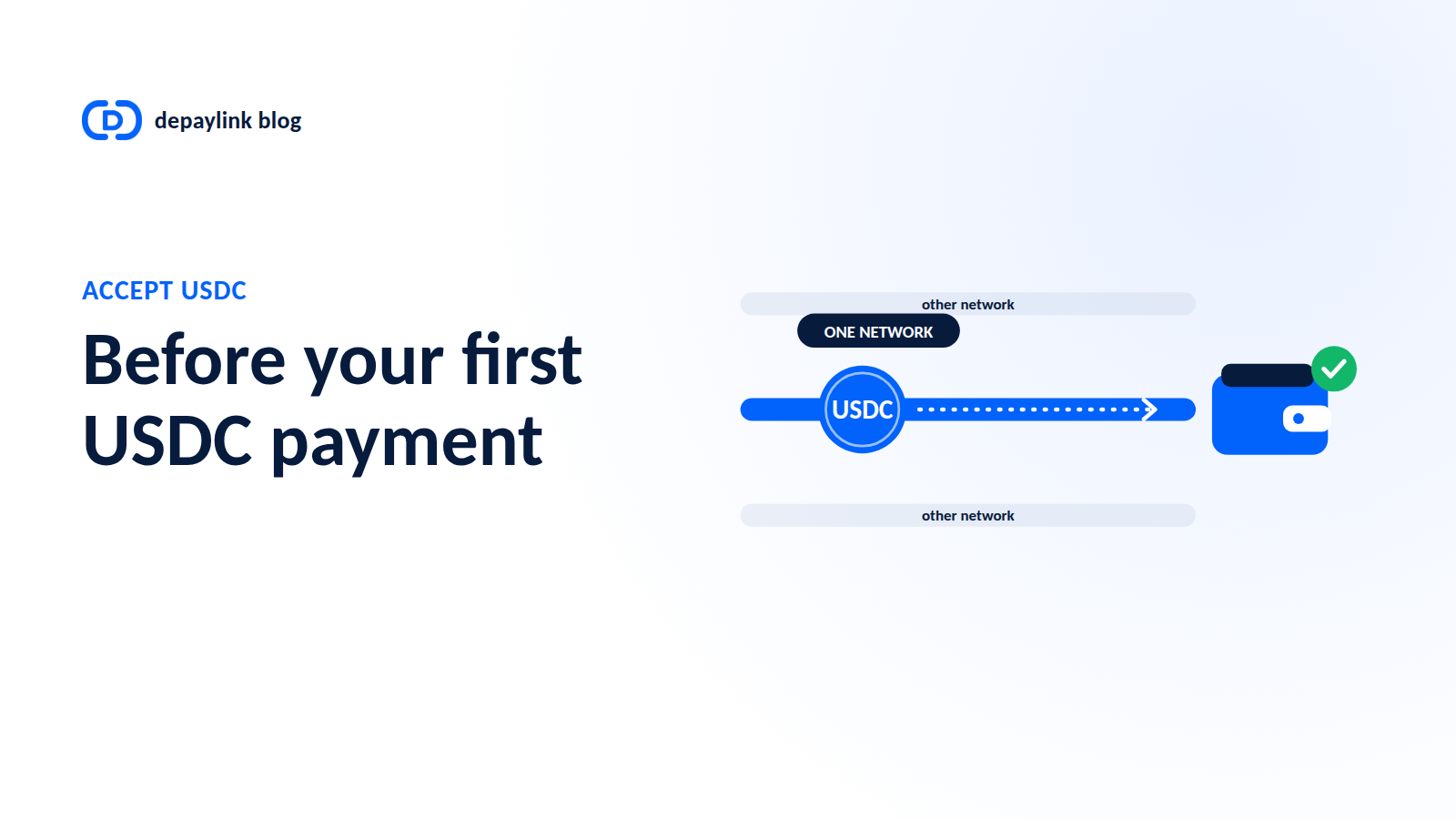
USDC is the same dollar stablecoin on every network, but each network is a separate system. USDC sent on Ethereum does not arrive in a Solana wallet, and the other way around. Most "lost" USDC payments happen because the sender and the receiver used different networks. The fix is simple: agree one network, check the address format, and fix the token and network in advance with a payment link.
One coin, many networks
Circle, the company behind USDC, issues it natively on several blockchains, including Solana, Ethereum, Base, Arbitrum, Polygon and Avalanche. A dollar of USDC on Solana and a dollar on Base are both redeemable, but they live on different ledgers. To move between them you need a bridge or an exchange; a normal transfer cannot cross networks.
How Solana compares
- Fees: a Solana transfer usually costs a fraction of a cent. Ethereum mainnet fees can be much higher; Base and Arbitrum are usually low.
- Speed: Solana payments typically confirm in seconds.
- Address format: Solana addresses are 32–44 letters and numbers with no "0x" prefix. Ethereum, Base, Arbitrum, Polygon and Avalanche all use the same "0x…" format, which is exactly why those mix-ups are so easy.
- Wallets: Phantom, Solflare and Backpack support Solana. MetaMask is mainly used for "0x" networks.
The most common wrong-network mistakes
- Exchange withdrawals on the default network. Exchanges often pre-select Ethereum or their own network. The sender must pick Solana when withdrawing.
- "Pay me in USDC" with no network named. The client picks whatever their wallet shows first.
- Look-alike tokens. Anyone can create a token called "USDC". On Solana, real USDC has the mint address
EPjFWdd5AufqSSqeM2qN1xzybapC8G4wEGGkZwyTDt1v. - Bridged versions. Some networks also carry older bridged USDC (often shown as USDC.e). It is a different token from native USDC.
Can a wrong-network payment be recovered?
Sometimes. If the money went to an exchange account, its support may recover it, often for a fee. If it went to a wallet address that you also control on the other network, you may be able to reach it by importing the same wallet there. If nobody controls that address on the other network, the money is usually gone. Prevention is far easier than recovery.
A simple checklist before every payment
- Write "USDC on Solana only" on the invoice or checkout.
- Ask senders using an exchange to choose Solana as the withdrawal network.
- Check that your address has no "0x" prefix.
- For a new client, ask for a small test payment first.
- Confirm the token is real USDC before marking the payment received.
The easiest fix: a payment link
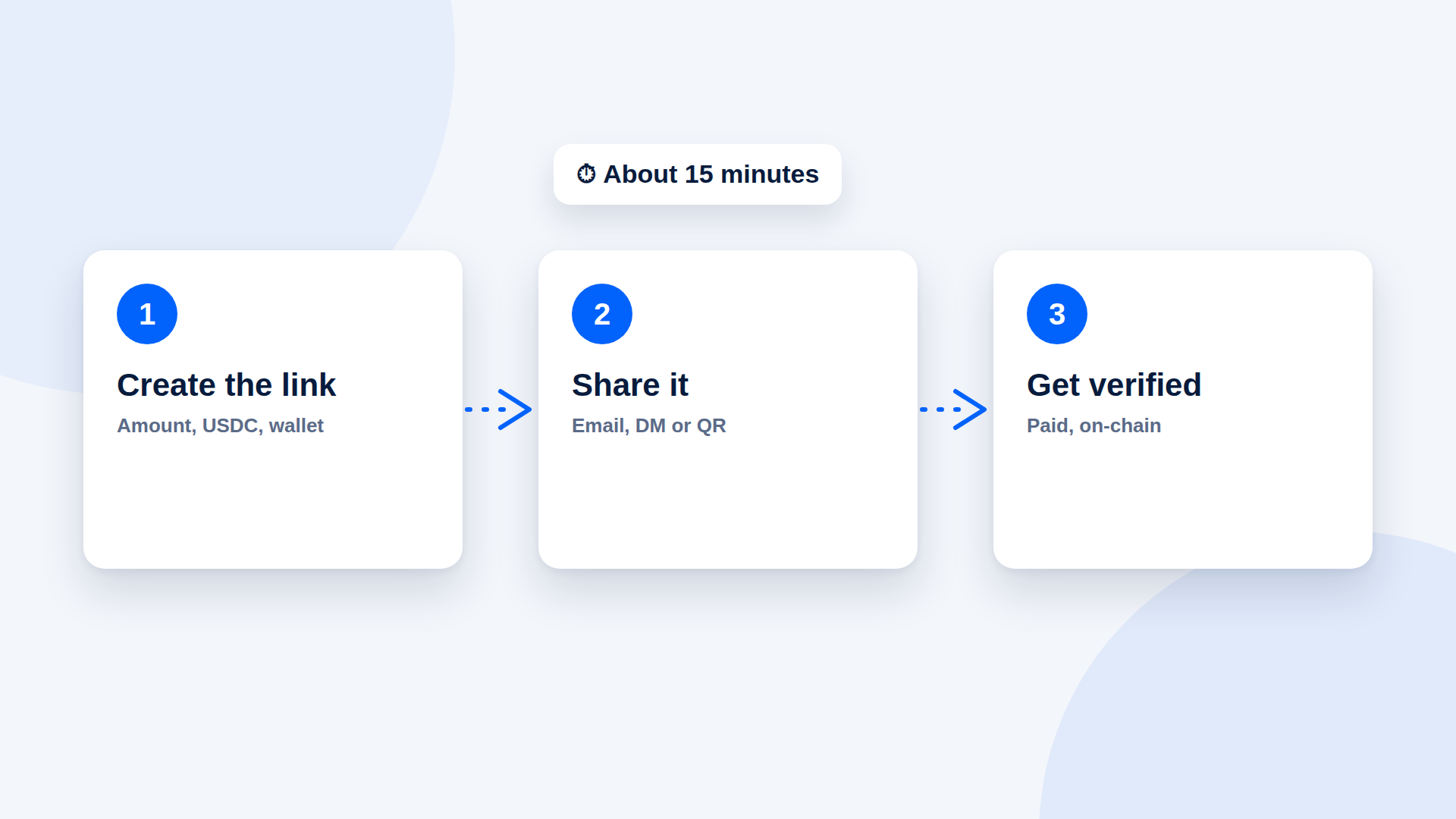
A DePayLink payment link fixes the token, the network and the amount before the customer pays. They open the link, see they are paying USDC on Solana, and pay from their own wallet. DePayLink checks the blockchain and marks the payment paid only when the right token and amount reach your wallet. The money goes straight to you, with no DePayLink transaction fees. Read more in how to invoice a client in USDC on Solana.
FAQ
Is USDC on Solana worth the same as USDC on Ethereum?
Yes, both are designed to equal one US dollar. They just live on different networks.
Can I receive USDC from any network in my Solana wallet?
No. A Solana wallet only receives USDC sent on Solana.
Does DePayLink accept USDC on other networks?
No. DePayLink currently works on Solana, with SOL and USDC.