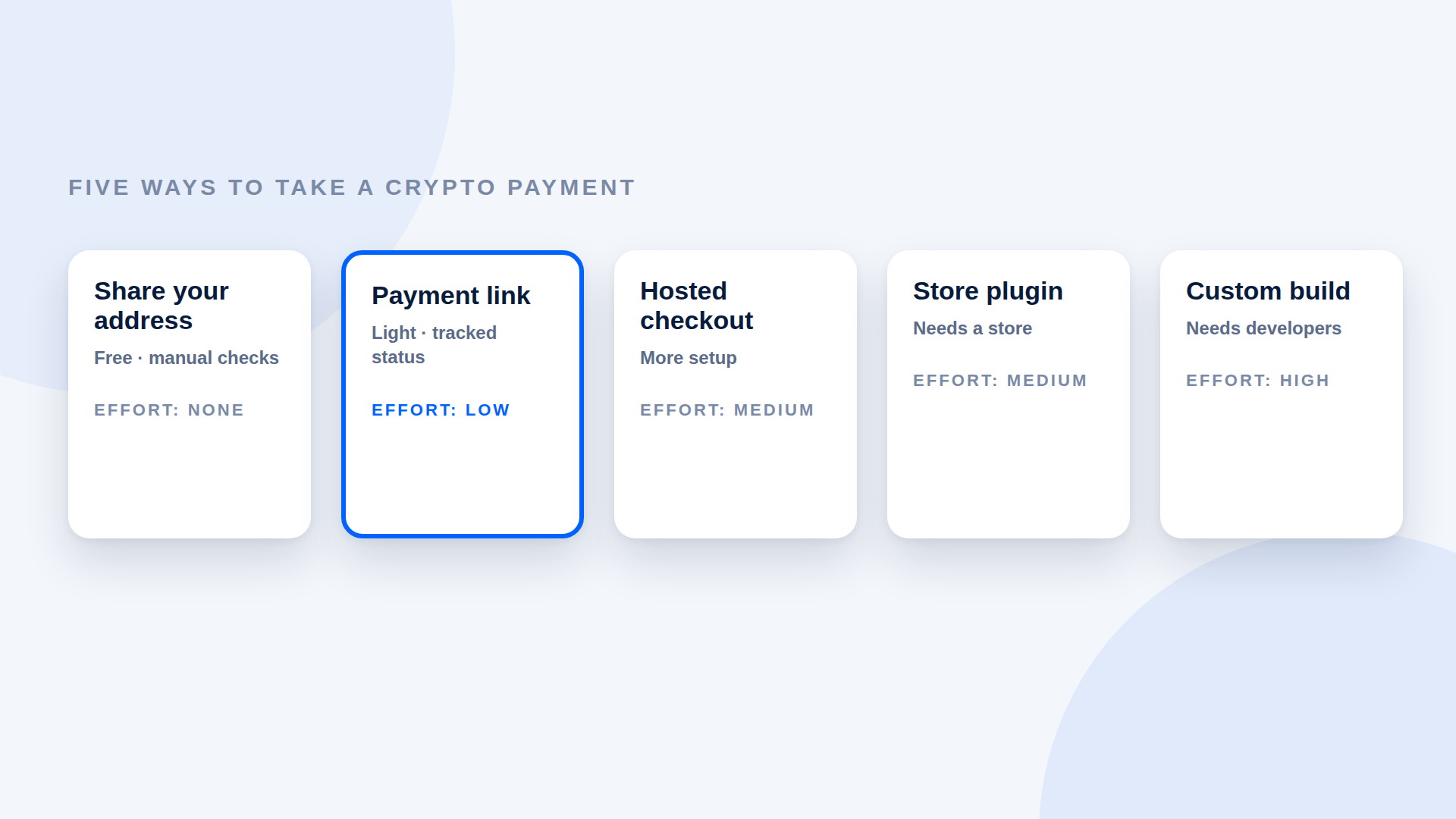
An agency can add USDC as a payment option by sending a payment link with each milestone invoice, naming the asset and network in the contract, and agreeing an internal process for wallets and records. It works best for clients who already hold stablecoins, such as crypto-native companies, and as an extra option, not a replacement for bank transfers.
Why agencies consider it
- Cross-border clients: wallet-to-wallet transfers avoid intermediary banks.
- Crypto-native clients: many already pay contractors from stablecoin treasuries.
- Dollar pricing: invoicing in USDC keeps amounts steady.
- Milestone cash flow: smaller, frequent payments are easy to request with links.
Set it up
Decide the policy
Choose the asset (USDC) and network (Solana), and decide who approves payments in USDC. State it in your standard terms.
Set up the wallet properly
Use a dedicated business wallet and agree who has access. With more than one person involved, avoid depending on one person's phone. Keep recovery phrases offline.
Write it into the contract
Include: - Payment asset and network ("USDC on Solana") - How amounts are set (fixed in USDC, not converted later) - Who bears network fees - Payment due dates for each milestone - Refund and cancellation terms
Create a link per milestone
For each milestone invoice, create a payment link with the amount, asset and your wallet. Label it with the project and milestone, so your records match.
Example milestone plan
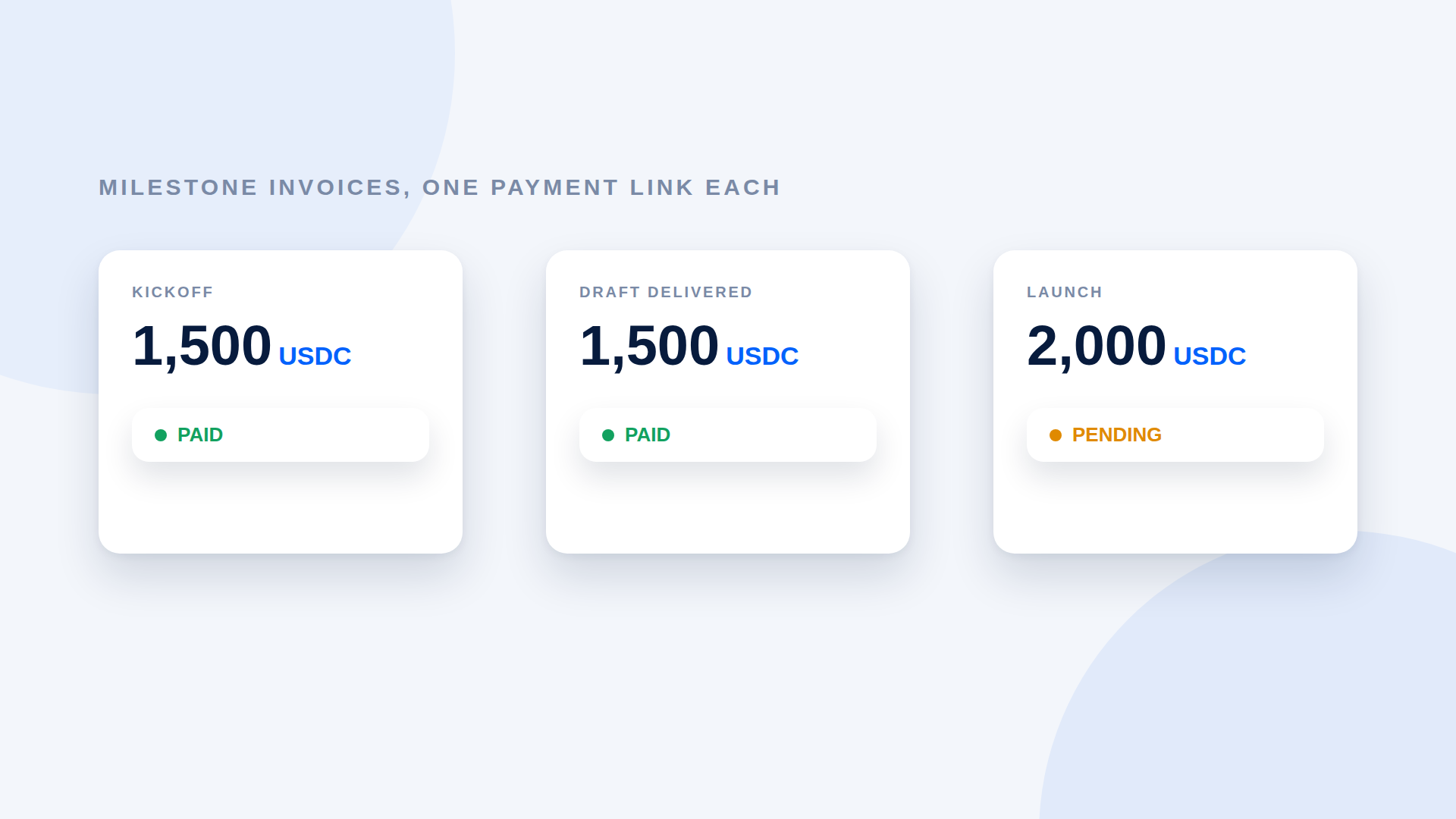
| Milestone | Amount | Link status |
|---|---|---|
| Kickoff | 1,500 USDC | Paid |
| Draft delivered | 1,500 USDC | Paid |
| Launch | 2,000 USDC | Pending |
Each link shows its own status, so the account manager can see at a glance what is outstanding.
Internal process
- Who creates links? A single owner, or a small team.
- Who verifies? Check the status before work starts or is released.
- Who reconciles? Match payments to invoices in your books each week.
- Who cashes out? Decide whether and when to convert to local currency.
Records and tax
Record each payment's date, reference, amount in USDC and its value in your local currency when received. Your accountant will want this. Tax and reporting rules differ by country, so get local advice before you start.
Client communication
Explain what the client needs: a wallet with USDC on Solana and a little SOL for the fee. Offer a bank transfer alternative. Never insist.
Risks to manage
- Wrong-network payments
- A client paying a different amount from a milestone
- Wallet security with several staff
- Stablecoin risk; convert on a schedule if you do not want to hold it
Where depaylink fits
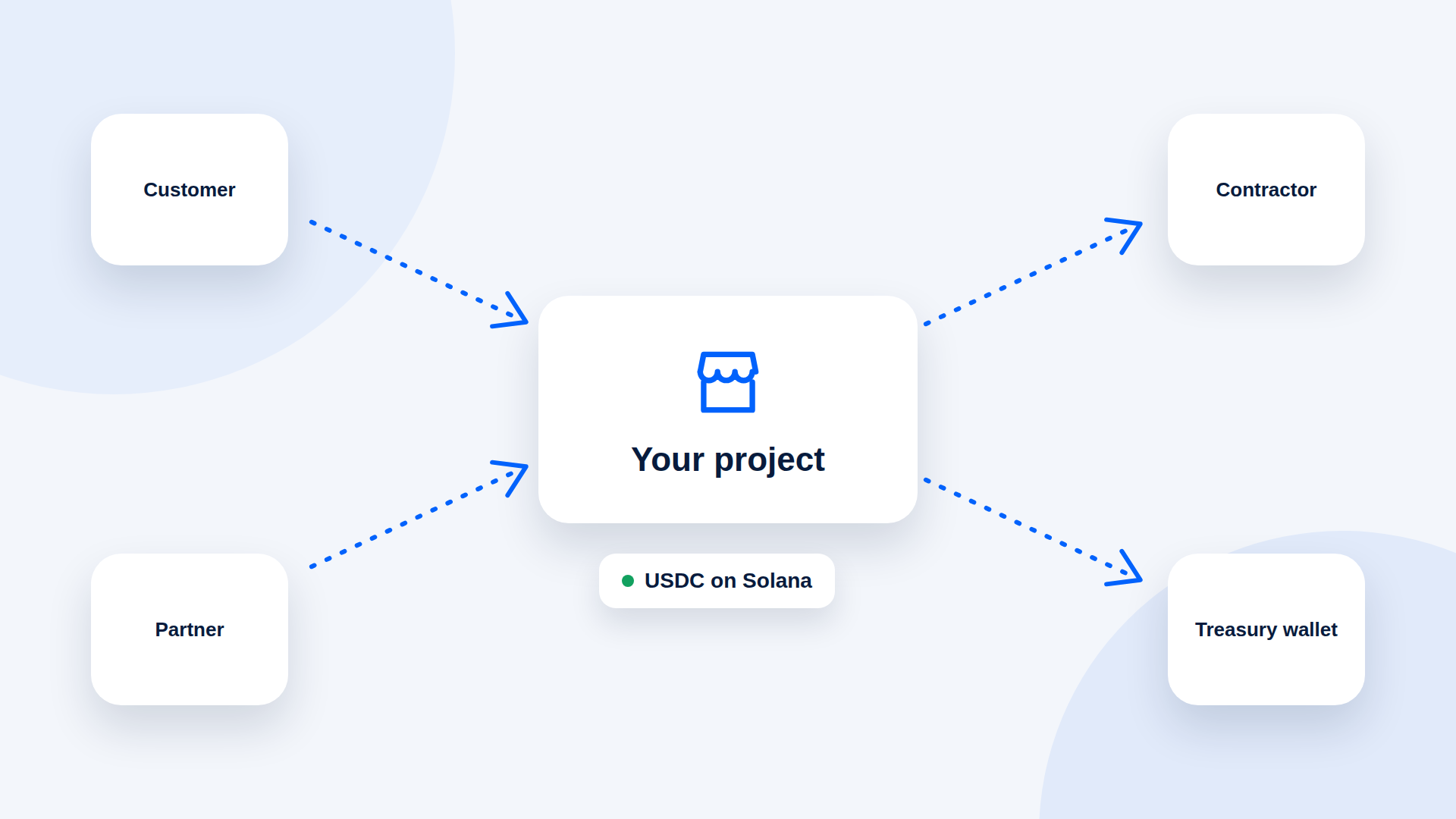
depaylink creates SOL and USDC payment links on Solana, one per milestone, with funds going directly to your wallet and on-chain verification of amount, asset and destination. Pro adds custom branding, custom payment pages, analytics and up to 3 saved wallet addresses. depaylink does not convert funds or generate invoice documents.
Frequently asked questions
Can an agency accept crypto from US or EU clients?
Often yes, but rules vary. Check local law and speak to your accountant.
Should the contract fix the amount in USDC?
Yes, to avoid exchange-rate disputes.
Who pays the network fee?
The sender pays it. State this in the contract so there are no surprises.
Can we use multiple wallets?
Yes. Pro allows up to 3 saved wallet addresses in depaylink.